Newsletters


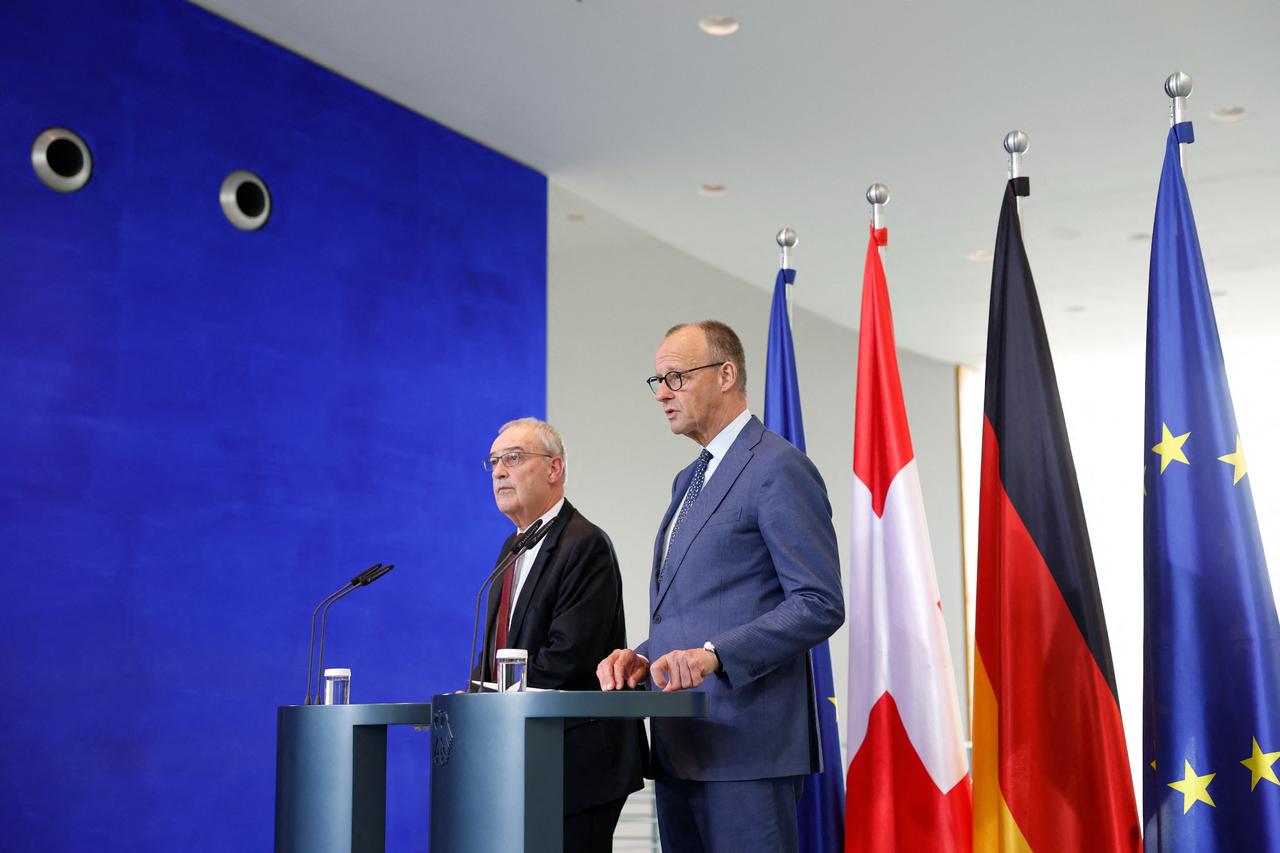


German Chancellor Friedrich Merz on Tuesday urged Iran to return to negotiations with the United States, warning that a prolonged conflict would have serious consequences for the Middle East and the global economy.
“Iran must come to the negotiating table. It must stop playing for time,” Merz said during a joint press conference with Swiss President Guy Parmelin in Berlin.
“Iran must no longer hold the region—and the entire world—hostage,” he added.
Merz said the continued disruption and blockade around the Strait of Hormuz was already affecting the world economy and particularly export-driven countries such as Germany and Switzerland.
“We are therefore working with our partners to restore freedom of navigation at the Strait of Hormuz as quickly as possible,” he told reporters.
“Once the necessary preconditions have been met, Germany will also be ready to contribute its military capabilities to this effort,” he added.
The Strait of Hormuz remains one of the world’s most critical energy chokepoints, handling a significant share of global oil and liquefied natural gas shipments.
Merz’s remarks came a day after U.S. President Donald Trump said he had postponed a major military strike against Iran following direct appeals from the leaders of Qatar, Saudi Arabia and the United Arab Emirates.
However, Trump also warned that U.S. military preparations remained active.
He said he had instructed senior defense officials to “be prepared to go forward with a full, large-scale assault of Iran, on a moment’s notice” if negotiations fail to produce an acceptable agreement.
The tensions follow stalled negotiations mediated by Pakistan.
The United States imposed a blockade on Iranian ports beginning April 13, including facilities linked to the Strait of Hormuz.
Iran later responded by tightening control over the waterway and requiring ships to coordinate transit with Iranian authorities.
The measures have raised concerns that the fragile ceasefire in effect since April 8 could collapse if negotiations fail to produce a broader settlement.


 Set as preferred source
 Set as preferred source


 1 min read


 1 min read