

 Newsletters


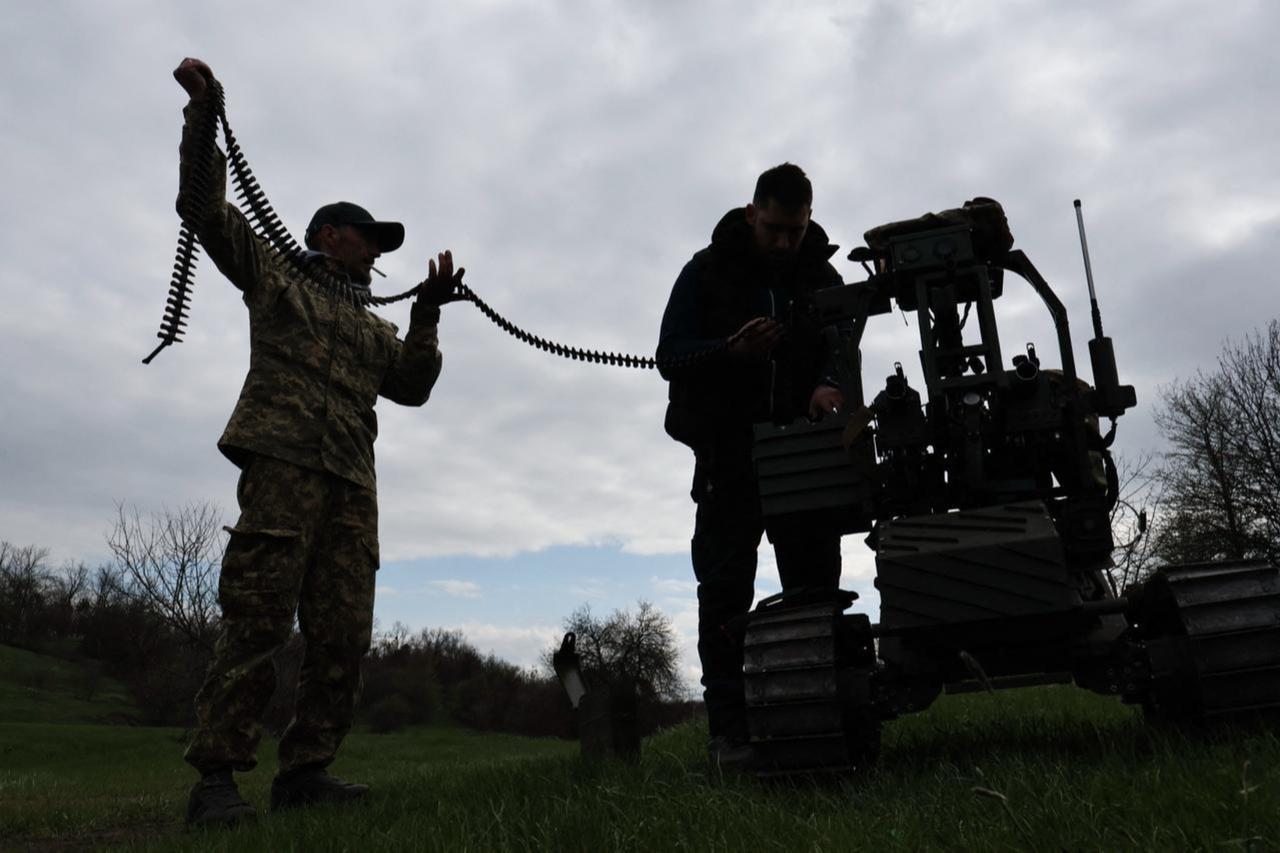


For a very long time, war was almost synonymous with attrition warfare. During wars, the opposing sides sought to exhaust the enemy’s manpower, resources, and morale.
“We won because we smothered the enemy in an avalanche of production, the like of which he had never seen, nor dreamed possible,” said William S. Knudsen, a U.S. general who was the director of war production during World War II.
This strategy could be understood not only as a matter of choice, but also as something imposed by technological conditions. The technological circumstances of the time did not allow for methods such as maneuver warfare or precision targeting that could bring a war to a rapid conclusion.
The most obvious example of this can be seen on the Western Front of World War I. Because technologies such as trenches and Maxim guns gave the defense a major advantage, the belligerents tried to wear each other down through extended battles. Examples such as the Battle of Verdun resulted in the deaths of hundreds of thousands of people, despite front lines that barely changed.
World War II represented another turning point. Offensive technologies such as tanks and combat aircraft made it possible to overcome defensive systems such as the Maginot Line, and blitzkrieg brought maneuver warfare back into prominence. In contrast to the relatively slow nature of World War I, World War II witnessed cases such as Belgium falling in 18 days, the Netherlands in five days, and Denmark within only a few hours in the face of maneuver warfare.
The Cold War years presented a different situation. As one of the two new hegemons of the bipolar world order, the United States sought to balance the Soviet Union, which had advantages in conventional firepower and population, through technological superiority.
In the early years of the Cold War, this balancing effort took the form of the First Offset Strategy, based on the deterrent power of nuclear weapons. Later, through the Second Offset Strategy, it relied on precision-based technologies such as Project Assault Breaker.
With the collapse of the Soviet Union, the unipolar system began, and the United States became the world’s undisputed hegemonic power. During this period, it would not be wrong to say that the United States generally faced asymmetric rivals.
In the Gulf War, the Kosovo War, and the War on Terror that began after Sept. 11, the United States achieved significant successes through precision targeting technologies and the strategy of “shock and awe.”
These technological developments led countries to rely on a small number of high-end systems rather than producing large quantities of military platforms. For example, in terms of the number of aircraft, the U.S. Air Force today is only one-fifth the size it was at its peak in 1954.
Although many people may not have noticed it, another important turning point in warfare has taken place in recent years. The war launched by Russia in 2022 to overthrow the government in Ukraine, and described by Moscow as a “special military operation,” completed its fourth year this past February.
After Russia failed to achieve the rapid victory it had initially envisioned, the war entered a phase of stalemate and turned into a war of attrition. Despite Russia’s large population and air superiority, Ukraine has countered successfully by leveraging cheap drone technology.
In 2024, Ukraine’s Operation Spider’s Web captured global headlines after covertly deployed Osa drones destroyed hundreds of millions of dollars in Russian combat aircraft.
Another similar case was the 2026 U.S.-Israel and Iran war. Through the targets they struck in Iran and the air superiority they established, the United States and Israel aimed to trigger a popular uprising and regime change through a strategy of shock and awe.
For now, however, the outcome suggests that this attempt has failed. Despite the weakness of its air force, Iran not only struck U.S. and Israeli targets with missile technologies and suicide drones, but also sought to increase the cost of war for the opposing side by closing the Strait of Hormuz and striking U.S.-allied states in the region.
By producing large numbers of low-cost Shahed drones, Iran has forced the United States and Israel to expend anti-missile interceptors worth millions of dollars each, thereby imposing costs and economically wearing down its rivals.
This situation shows that, as the unipolar world order begins to come under strain and great-power interventions become more common again, the phenomenon of attrition warfare has returned to the agenda.
Although there are counterexamples, such as the U.S. intervention in Venezuela at the beginning of 2026, it is reasonable to assume that we are entering a period in which production capacity and logistics lines will regain importance alongside precision in great-power competition.
Therefore, the main conclusion regarding the future of war is that technological superiority can no longer be defined solely by possessing the most advanced and expensive systems.
In the new era, the success of states will depend on their ability to combine precision-targeting capabilities with mass production capacity, low-cost expendable systems, strong logistics networks, and sustainable ammunition stocks. Attrition warfare is returning not as a relic of the old world, but in an updated form shaped by new technologies.


 Set as preferred source
 Set as preferred source


 1 min read


 1 min read


