Newsletters


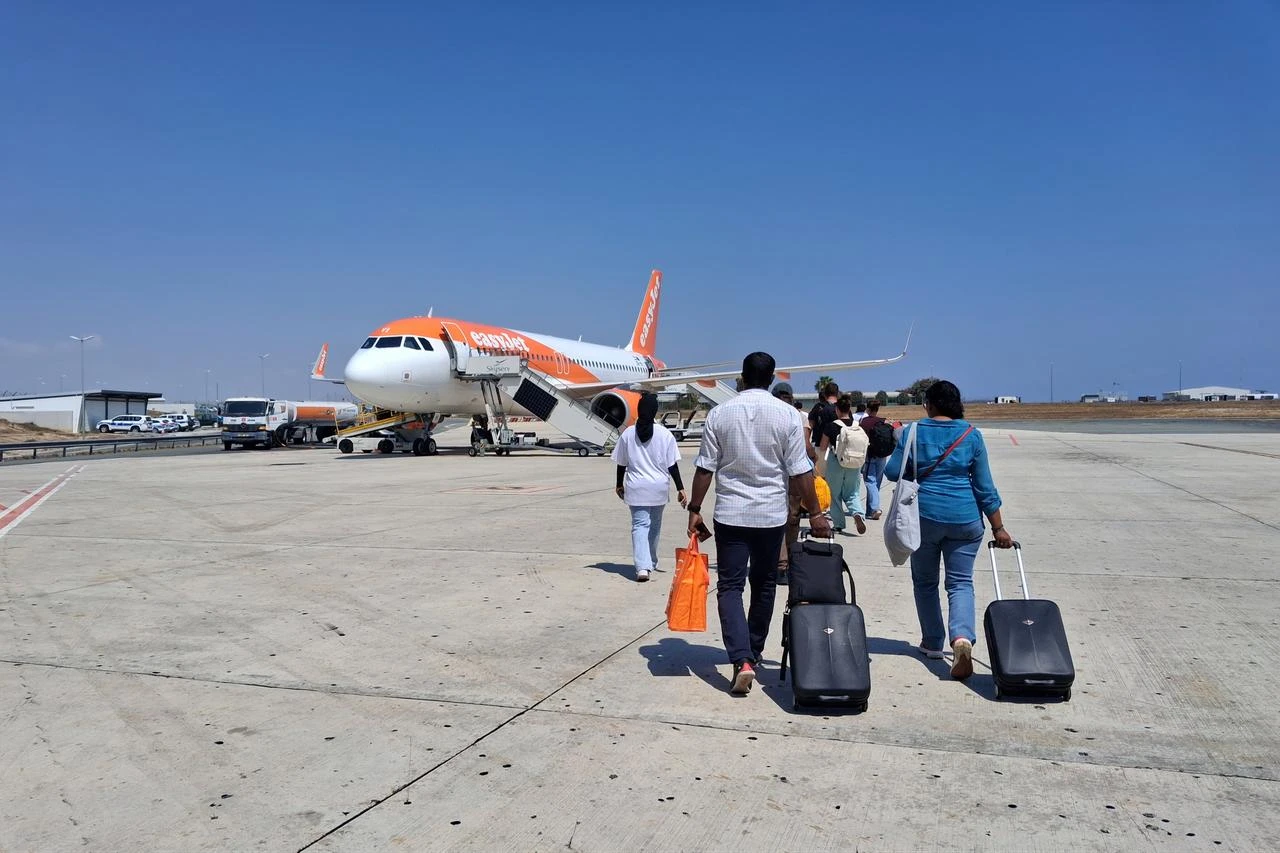


Media in the Turkish Republic of Northern Cyprus (TRNC) said Saturday that reports by Greek Cypriot and Greek outlets of a near-collision between a Turkish military cargo plane and a British passenger jet on Aug. 19 were politically motivated, insisting the two aircraft were never in danger.
The Kibris newspaper said the Turkish military aircraft's controlled movement in the Ercan Advisory Airspace, where its route intersected with the British jet, was being used by Greek Cypriot actors to manufacture a political crisis.
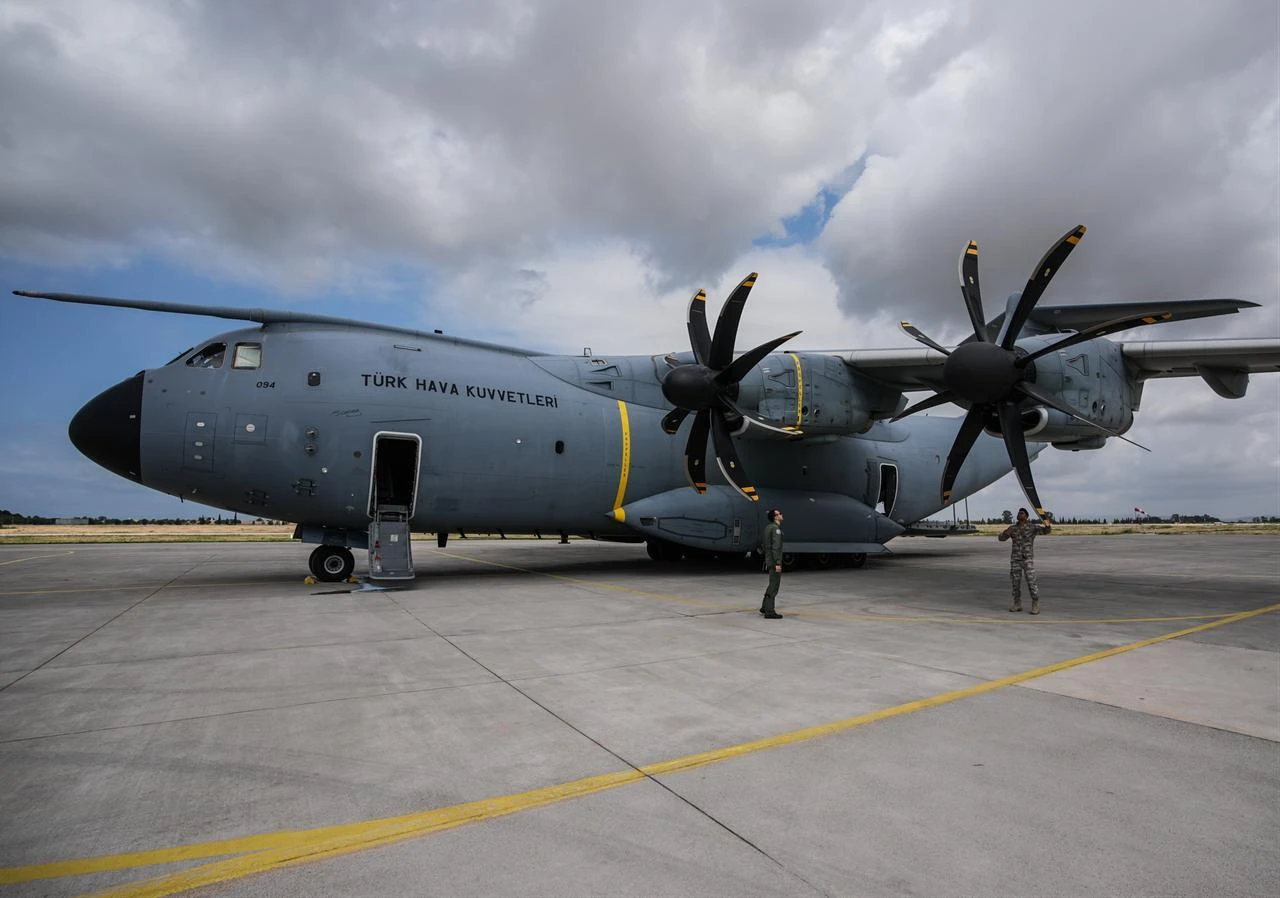
In a column titled "Radar Doesn't Look at a Plane's Nationality, It Sees the Truth," published under the byline of Mete Tumerkan, the newspaper said Greek Cypriot and Greek media reported that a British passenger jet flying the Belfast-Larnaca route and a Turkish Air Force (TurAF) A400M transport aircraft returning from Somalia to Türkiye had crossed paths in the same area northwest of Cyprus on Aug. 19, characterizing the event as a "collision risk" and a "threat to civil aviation."
Tumerkan wrote that the Ercan Air Traffic Control Center had notified the Turkish A400M crew of the approaching British passenger jet in advance, and that Turkish pilots visually tracked the civilian aircraft.
"(On Aug. 19), the Ercan Air Traffic Control Center notified the Turkish A400M crew of the approaching British passenger jet in advance. Turkish pilots visually tracked the civilian aircraft.
The crossing between the two aircraft occurred in a controlled manner, maintaining 1,300 feet of vertical separation and two nautical miles of horizontal separation. What's more, no Traffic Alert and Collision Avoidance System (TCAS) report was filed by the British airline following the incident," he wrote.

The columnist wrote that Türkiye's smart air traffic management systems, Mode-S surveillance capability and wide radar network contribute to the safe management of air traffic in the region.
He said Türkiye implemented flight safety quality standards and international norms years ago, and said international organizations have confirmed shortcomings in the Greek Cypriot administration's air traffic capabilities, noting that Ercan has both primary and secondary surveillance radars, with an additional secondary surveillance radar located in Agirdag, and that the Ercan Area Control Center provides 24-hour radar control service.
He said people may hold whatever political view they wish regarding the international status of the TRNC's Ercan Airport, but cannot disregard the state-of-the-art radar systems installed there.
"Greek Cypriot claims are political, no danger occurred between the Turkish military cargo plane and the British passenger jet on Aug. 19," the columnist wrote.
Tumerkan wrote that professional organizations representing Greek Cypriot air traffic controllers have long cited staff shortages, and that international organizations have previously flagged personnel and technical infrastructure problems in the Greek Cypriot administration's air navigation services.
He also referenced a communications failure in the Athens Flight Information Region on Jan. 4, 2026, saying air traffic controllers were unable to communicate with aircraft and that flights entering or transiting Greek airspace were halted. He wrote that an expert report attributed the failure to outdated communications infrastructure.
"If you are genuinely concerned about flight safety, what needs to be done is very clear: Set politics aside and strengthen technical coordination, because in the sky, it is technical facts that matter, not political recognition. Radar does not look at a plane's nationality or at politics. It sees the truth," he wrote.
Cyprus has been mired in a decades-long dispute between Greek Cypriots and Turkish Cypriots, despite diplomatic efforts by the United Nations to reach a comprehensive settlement.
Ethnic attacks starting in the early 1960s forced Turkish Cypriots to withdraw into enclaves for their safety. In 1974, a Greek Cypriot coup aimed at Greece's annexation of the island led to Türkiye's military intervention as a guarantor power to protect Turkish Cypriots from persecution and violence.
TRNC was founded in 1983 as a result.
The island has seen an on-and-off peace process in recent years, including a failed 2017 initiative in Switzerland under the auspices of guarantor countries Türkiye, Greece and the United Kingdom.
The Greek Cypriot administration entered the European Union in 2004, the same year Greek Cypriots single-handedly blocked a U.N. plan to end the dispute.


 Set as preferred source
 Set as preferred source


 2 min read
 1 min read