Newsletters


Yemen's Houthis seized control of Mayyun Island on Friday, completing their takeover of the Bab al-Mandeb Strait area and giving the Iran-backed group control of the entirety of Yemen's Red Sea coastline, a local government official and eyewitnesses told Agence France-Presse (AFP).
"Boats carrying armed Houthi fighters reached Mayyun Island after government forces withdrew from it yesterday," the official said, referring to the island also known as Perim, which divides the strait into two shipping lanes.
"The Houthis have completed their takeover of the Bab al-Mandeb area and Mayyun Island, which is located in the middle of the strait," the official added, speaking to AFP on condition of anonymity.
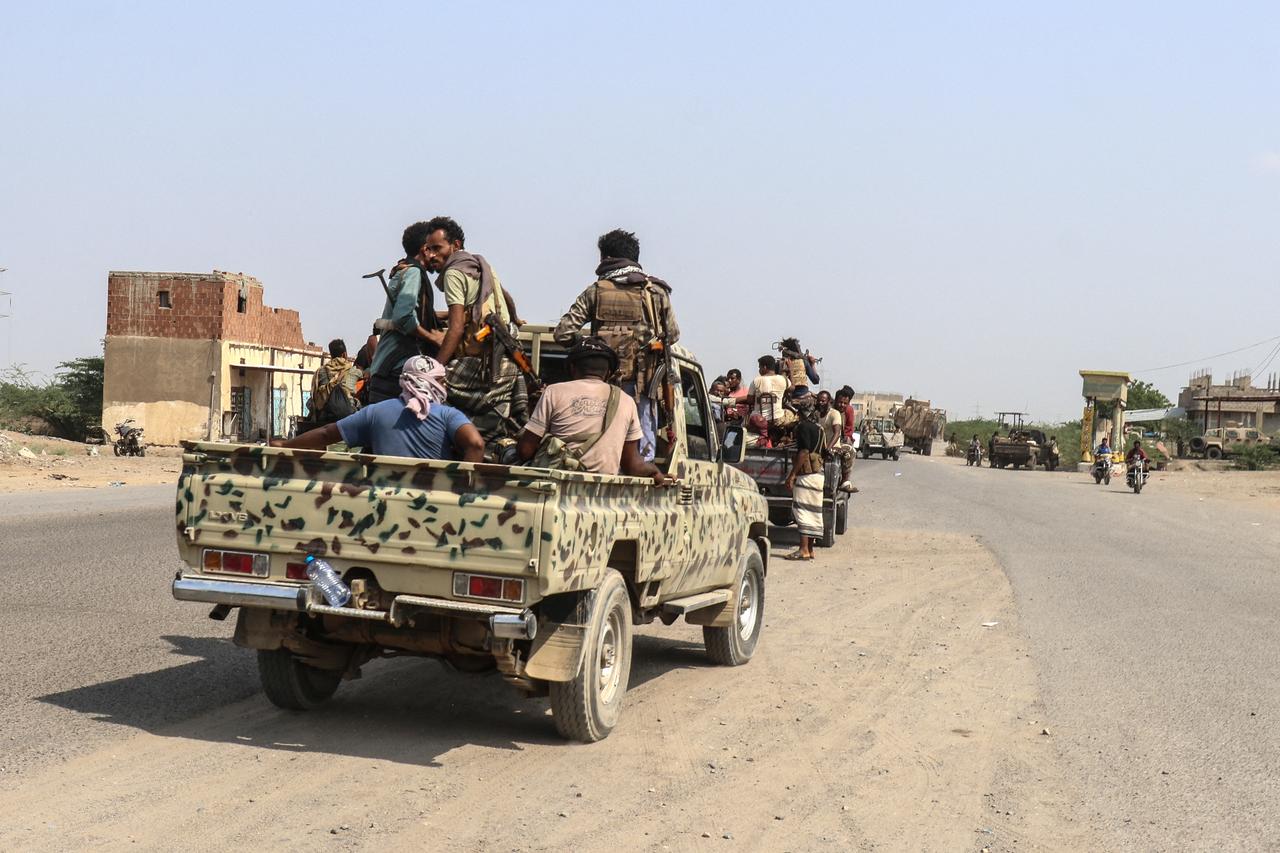
An eyewitness said Houthi gunmen were "deploying along the Bab al-Mandeb shore and are driving around in military vehicles."


With government forces already gone from Mocha, Houthi fighters met little resistance moving south along the coast, seizing the town of Dhubab, which sits directly on the strait across from Perim, before taking Murad, the last coastal town remaining in government hands. Houthi naval forces then pushed offshore, seizing Mayyun Island and fighting their way into Zuqar Island, where clashes were ongoing.
Reuters also reported that Houthi forces had reached Dhubab, citing two Yemeni government sources who said control of Dhubab and Perim was key to holding the strait.
Hundreds of people have died since the Houthis launched their offensive around the strait, which is a vital artery for Saudi oil exports.
Fighting between government forces and the Houthis has intensified on several fronts since early July, following years of relative calm after a 2022 truce.
Known as the "Gate of Tears" in Arabic for its history of shipwrecks, the strait sits at the southern tip of the Red Sea, connecting it to the Gulf of Aden. It is about 100 kilometers long and just 30 kilometers wide at its narrowest point, separating Yemen from Djibouti and Eritrea on the Horn of Africa.
The strait is normally one of the world's busiest shipping lanes, with oil tankers and cargo ships using it to reach the Mediterranean via the Suez Canal, cutting thousands of kilometers off journeys between Asia and Europe and North America.
Even before the Middle East war, the U.S. Energy Information Administration said 12% of world oil shipments transited the strait in 2023.
Suez Canal traffic fell sharply in 2024 as the Houthis attacked Red Sea shipping during the Gaza war and has yet to recover, according to IMF PortWatch data analyzed by AFP.
Total transits dropped from 26,895 vessels in 2023, or 73.7 per day, to 14,498 in 2024 and 14,070 in 2025. Average transits for January-August 2026 stood at just 40.8 vessels per day, still little more than half the pre-crisis level.
Although Houthi attacks during the Gaza conflict cut ship numbers dramatically, Iran's closure of the Strait of Hormuz turned the Bab al-Mandeb into a vital alternative route for Gulf oil. Saudi crude shipments from the Red Sea port of Yanbu surged after the Iran war began, averaging around 3.8 million barrels per day between March and July, about five times pre-war levels, according to estimates from commodities data firm Kpler.
But shipments fell sharply to 1.5 million barrels per day in August after the Houthis resumed attacks on Saudi shipping in July. Preliminary Kpler data put exports at 2.44 million barrels per day in the first nine days of September, though that figure remains subject to revision.

Andreas Krieg, a security expert at King's College London, said the "biggest danger is not necessarily physical closure of the Bab al-Mandeb but persistent uncertainty," predicting that prolonged instability would suppress traffic through Suez and impose significant costs on Egypt while adding time and expense to Europe-Asia trade.
Krieg told AFP that the Houthi control of the coast would give the group "extraordinary strategic leverage," though he noted that "the ability to impose risk on shipping already exists without territorial control of the strait."
Yemen has been engulfed in conflict since the Houthis seized the capital, Sanaa, and several provinces in September 2014, prompting a Saudi-led Arab coalition to intervene in March 2015 in support of the internationally recognized government.


 Set as preferred source
 Set as preferred source


 2 min read

 1 min read