Newsletters




Iranian Parliament Speaker Mohammad Bagher Ghalibaf accused Israel on Monday of seeking to draw the United States into an "endless war" with Tehran, warning that Washington risked becoming trapped in a prolonged conflict as tensions continued in the Strait of Hormuz.
“Israelis are working overtime to drag the US into an endless war with Iran, a quagmire that no president, now or in the future, Republican or Democrat, could escape,” Ghalibaf wrote on X.
“Unless Washington drops the ‘Israel First’ mindset, America and its allies are headed straight for a dark age,” he added.
His remarks came as Iranian state television reported that the country's armed forces had targeted at least 11 tankers attempting to navigate the Strait of Hormuz through routes not authorized by Tehran over the past 10 days.
The developments followed months of military confrontation between the United States and Iran, with diplomatic efforts to end the conflict remaining stalled.
According to a report broadcast by Iranian state television, Iranian forces targeted tankers that had switched off their tracking systems and attempted to use an "alternative" route through the strategic waterway.
The report said at least 11 tankers had been targeted over the previous 10 days but did not specify whether any had sustained damage from naval mines.
It also claimed that four tankers had been unable to complete their passage through the strait during the previous 24 hours.
Iranian state television further reported that the Islamic Revolutionary Guard Corps (IRGC) had prevented vessels it described as "enemy" ships from moving through Iranian territorial waters by remotely disabling their navigation systems.
The reported incidents and the claims about interference with navigation systems could not be independently verified.

Separately, Iran denied Monday that it was negotiating with Washington to reopen the Strait of Hormuz in exchange for the release of $8 billion in frozen Iranian assets.
An unnamed Iranian official told the semi-official Fars News Agency that reports of such negotiations were false, insisting that Tehran would engage in talks only within the framework of seven conditions it had previously presented.
Those conditions include lifting the naval blockade, guaranteeing safe passage for commercial vessels and oil tankers through the Strait of Hormuz, removing unilateral sanctions and exempting Iranian oil exports from restrictions.
Iran is also demanding the release of frozen assets, permission to retain nuclear materials inside the country and an end to the war.
The denial followed media reports suggesting that U.S. President Donald Trump would meet Qatari Prime Minister Sheikh Mohammed bin Abdulrahman Al Thani on Monday to discuss the reported Iranian proposal.
 2 min read
The latest statements come as Washington and Tehran remain at odds over ending the conflict that began with U.S. and Israeli military strikes against Iran on Feb. 28.
Although a ceasefire was reached in April, fighting between the United States and Iran resumed in July after diplomatic efforts failed to produce a lasting settlement.
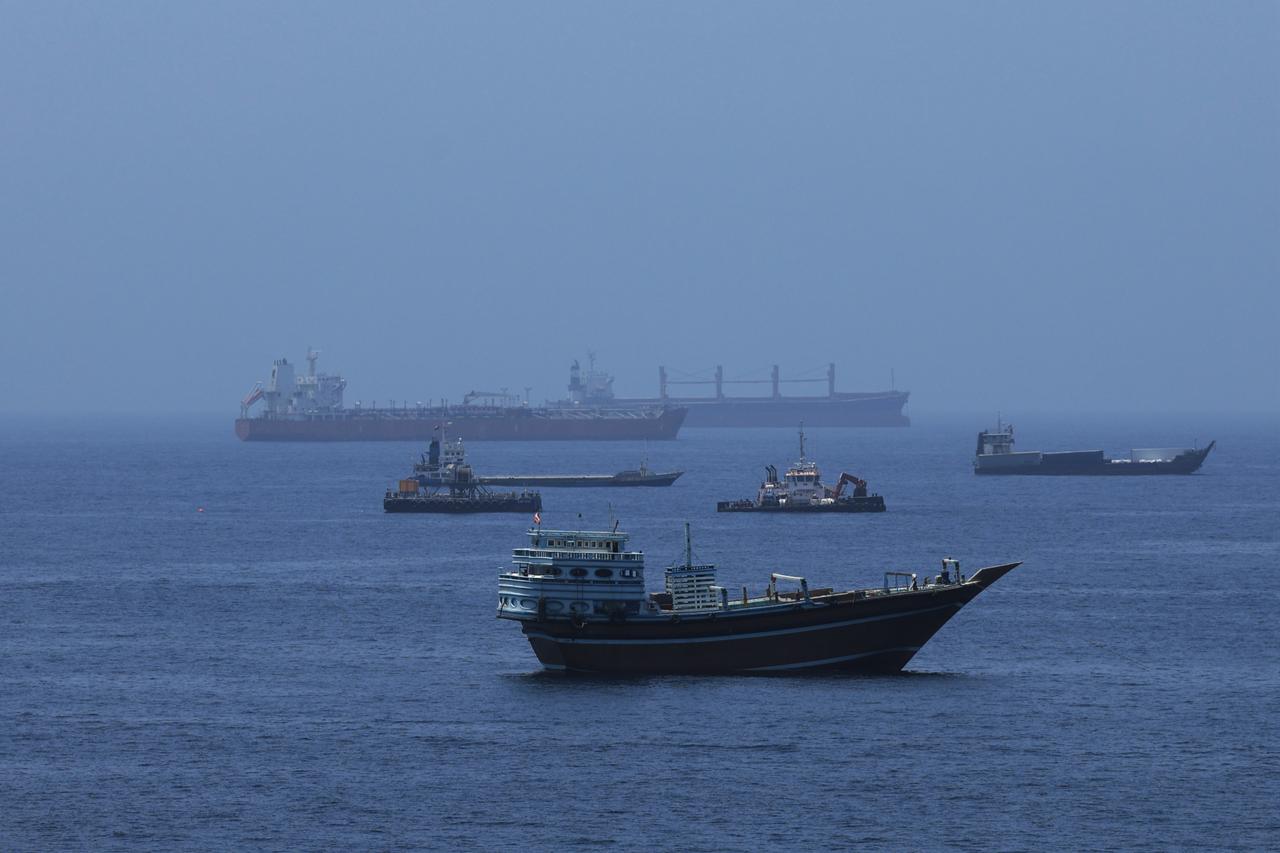
The continuing confrontation has also affected maritime traffic through the Strait of Hormuz, where Iran has sought to impose restrictions on vessels using routes it has not authorized.
Ghalibaf's warning and the reported incidents involving oil tankers come as disagreements over maritime security, sanctions and the terms of a potential agreement continue to complicate efforts to end the war.


 Set as preferred source
 Set as preferred source


 1 min read