Newsletters


Iranian Foreign Minister Abbas Araghchi held a phone call with his South Korean counterpart Friday as Gulf states reportedly prepare to meet Tehran in Oman over efforts to keep shipping moving through the Strait of Hormuz.
South Korea’s Foreign Ministry said the conversation took place at Araghchi’s request, with the two discussing the latest situation in the Middle East, bilateral relations and the protection of Korean nationals abroad.
Cho Hyun emphasized Seoul’s position that all vessels, including South Korean ships, must have free and safe passage through the Strait of Hormuz. The ministers agreed to maintain bilateral and multilateral communication on the regional situation and pending Korea-Iran issues, the ministry said.
The call came as South Korea decided earlier this week to send a fact-finding team to the United Arab Emirates to assess security and operational conditions in the Strait of Hormuz as the government considers whether to deploy troops to the strategic waterway.
Before the move, Iran warned Monday that any South Korean military participation in the Persian Gulf or Strait of Hormuz would have "serious consequences."
Meanwhile, the Financial Times reported that foreign ministers from the six-member Gulf Cooperation Council (GCC) reportedly planned to meet Araghchi on Sept. 14 in the Omani coastal city of Salalah.
The gathering, an Omani initiative, would be the first meeting between the GCC's top diplomats and a senior Iranian official since the U.S. and Israel launched the war against Iran in February. Details were not finalized, but several states had confirmed their participation and the meeting was expected to go ahead, according to people briefed on the matter.
The GCC includes Saudi Arabia, the United Arab Emirates, Qatar, Kuwait, Bahrain and Oman. Saudi Arabia and the UAE have maintained diplomatic communications with Iran despite Iranian attacks against them. Araghchi last attended a GCC gathering in Doha in October 2024.
Oman has spent weeks holding talks with Iran over a temporary arrangement that would allow commercial ships to transit the Strait of Hormuz without paying fees. Under the proposed deal, vessels would enter the strait through Iranian waters and exit mainly through Omani territory.
The interim arrangement was seen as a possible way to ease tensions over the waterway while Iran and its Gulf neighbors work toward a longer-term deal.


Iran has repeatedly said the deal with Oman would not be enough to reopen the strait, demanding that the U.S. lift its blockade on Iranian ports, restore an oil sales waiver and allow access to some frozen overseas assets.
The U.S. has told mediators it will not return to the memorandum of understanding signed in June, which was intended to extend the ceasefire and gradually reopen the Strait of Hormuz. Instead, Washington wants a broader deal covering part of the nuclear issue, according to a person briefed on the talks, the Financial Times reported.
There are no direct U.S.-Iran talks, but mediators have kept back channels open as they work on a new proposal to bring both sides back to the negotiating table. The Financial Times reported that a Qatari delegation visited Tehran twice last week as part of efforts to halt the conflict.
The visits followed a trip by Prime Minister Sheikh Mohammed bin Abdulrahman Al Thani to Tehran on Aug. 27 to push for renewed diplomacy and discuss a phased plan for shipping through the Strait of Hormuz.
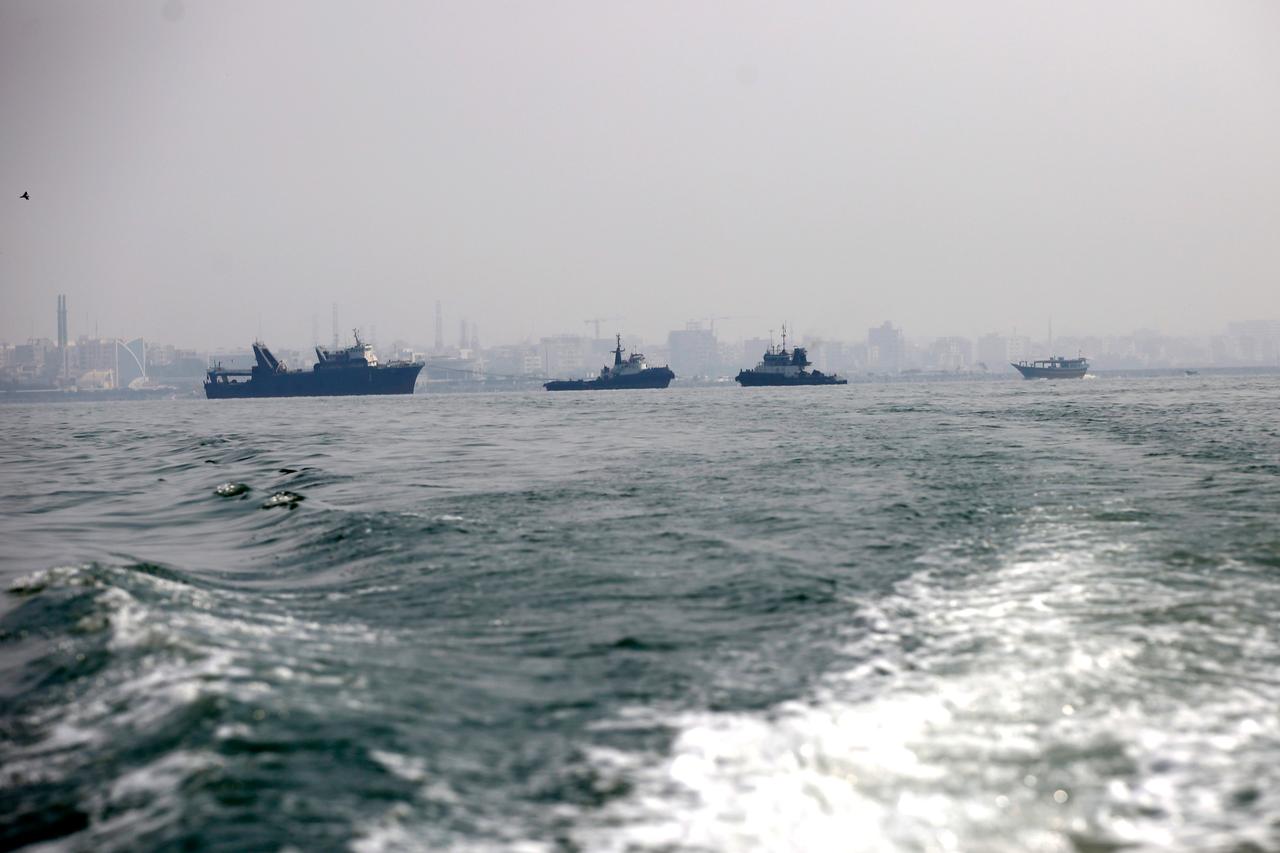
Meanwhile, shipping traffic through the Strait of Hormuz remains well below normal. Two vessels were hit by four unknown projectiles off Oman on Thursday, the U.K. Maritime Trade Operations center said. One caught fire, while the status of the other remained unclear.
The incident occurred 4 nautical miles (7.4 kilometers) west of Khasab. The master of another vessel reported seeing four projectiles strike the ships about 6 nautical miles north of his position.
Ship-tracking data showed that seven vessels transited the strait Thursday, down from 11 the previous day and well below the 10-day average of 15. Two of the seven were leaving the strait, while five were entering, MarineTraffic data showed.
The figures exclude vessels that may have crossed the waterway with their Automatic Identification System transmitters switched off to avoid detection.


 Set as preferred source
 Set as preferred source


 1 min read
 1 min read