

 Newsletters


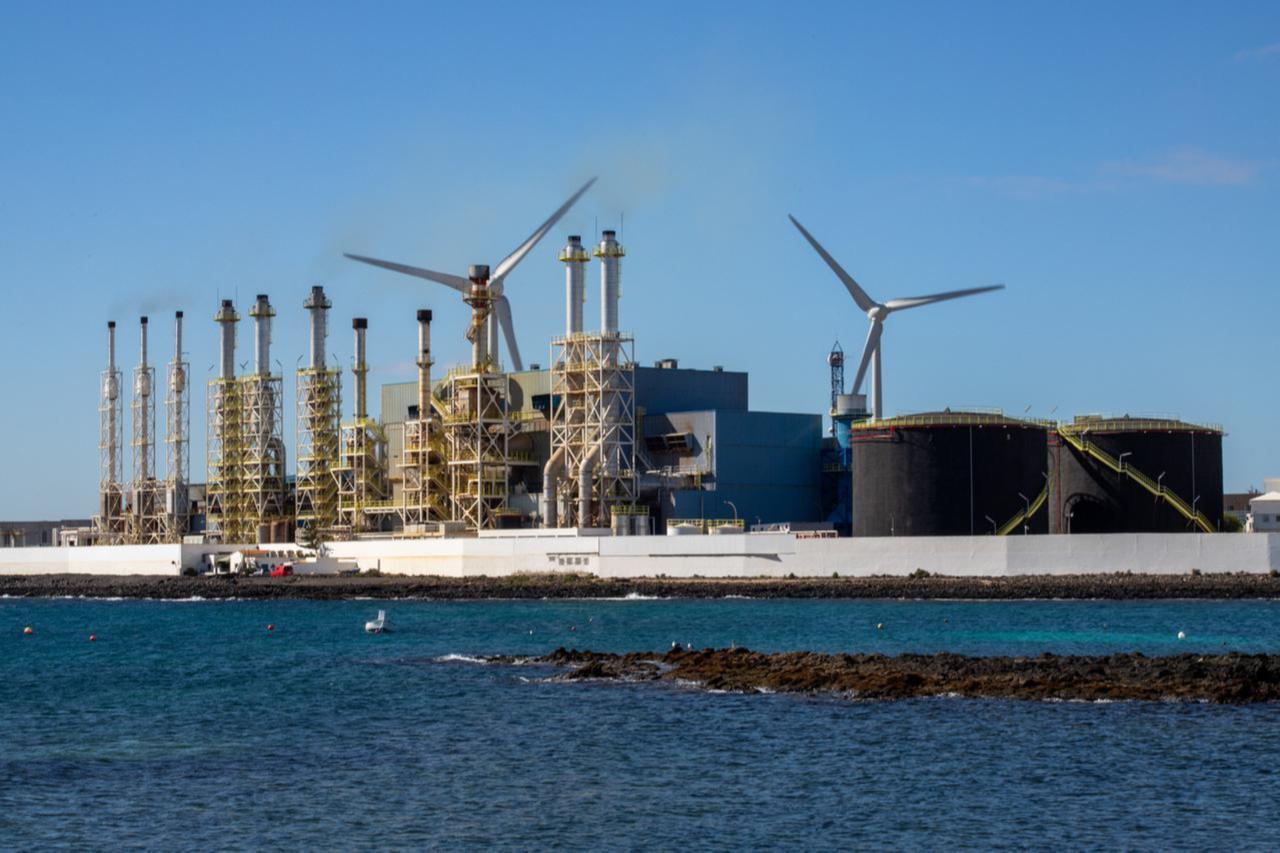


Iran's foreign minister on Saturday condemned what he described as a US strike on a freshwater desalination plant on Qeshm Island in the Persian Gulf, and within hours the Islamic Revolutionary Guard Corps launched retaliatory strikes against the US naval base in Bahrain's Jufair, Iranian state media reported, in a rapid escalation that has thrust water infrastructure to the centre of the widening Middle East conflict.
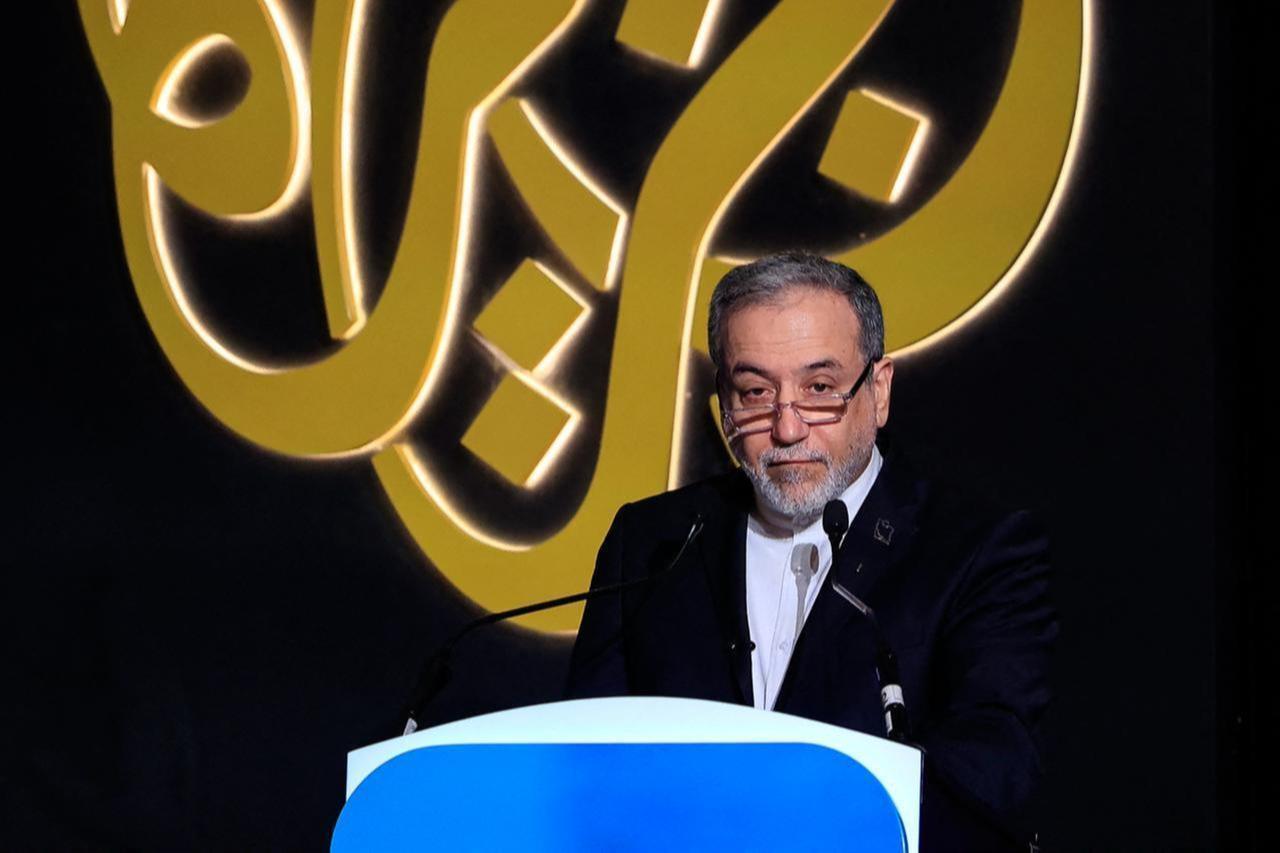
"The US committed a blatant and desperate crime by attacking a freshwater desalination plant on Qeshm Island," Seyed Abbas Araghchi wrote on the social media platform X. "Water supply in 30 villages has been impacted. Attacking Iran's infrastructure is a dangerous move with grave consequences. The US set this precedent, not Iran."
That final sentence carried a weight well beyond the immediate incident. Across the Persian Gulf coastline from Iran sit more than 400 desalination plants operated by Gulf Cooperation Council states, facilities that produce roughly 40 percent of the world's desalinated water and that, in several countries, represent the sole meaningful source of drinking water.
In Kuwait, approximately 90 percent of drinking water comes from desalination; in Oman the figure is 86 percent, in Saudi Arabia 70 percent, and in the UAE 42 percent. Araghchi's pointed reference to a "precedent" appeared designed to signal that if the United States could strike Iranian water infrastructure, Tehran now considered itself entitled to do the same to the region's far more vulnerable desalination network.

Security experts have long warned that the Gulf's reliance on centralised desalination infrastructure represents one of the most dangerous pressure points in any Middle East conflict.
A leaked 2008 US diplomatic cable from Riyadh warned that Saudi Arabia's capital would have to be evacuated within a week if the Jubail desalination plant, its pipelines, or associated power infrastructure were seriously damaged, adding that the Saudi government's structure could not function without it.
The Jubail complex, located on Saudi Arabia's eastern coast, supplies more than 90 percent of Riyadh's drinking water through a pipeline stretching roughly 500 kilometres inland.
Qatar's prime minister warned last year that any attack on Iran's nuclear facilities could contaminate the region's waters and threaten life in Qatar, the UAE, and Kuwait, and disclosed that Qatar had once assessed it could run out of potable water in just three days in such a scenario, leading Doha to build 15 massive water reservoirs as emergency reserves.
Despite these fears, Iran has so far refrained from directly targeting Gulf desalination facilities during the current conflict, even as it has struck airports, hotels, ports, oil installations, and energy infrastructure across the UAE, Saudi Arabia, Kuwait, Qatar, Bahrain, and Oman over the past week.
Christian Henderson, a scholar of political economy and food security at Leiden University, speaking to MEE, said Iran's current strategy focuses on imposing economic costs through energy infrastructure strikes, and that while Tehran could target desalination plants, doing so would represent a significant escalation.
However, recent military developments have already demonstrated how close the conflict has come to Gulf water systems. Iran struck a power station in Fujairah in the UAE that supports one of the world's largest desalination complexes, and in Kuwait, debris from a drone interception reportedly caused a fire at another desalination facility.
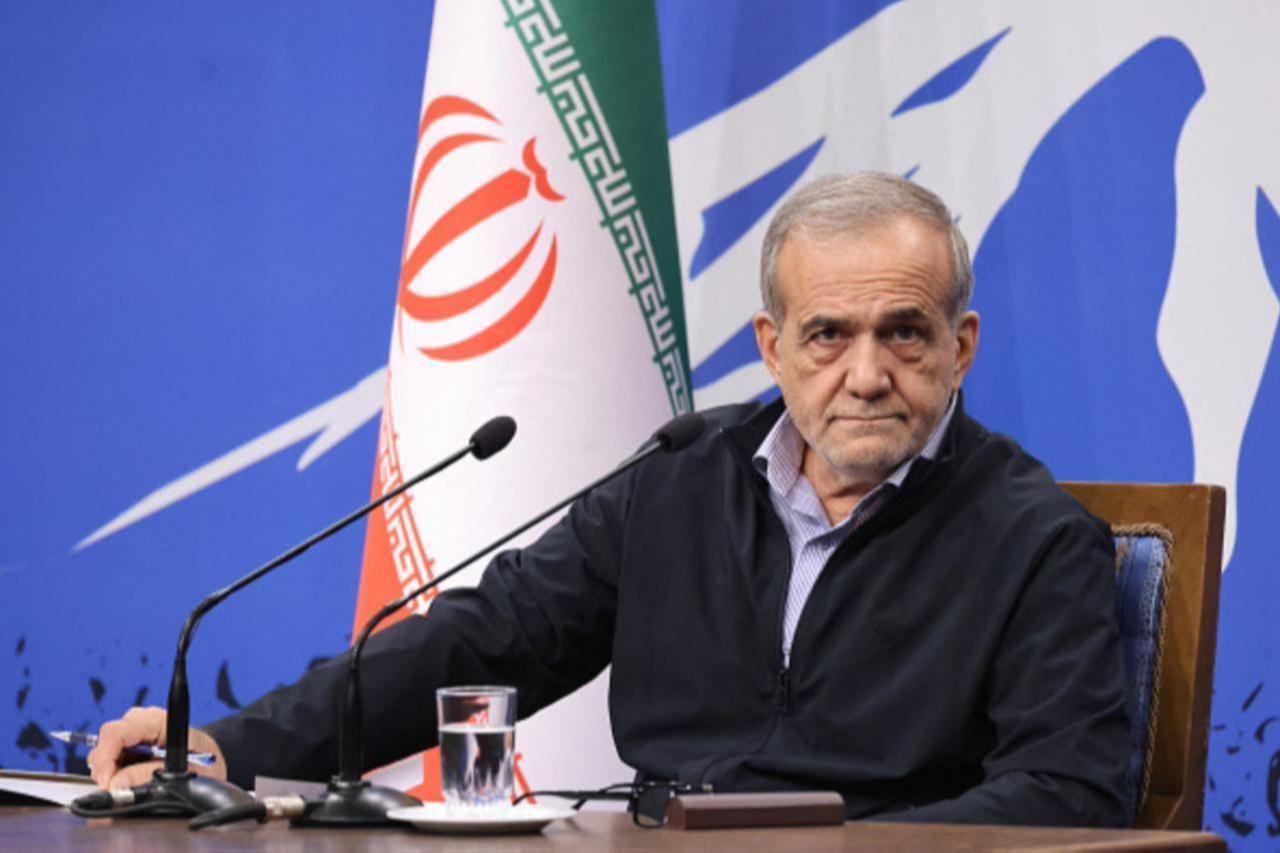
Before the Qeshm strike, Iranian President Masoud Pezeshkian had announced that the country's interim leadership council had approved suspending attacks on neighbouring states, unless strikes on Iran originated from their territory.
"I personally apologise to neighbouring countries that were affected by Iran's actions," Pezeshkian said.
But even that apology was sharply circumscribed. Pezeshkian maintained that Iran's strikes had been aimed at US military bases and installations across the region, not at Arab nations themselves, and that Tehran considered these facilities legitimate targets under its right of self-defence.
"We have not attacked our friendly and neighbouring countries; rather, we have targeted US military bases, facilities, and installations in the region," he said on X.
The US strike on the Qeshm desalination plant, and the IRGC's swift retaliation against the Jufair naval base, which hosts the US Fifth Fleet, now cast serious doubt over whether that conciliatory posture will hold. The sequence of events suggests that any Iranian restraint toward Gulf neighbours may be conditional and fragile, subject to reversal the moment Tehran perceives a new provocation.
The UAE, Kuwait, Qatar, Bahrain, and Saudi Arabia have all reported drone and missile attacks over the past week, and Emirates airline suspended all flights to and from Dubai until further notice.
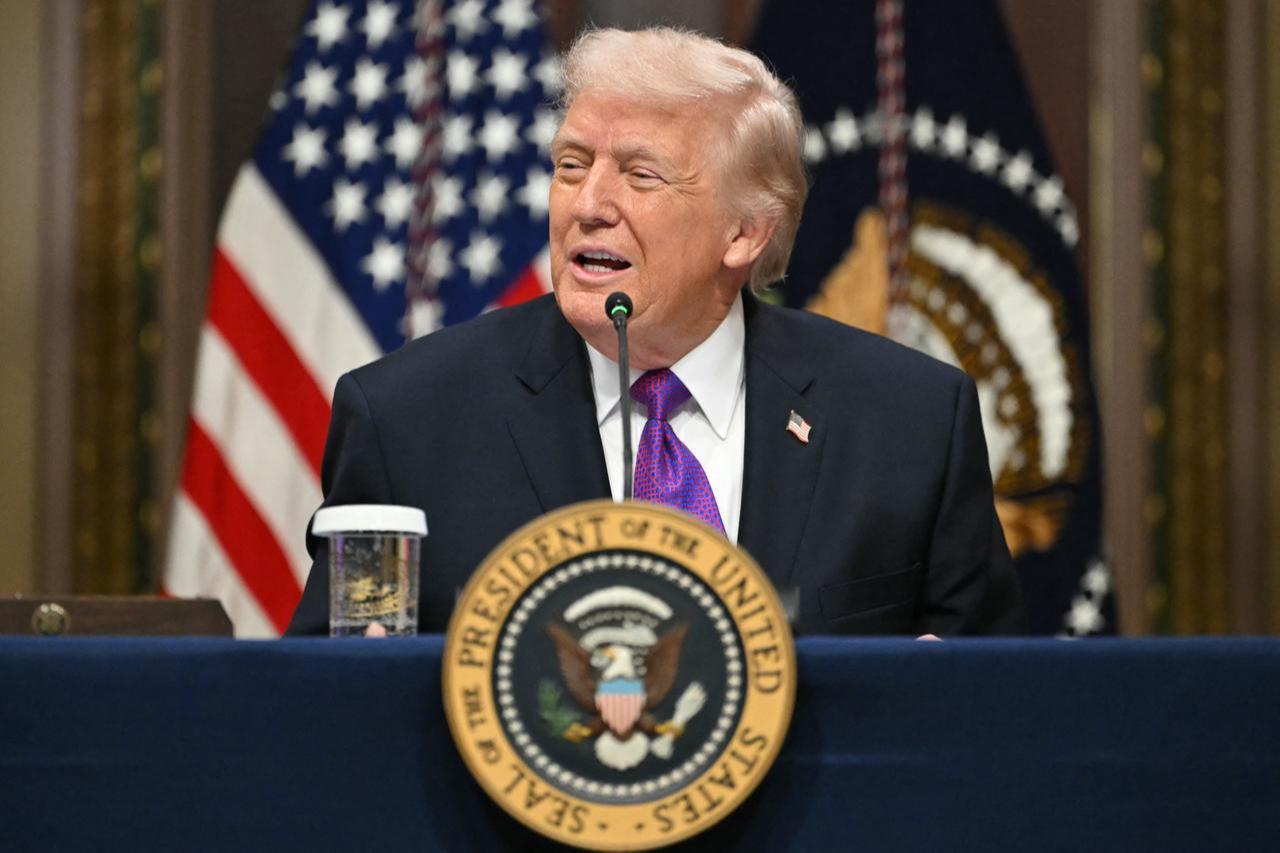
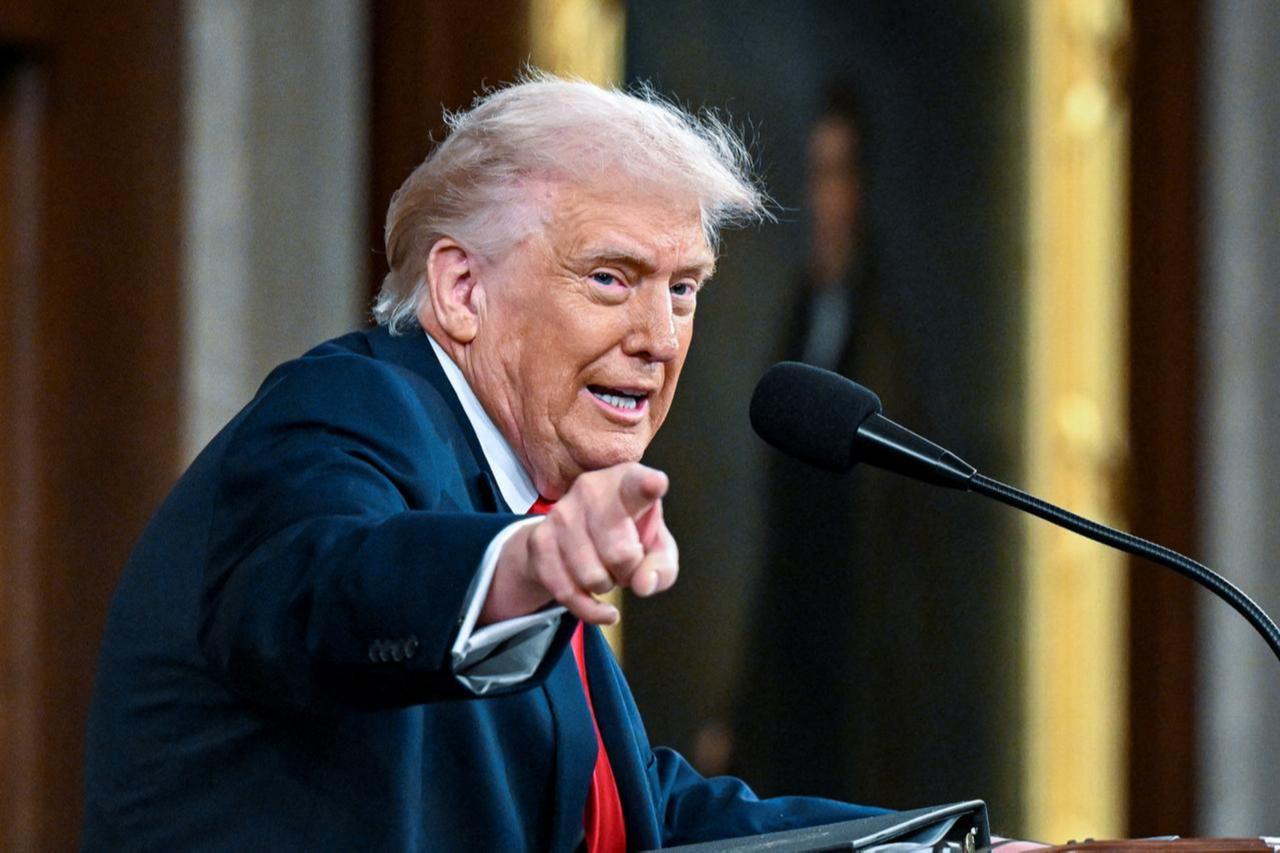
The exchange came against the backdrop of intensifying rhetoric from Washington. US President Donald Trump warned that Iran would be "hit very hard" and expanded his language to threaten groups and areas "not considered for targeting up until this moment in time."
Trump characterised Iran as defeated, saying Tehran "has apologised and surrendered to its Middle East neighbours" under relentless US and Israeli pressure. "Iran is no longer the 'Bully of the Middle East.' They are, instead, 'THE LOSER OF THE MIDDLE EAST,'" he wrote on Truth Social, adding that regional leaders had expressed gratitude for Washington's actions.
The US president reiterated his demand for Tehran's complete capitulation. "There will be no deal with Iran except UNCONDITIONAL SURRENDER!" Trump posted on Friday.
The human toll of the conflict continues to climb. Iran's UN ambassador, Amir Saeid Iravani, reported that US-Israeli attacks had killed at least 1,332 Iranian civilians and wounded thousands. Iranian strikes have killed 11 people in Israel, while at least six US service members have been killed. Trump confirmed he would attend a dignified transfer ceremony at Dover Air Force Base for the fallen soldiers.
Russian President Vladimir Putin spoke with Pezeshkian by phone, expressing condolences over civilian casualties and calling for an immediate halt to hostilities. Iran's state media reported that Pezeshkian told Putin he expected Russia to back Iran's "legitimate rights against aggression."
The deeper significance of Araghchi's statement lies in what it implies about the conflict's possible trajectory.
Analysts have noted that while Iran's recent attacks are intended to internationalise the battlefield and raise the cost for Arab states of aligning with Washington, deliberately targeting or threatening desalination infrastructure would raise those costs in a fundamentally different way, potentially pushing GCC governments to treat water security as a matter of national survival rather than collateral risk.
The Gulf states' dilemma is acute. While they host American military bases, they had told Washington that these installations would not be permitted for use in attacks on Iran. Iran's retaliatory strikes on their territory have nonetheless dragged them into a conflict they actively sought to avoid, undoing years of diplomatic de-escalation, including a hard-won rapprochement with Saudi Arabia.
Bernard Haykel, professor of Near Eastern Studies at Princeton University, speaking to the Jerusalem Post, said the Saudi red line had been crossed because Iran struck civilian infrastructure including oil installations, desalination facilities, and electricity generation.
He noted that Iran had warned Saudi Arabia it would strike if it faced an existential attack, and the Saudis had responded that if they were hit while remaining neutral, they would join forces with the Americans.
Early on Saturday, Iran's army said its navy carried out drone strikes against targets in Israel and US positions in Abu Dhabi and Kuwait, in an apparent response to the US attack on the Iranian naval vessel IRIS Dena that killed dozens of sailors.
With diplomatic prospects appearing bleak and Pezeshkian's earlier conciliatory gestures already undermined by fresh hostilities, the question now is whether Araghchi's warning about a "precedent" remains rhetoric, or whether the targeting of water infrastructure, the resource that sustains human life in one of the planet's most arid regions, becomes the next frontier in a conflict that has already engulfed much of the Middle East.


 Set as preferred source
 Set as preferred source


 1 min read
 1 min read



