Newsletters


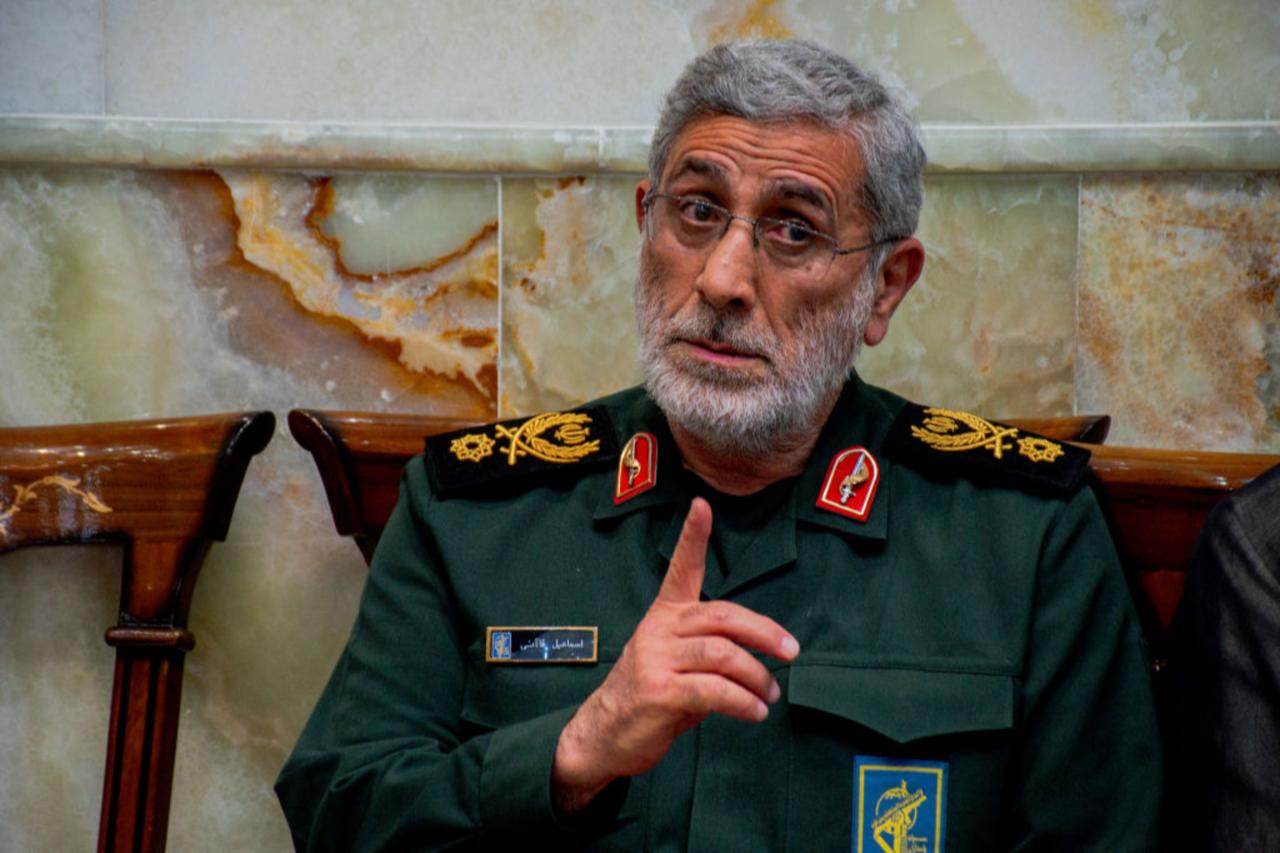


Iranian officials have denied claims that Quds Force commander Ismail Qaani was executed on accusations of spying for Israel, after reports circulated in some media outlets.
The claims emerged after speculation about intelligence leaks following attacks that killed several senior Iranian officials.
Unverified reports in some Arab media outlets claimed that Qaani had been executed after being accused of spying for Israel.
According to a report cited by France24, Qaani was allegedly arrested in Iran on espionage charges, interrogated, and later executed.
Iranian authorities did not issue an official confirmation of the reports, and uncertainty remained over their origin and accuracy.
Iran’s ambassador to Baghdad, Mohammad Kazem Al-Sadeq, rejected the allegations and said Qaani had not been executed.
“Ismail Qaani is in the field and personally directing the war,” Al-Sadeq said. Qaani had previously denied accusations that he was acting as an Israeli agent.
Speculation over intelligence leaks intensified after joint U.S.-Israeli strikes killed Iran’s supreme leader, Ali Khamenei, and other senior officials.
Questions emerged over how the locations of high-level Iranian targets had been identified. Qaani was reportedly among the last people to see Khamenei before the attack that killed him.
Reports also noted that Qaani had left locations shortly before several major attacks in recent years.
He was said to have left a building shortly before an Israeli strike in Damascus that killed Iranian Revolutionary Guard commanders, as well as before a bombardment in Lebanon that killed Hezbollah leader Hassan Nasrallah.
He was also reported to have left a building shortly before a meeting of senior Iranian military officials was targeted during the June “12-Day War.”
Ismail Qaani was born in 1957 in the Iranian city of Mashhad. He joined Iran’s Islamic Revolutionary Guard Corps after the 1979 Iranian Revolution and served during the 1980-1988 Iran-Iraq War.
Qaani held senior roles in the Quds Force for many years and was involved in operations linked to Afghanistan and Pakistan. He was placed on U.S. sanctions lists and has been described as a key figure in Iran’s relations with regional militia groups.
Qaani became commander of the Quds Force in January 2020 after the U.S. killed his predecessor Qassem Soleimani in an airstrike in Baghdad.
Although considered a lower-profile figure than Soleimani, he has played an important role in Iran’s regional strategy since taking the position.


 Set as preferred source
 Set as preferred source


 1 min read
 1 min read