Newsletters


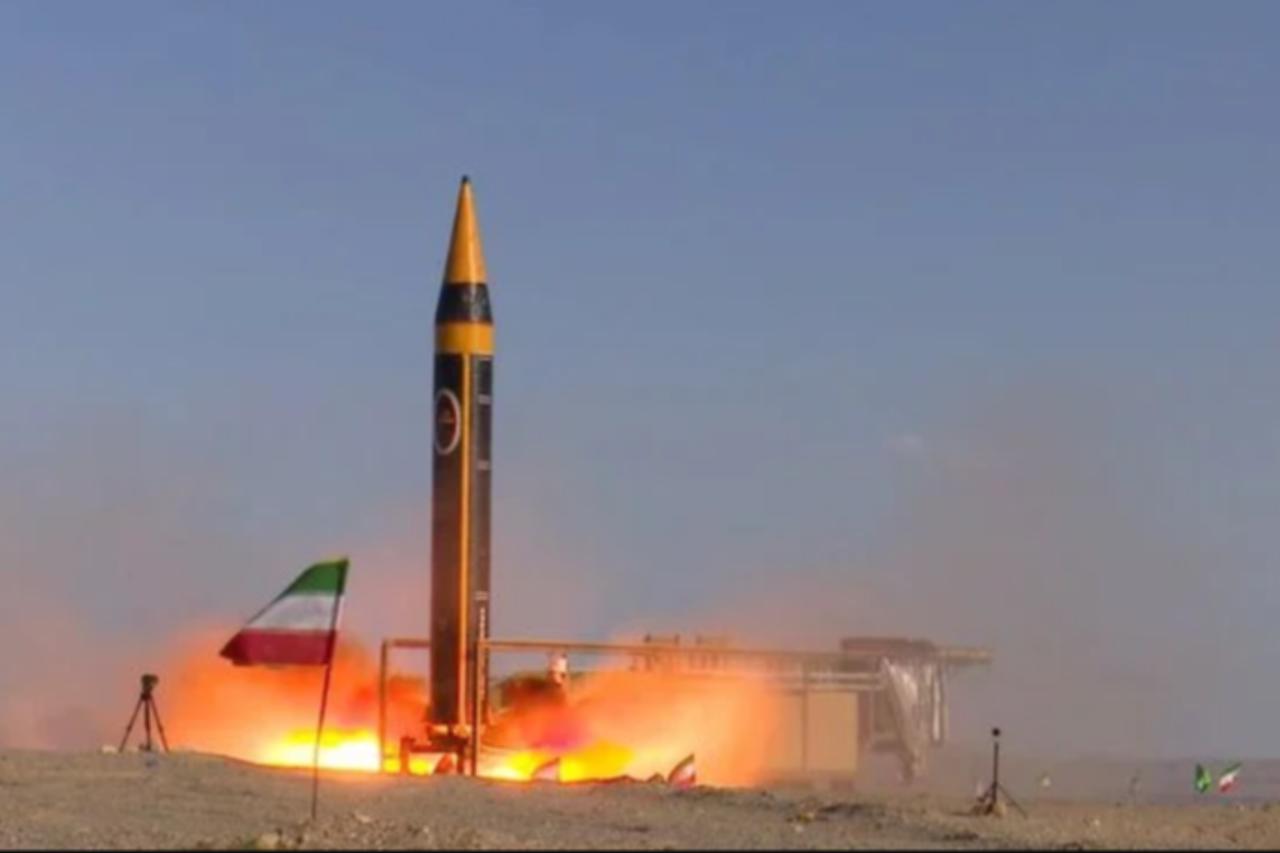


Iran launched a fresh wave of ballistic missiles toward Tel Aviv late on March 5, with images and videos captured by residents pointing to the use of the Khorramshahr-4, one of the heaviest and most advanced weapons in Tehran's missile arsenal. Fires and damage were reported in at least three locations in and around Tel Aviv as the conflict between Iran and the US-Israeli coalition entered its sixth day.
Observers tracking the strikes said evidence of submunition impacts across central Israel indicated the Khorramshahr-4 had been deployed, a finding consistent with the missile's known capability to carry a cluster warhead that disperses multiple smaller explosives over a wide area. The identification was based on the distinctive pattern of scattered damage visible in images circulating from the scene, a hallmark of the weapon's design.
The Islamic Revolutionary Guard Corps confirmed the deployment in a statement, saying the Khorramshahr-4 missiles were launched during the 19th wave of what it calls "True Promise Operation," with warheads weighing 1,000 kilograms aimed at central Tel Aviv, Ben Gurion Airport, and what it described as the 27th Airbase of the Israeli Air Force.
Israel's military disputed those claims, stating that all Iranian ballistic missiles launched overnight were intercepted by air defenses, though one missile fired in the morning struck an open area in a central town. The IDF also pointed out that no 27th Squadron exists in the Israeli Air Force, and the IRGC's reference likely points to Airbase 27, also known as Lod Airbase, which was permanently closed in 2010.
Analysts noted that by claiming to target Ben Gurion Airport, the IRGC appeared to be signaling an effort to disrupt Israel's main international gateway, mirroring the impact that Western airstrikes have had on Iranian airports and civilian infrastructure inside Iran.
The Khorramshahr-4, also known as Kheibar, stands as the most powerful confirmed ballistic missile in Iran's inventory. First unveiled in May 2023, the missile has a reported range of approximately 2,000 kilometers, measures 13 meters in length, and carries a warhead weighing about 1,500 kilograms. Iranian officials claim it can reach speeds of Mach 16 outside the atmosphere and Mach 8 within it.
What makes the weapon particularly challenging for defenders is its cluster munition configuration. Previous IDF assessments have established that the Khorramshahr-4's warhead can open during descent at an altitude of roughly 7 kilometers, releasing approximately 20 submunitions, each carrying about 2.5 kilograms of explosives, across a diameter of some 16 kilometers.
It is this wide dispersal pattern that observers identified in the aftermath of the March 5 strikes on Tel Aviv.
The missile is also equipped with maneuverable reentry vehicles featuring control fins and satellite navigation, and its hypergolic fuel system allows launch preparation in under 12 minutes, significantly reducing the window for pre-launch detection.
IRGC Aerospace Division commander General Amir Ali Hajizadeh has previously claimed a single Khorramshahr-4 could strike up to 80 separate targets through its submunition capability.
The Khorramshahr missile family traces its origins to North Korean Hwasong-10 technology and has been developed through four successive generations since its first test in 2017. The name "Kheibar" references the Battle of Khaybar, a seventh-century military engagement that carries pointed historical symbolism in the context of the Israeli-Iranian rivalry.
 1 min read

The deployment of the Khorramshahr-4 with its cluster warhead comes as Iran's broader missile strategy has visibly shifted since the opening of hostilities on February 28.
Military analysts have observed that Iran has moved from large coordinated barrages of dozens of missiles to smaller, more frequent volleys arriving every hour or two, a change the IDF attributes to continuous Israeli and American strikes on mobile launchers inside Iranian territory. The head of US Central Command has said Iranian ballistic missile attacks have dropped by 90 percent since the war began.
The turn toward the Khorramshahr-4 and its submunition payload suggests Tehran is seeking to maximize the destructive footprint of each individual launch rather than relying on the sheer volume of fire that characterized the war's opening hours.


 Set as preferred source
 Set as preferred source



 1 min read