Sign in
 Newsletters


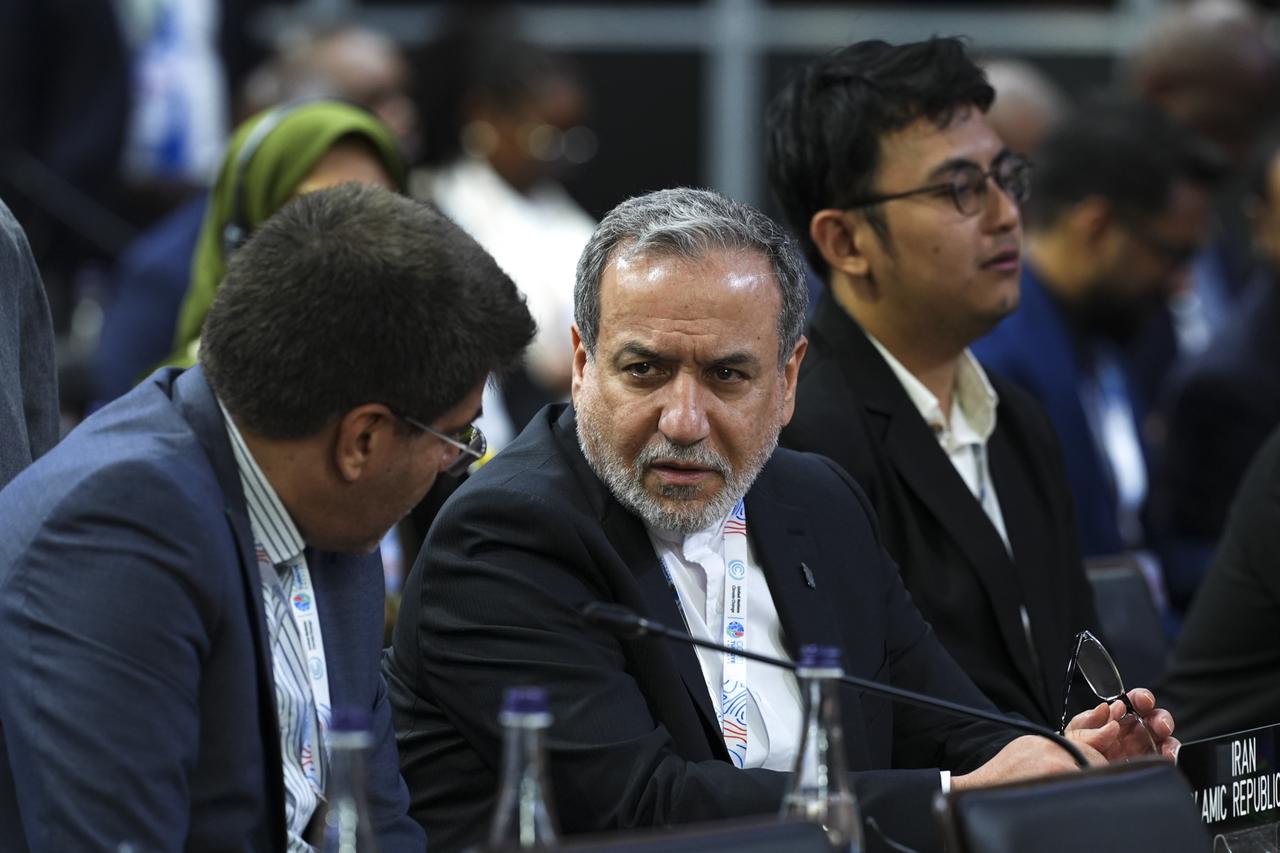


Iran remains committed to diplomacy and peaceful solutions despite what it describes as U.S. aggression and economic pressure, Foreign Minister Abbas Araghchi said Monday, as another senior Iranian official warned that an agreement with Washington remained out of reach under current conditions.
Addressing the 30th meeting of foreign ministers of the Economic Cooperation Organization (ECO) in Islamabad, Pakistan, Araghchi accused the United States of undermining diplomatic efforts through military operations, economic restrictions and threats.
“Unfortunately, the United States chose a completely different path,” Araghchi said, according to a transcript released by Iran's Foreign Ministry.
He accused Washington of aggression, targeted assassinations, economic pressure and imposing a blockade in violation of international law and the United Nations Charter.
Araghchi maintained that Tehran had remained committed to diplomatic engagement over the past two years and sought constructive relations with neighboring countries.
His remarks came as negotiations between Iran and the United States remained stalled, with disagreements over Tehran's conditions for an agreement and navigation through the Strait of Hormuz continuing to complicate efforts to resolve the conflict.

Separately, Iranian Deputy Foreign Minister Kazem Gharibabadi said Sunday that Tehran could not reach an understanding with Washington under current circumstances, accusing the United States of using diplomacy to gain time for another attack.
In an interview with Iranian television, Gharibabadi said Washington had sought to postpone the implementation of some of Iran's conditions.
He said the United States "postponed the implementation of some conditions to later stages, which means that an understanding cannot be reached under these circumstances."
"The United States has proven that it cannot be trusted," he said, adding that Washington must provide guarantees that all Iranian conditions would be fulfilled.
Gharibabadi also said Tehran had shortened its proposed timetable for reopening the Strait of Hormuz.
"Iran's plan to reopen the Strait of Hormuz has been reduced from 7 days to 2 days," he said.
The comments highlighted Tehran's continued insistence on guarantees and the fulfillment of its demands before an agreement could be reached.
During his address in Islamabad, Araghchi emphasized that Iran had no inherent dispute with its neighbors and wanted to strengthen friendly and constructive relations across the region.
“The territory, airspace and facilities of countries in the region must not become a platform for attacks against one another,” he said.
Araghchi maintained that Iranian military operations had targeted only facilities and bases used by those attacking Iran, arguing that such actions should not be interpreted as attacks against neighboring governments or their populations.
He called for an inclusive, regionally led dialogue to establish security arrangements based on nonaggression and prevent third countries from using regional territory to launch attacks.
The foreign minister also argued that sanctions had strengthened the Iranian people's determination to defend their rights and resist what Tehran considers unlawful demands.
Turning to economic cooperation, Araghchi identified trade, transportation and energy as the “three strategic pillars” of cooperation within the ECO.
He welcomed the establishment of a technical negotiating committee to revise the ECO Trade Agreement (ECOTA), urging member countries to advance negotiations and encourage broader participation.
“A modern, inclusive and practical trade agreement could expand regional commerce and strengthen economic resilience,” he said.
Araghchi also called for a regional mechanism to protect energy flows and maintain reliable supplies amid geopolitical disruptions.
He cited the effects of U.S. and Israeli military operations on regional energy security, arguing that stronger cooperation was necessary to safeguard essential infrastructure and trade routes.
Araghchi also addressed the situation in the Palestinian territories, accusing Israel of committing genocide in Gaza and condemning settlement expansion and the displacement of Palestinians in the occupied West Bank and East Jerusalem.
He called for international action to ensure the unhindered delivery of food, medicine, temporary shelters and materials needed to restore essential infrastructure in Gaza.
“This is a time for practical action, collective responsibility and an end to silence and indifference,” he said.
The two-day ECO ministerial meeting began Sunday in Islamabad with preparatory discussions among senior officials from member countries.
Pakistan, which holds the organization's chairmanship for 2026-2027, is seeking to expand regional connectivity and economic integration under the theme “Reviving Regionalism for a Resilient ECO.”
Founded by Türkiye, Iran and Pakistan in 1985, the organization promotes regional economic development, trade and investment.
Its other members are Afghanistan, Azerbaijan, Kazakhstan, Kyrgyzstan, Tajikistan, Turkmenistan and Uzbekistan.
Araghchi thanked Pakistan and the ECO Secretariat for organizing the meeting and hosting the Iranian delegation.


 Set as preferred source
 Set as preferred source


 1 min read
 1 min read