Newsletters


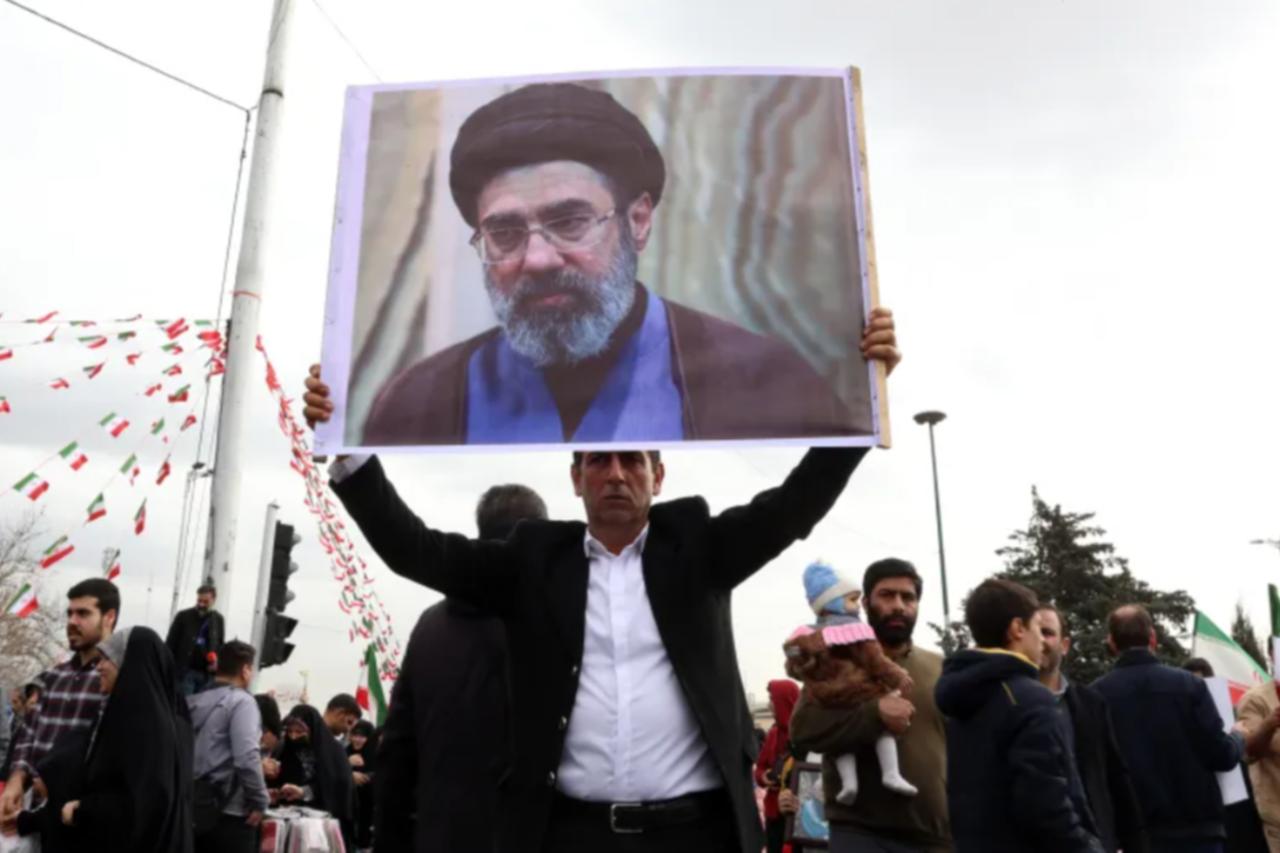


Iran's Assembly of Experts has named Mojtaba Khamenei as the country's new supreme leader, making the 56-year-old cleric and son of the late Ali Khamenei the third person to hold the Islamic Republic's most powerful office since its founding in 1979.
The appointment was confirmed on Sunday by Iran's Fars News Agency, which is affiliated with the Islamic Revolutionary Guard Corps, and by the semi-official Tasnim News Agency, both reporting that the 88-member clerical body had chosen the younger Khamenei by what the Assembly described as a "decisive vote."
In a formal statement, the Assembly of Experts said it had acted swiftly and without hesitation despite what it called "acute wartime conditions and direct threats by enemies against this institution," including airstrikes on the Assembly's own secretariat offices that killed several staff members and security personnel. The statement said the Assembly had begun preparations for an extraordinary session immediately after learning of the elder Khamenei's death, specifically to ensure the country would not face a leadership vacuum.
The Assembly called on all Iranians, "especially the elites and intellectuals of the seminaries and universities, to pledge allegiance to the new leadership and preserve unity around the axis of the velayat," the theological principle of clerical guardianship that underpins the Islamic Republic's system of government.

The path to Mojtaba Khamenei's appointment was neither smooth nor uncontested. According to Iran International, IRGC commanders began pressuring Assembly of Experts members to vote for Mojtaba Khamenei as early as March 3, through what the outlet described as repeated contacts and political pressure. A first electoral session was held online that day, with members describing the atmosphere as "unnatural" and those who raised objections given limited time to speak before discussion was cut off and a vote was held.
That session was disrupted when US and Israeli bombs struck the Assembly of Experts office in the city of Qom after votes had been cast but before the count was completed. A second session was then scheduled for March 5, reportedly managed from a location near the shrine of Fatima Masumeh in Qom, in an apparent effort to deter further airstrikes due to the site's religious significance.
The formal announcement was further delayed over security fears that Mojtaba Khamenei could himself become a target once his name was made public, according to the New York Times. Earlier on Sunday, before the official confirmation, Assembly of Experts member Hosseinali Eshkevari had strongly hinted at the outcome in a video broadcast on Iranian media, declaring that "the name of Khamenei will continue" and that a vote had been cast.
Mojtaba Hosseini Khamenei, born in Mashhad in 1969, has spent much of his adult life as one of the most powerful yet least visible figures in the Islamic Republic. He has never given public lectures, Friday sermons, or political addresses, to the point that many Iranians have never heard his voice, despite knowing for years that he was rising within the theocratic establishment.
His political influence grew through the Office of the Supreme Leader, where analysts and think tanks have described him as a gatekeeper and principal manager of his father's affairs. He served in the IRGC's Habib Battalion during the Iran-Iraq War from 1987 to 1988, forging relationships with figures who went on to occupy senior positions in the security and intelligence apparatus. He later studied theology in Qom under archconservative clerics, including the late Mohammad-Taqi Mesbah Yazdi.
His religious credentials have been a point of contention, since he holds the mid-level clerical rank of hojatoleslam rather than the higher rank of ayatollah. However, his father faced the same issue when he assumed the supreme leadership in 1989, and the constitution was amended to accommodate him, setting a precedent that may now apply to his son.
In November 2019, the US Treasury Department placed Mojtaba Khamenei under sanctions, accusing him of working to advance his father's regional ambitions and domestic repression. He has also been linked to alleged election interference and the violent suppression of pro-democracy protests in 2009, accusations that have trailed him for more than a decade.
The appointment carries a particular irony. According to Iran International, citing sources within the Assembly of Experts' offices, the elder Khamenei was "not pleased with the idea of his son's leadership and never allowed this issue to be raised during his lifetime," fearing it would impose a monarchy-like structure on the Islamic Republic, the very system the 1979 revolution was waged to overthrow.
Before his death, Ali Khamenei had reportedly nominated three senior clerics as potential successors, identified by the New York Times as Gholam-Hossein Mohseni-Ejei, Asghar Hijazi, and Hassan Khomeini. Mojtaba was not among them.
Yet in the chaos following his father's assassination on February 28, the IRGC, long considered the younger Khamenei's strongest institutional ally, moved to install him regardless. The Assembly's own statement acknowledged the extraordinary circumstances, noting that the body acted to prevent the country from being left in a "leadership vacuum," despite constitutional provisions under Article 111 for a temporary council to govern in the interim.
That three-member interim council, composed of President Masoud Pezeshkian, judiciary chief Mohseni-Ejei, and senior cleric Alireza Arafi, had been managing the functions of the supreme leader's office since the elder Khamenei's killing. The Assembly's statement thanked the council members for their service.


 Set as preferred source
 Set as preferred source


 1 min read
 1 min read