Newsletters





Iran has shipped about 9 million barrels of crude oil from floating storage in the Gulf of Oman since a U.S. naval blockade took effect on April 13, according to vessel-monitoring service TankerTrackers.
Another 2 million barrels departed on April 12, one day before the blockade began, tracker data showed.
The U.S. blockade, imposed after talks with Iran collapsed, aims to prevent ships from traveling to and from Iranian ports.
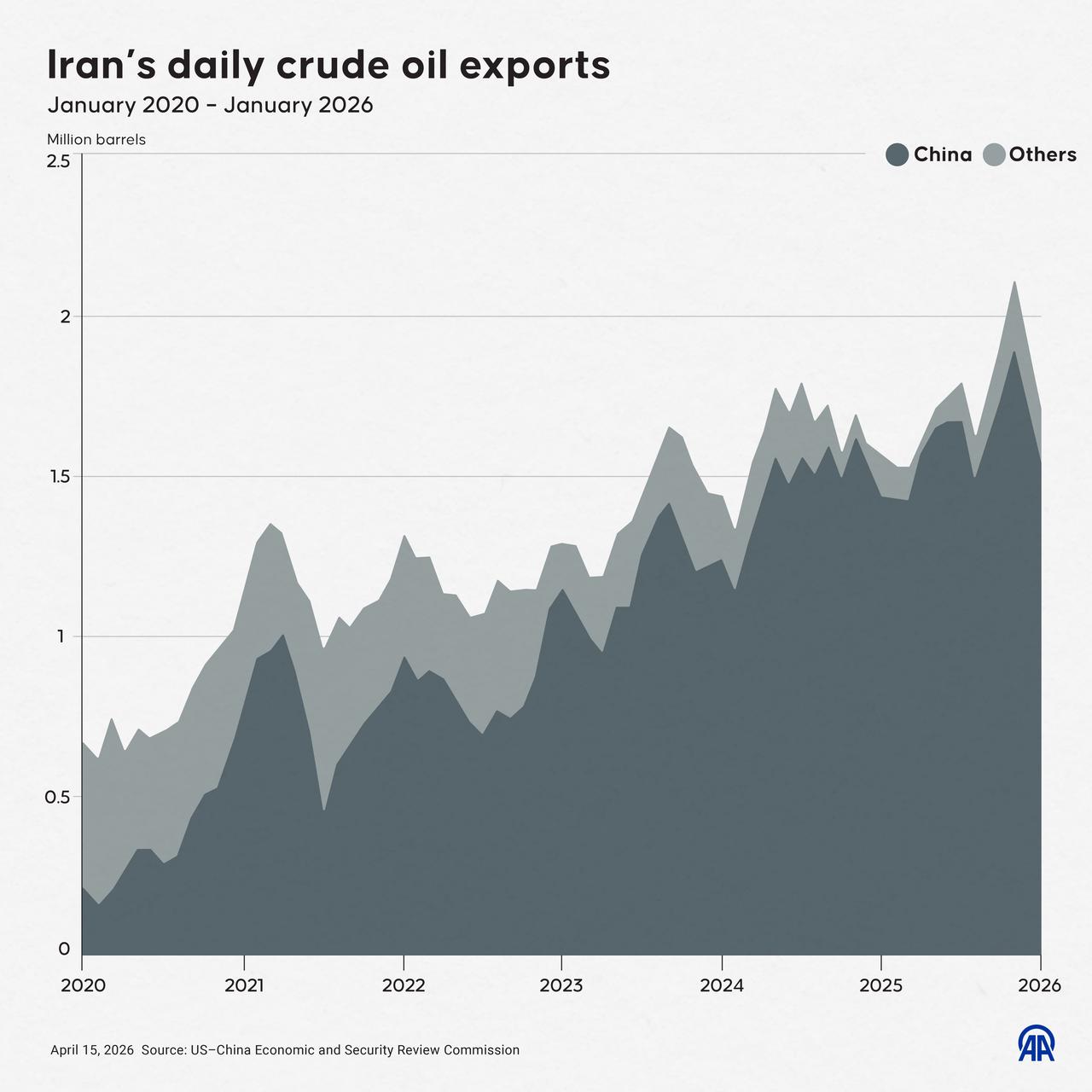
The blockade has targeted roughly 2 million barrels per day of Iranian oil exports, most of which normally head to China, raising stakes for both Tehran and global energy markets.
Since the blockade began, multiple vessels have reversed course and shipping traffic through the Strait of Hormuz has slowed sharply, while traders and shipowners have closely monitored whether Iran can sustain exports through floating storage, alternative routes, or shadow-fleet transfers.

Commercial shipping through the Strait of Hormuz remained active over the past 24 hours, according to shipping data compiled by Anadolu.
At least 11 tracked passages were recorded as of 9 a.m. GMT, including movements both into and out of the Gulf.
One sanctioned tanker, Rich Starry, appeared to be traveling in both directions, suggesting it may have reversed course during the period.
Sanctions and vessel records indicated that at least four ships in the sample were under U.S. sanctions: Rich Starry, RHN/Hong Lu, G Summer and Zaynar 2.

U.S. Central Command said Wednesday that no vessel has breached the blockade since it began Monday.
“Yesterday, an Iranian-flagged cargo vessel tried to evade the U.S. blockade after leaving Bandar Abbas, exiting the Strait of Hormuz, and transiting along the Iranian coastline. The guided-missile destroyer USS Spruance successfully redirected the vessel, which is heading back to Iran,” CENTCOM said.
The command added that 10 vessels had been turned around since the blockade began.
“Zero ships have broken through since the start of the U.S. blockade on Monday,” it said.


 Set as preferred source
 Set as preferred source


 1 min read



 1 min read