Newsletters


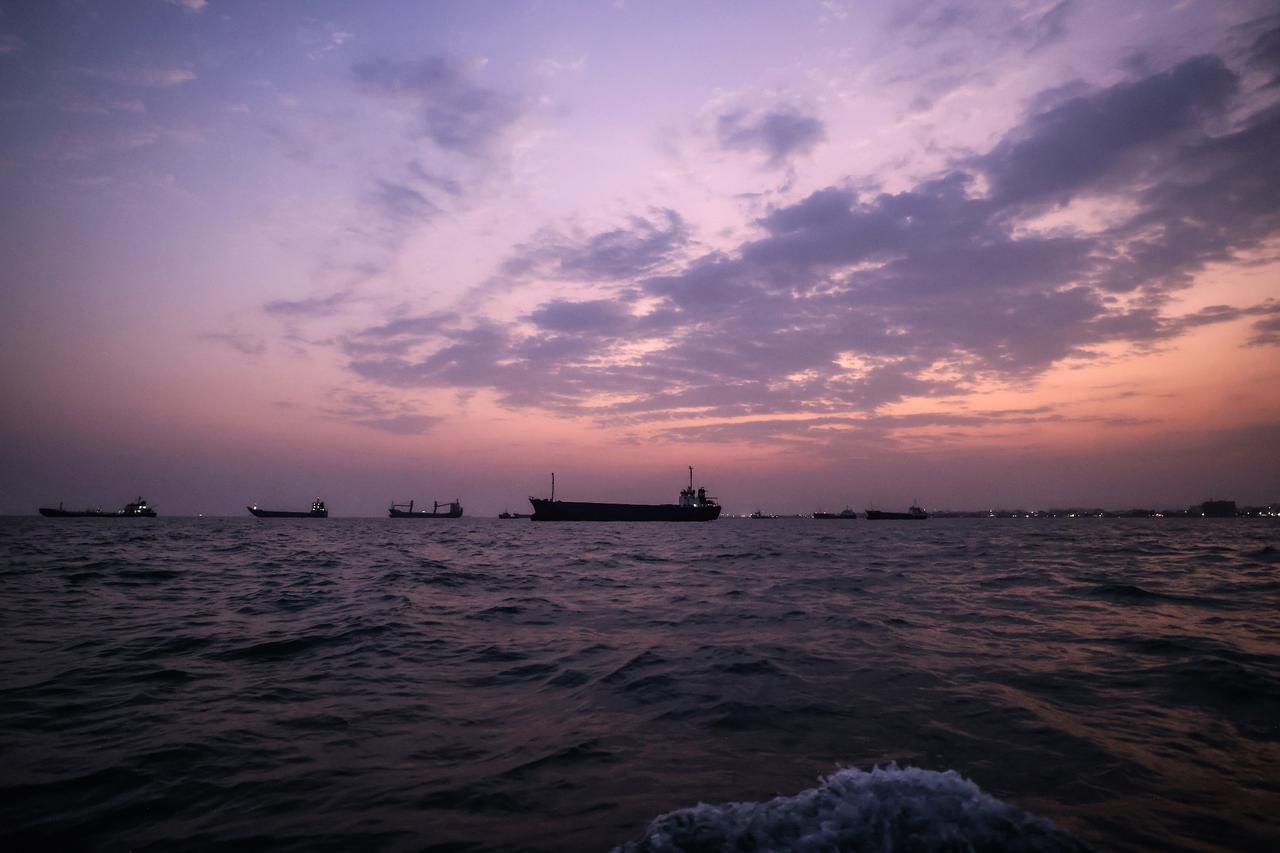


The U.S. campaign to throttle Iran's economy through an oil export blockade and sanctions enforcement is growing increasingly difficult for Tehran to withstand, three senior Iranian sources told Reuters, even as Iranian officials warned of a "more painful" military response to any further U.S. attacks.
Six months after U.S.-Israeli strikes on Iran launched the war, the conflict appears to be at a stalemate.
A preliminary ceasefire reached in June has unraveled, and diplomatic efforts to restart the peace process have made little progress.
Iran's Parliament Speaker Mohammad Bagher Ghalibaf said Sunday that alongside the military front, Iran's main battle is now over production and people's livelihoods, citing sharp currency fluctuations, inflation, unemployment and market management as major challenges.
He said Iranians could tolerate hardship but not mismanagement or inaction, and expected the government to act quickly.
Iran's Economy Minister Ali Madanizadeh said Tehran plans to respond to U.S. economic pressure with reforms and rejected the idea that sanctions would change the country's course, according to state media.
"They speak of economic pressure and isolation, of breaking off financial ties and they think that by pressuring the economy of a country they can change the decisions of its people," Madanizadeh said.
"I have to clarify one point: The responsibility of reforming Iran's economy is with its government and people, not with the U.S. Treasury," he added.
Economy Ministry Deputy Morteza Zamanian said the ministry's "Economic War Headquarters" is doubling down on efforts to resolve problems caused by the war, according to the semi-official Tasnim news agency.

Iran, the third-largest producer in OPEC, exported 90% of its crude via its Kharg Island hub before the war.
Flows have been disrupted since a U.S. blockade of Iranian oil exports began in mid-April.
U.S. Central Command (CENTCOM) said on the social media platform X that, as of Sunday, it had redirected 92 commercial vessels, disabled three and boarded two to ensure strict compliance with the blockade, adding that a U.S. Air Force F-35A stealth fighter jet was patrolling regional waters.
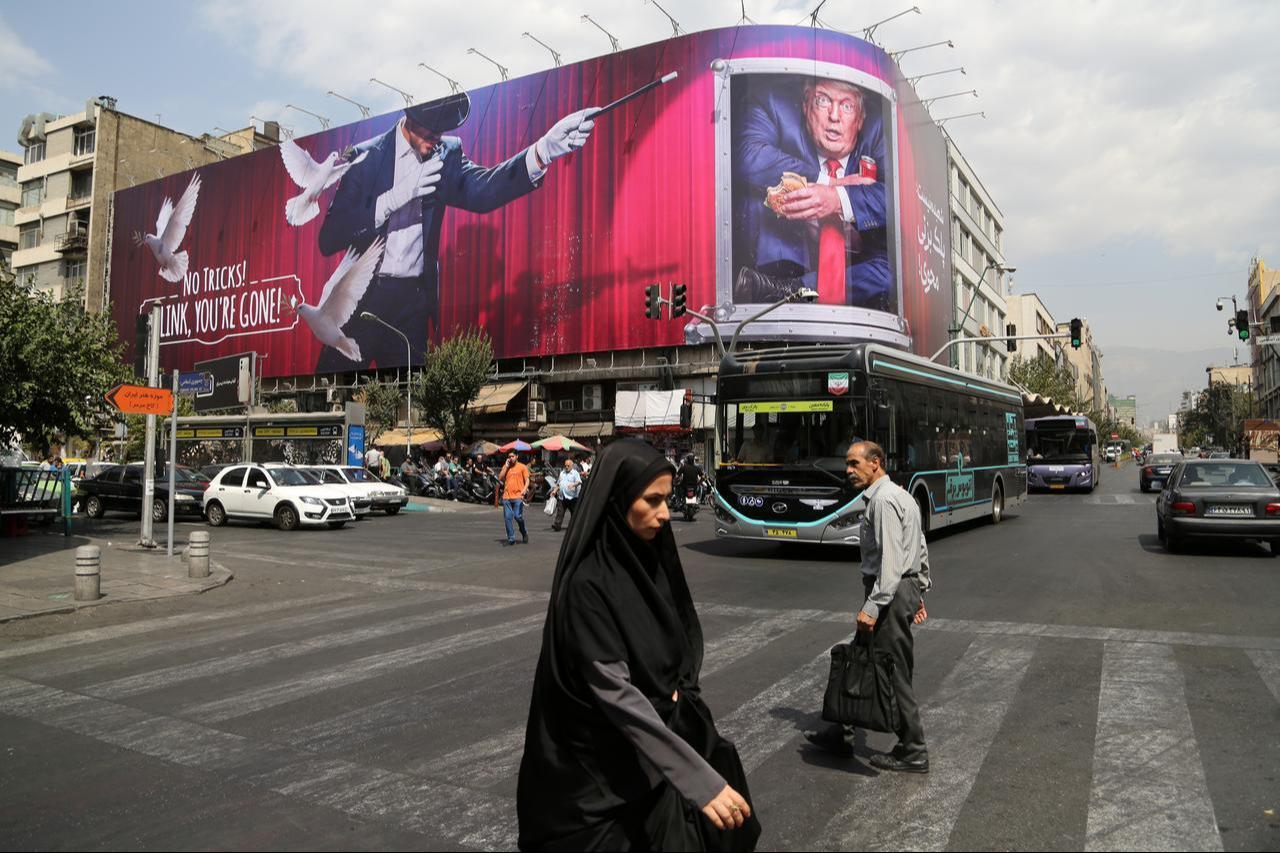
On Aug. 31, U.S. President Donald Trump posted a one-line social media message accompanied by an AI-generated video depicting Kharg Island being "blown to smithereens."
Iranian authorities have vowed a strong response if the island is attacked. Iran's Oil Minister Mohsen Paknejad said in a state television interview that the island had been hit around 550 times in previous months but continued operating.
Iran has also imposed a blockade on the Strait of Hormuz, pushing up global fuel prices ahead of U.S. midterm elections in November.
U.S. Energy Secretary Chris Wright disputed the effectiveness of Iran's blockade, telling CNN that transits through the strait are averaging more than 9 million barrels a day.
"With the access pipelines that go around the strait, we're probably two-thirds or more of pre-conflict flows. So Iranians are still causing trouble, but the United States Navy is winning that battle," Wright said.
Following a pause in military action for much of August, tit-for-tat strikes resumed over the weekend.
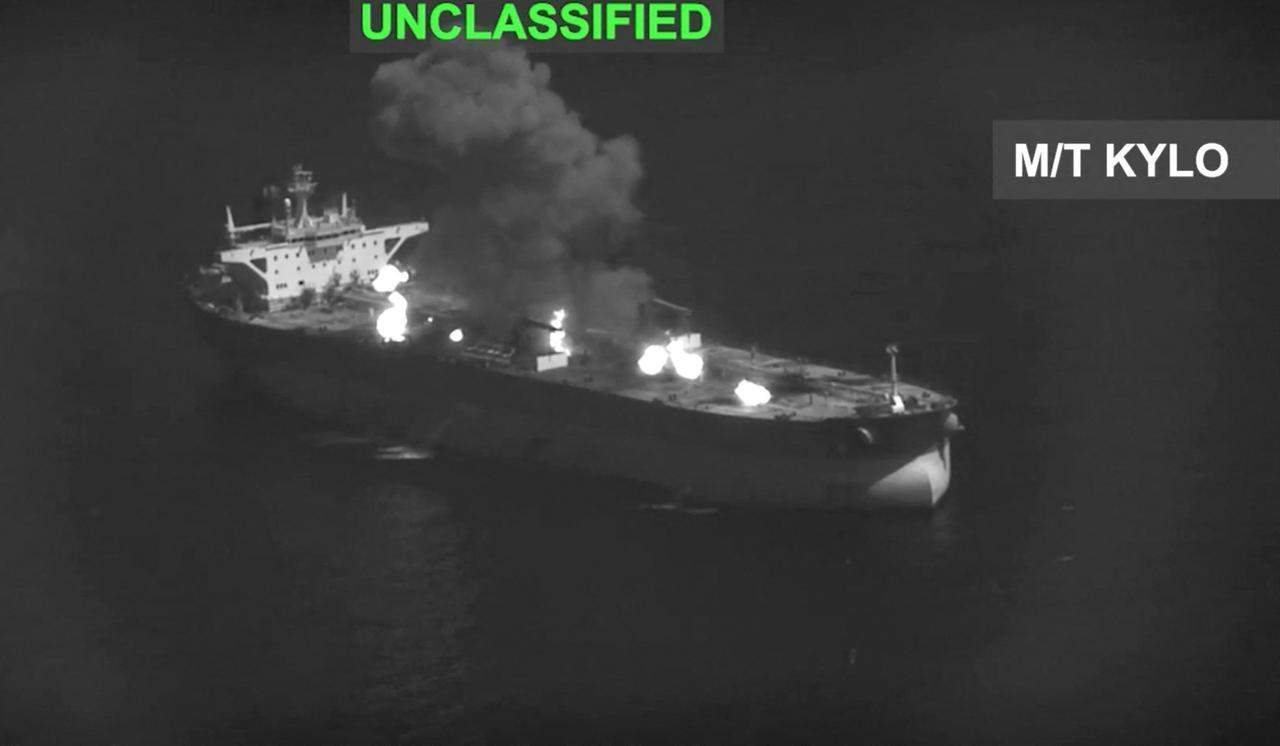
U.S. Central Command said it struck three Iranian tankers on Saturday, including one off the coast of Kharg Island, after Iran's Islamic Revolutionary Guard Corps (IRGC) launched ballistic missiles at two U.S. Navy ships, an aircraft carrier and a destroyer, that CENTCOM said failed to hit their targets.
CENTCOM said the three tankers it struck were "part of a multibillion-dollar shadow network that funds the IRGC and its regional proxies."
Video released by the U.S. military showed large fireballs after the strikes.
Iran's Revolutionary Guards said their naval forces "targeted three oil tankers on the unauthorized route of the Strait of Hormuz and three vessels affiliated with the child-killing America in other areas," warning ships against transiting the waterway via routes not approved by Tehran.
Iran's Guards separately said they attacked a U.S. naval drone attempting to enter the strait, a claim CENTCOM spokesman Capt. Tim Hawkins called "a complete lie."
Iran's Foreign Ministry condemned the U.S. strikes on its oil tankers as "illegal and aggressive actions."
CENTCOM Commander Adm. Brad Cooper said after the exchange: "If you shoot at two of our ships, we will impose an even higher economic cost, taking out three of yours."
Ghalibaf, who has served as Iran's chief negotiator in talks to end the war, said Sunday the U.S. should understand the rules have changed "before it is too late."
"From now on, any attack against Iran's interests and security will receive a faster, heavier and more painful response," Ghalibaf said in a speech carried by state media.
Mohsen Rezaei, secretary of Iran's Supreme National Security Council, said a restricted zone would be announced outside the Strait of Hormuz in the coming days, extending from the U.S. Navy's blockade line and including areas of the Persian Gulf.
"Any ship entering this new zone will be placed on the sanctions list" of Iran, Rezaei told state television, though he provided few further details.


 Set as preferred source
 Set as preferred source


 3 min read