Newsletters


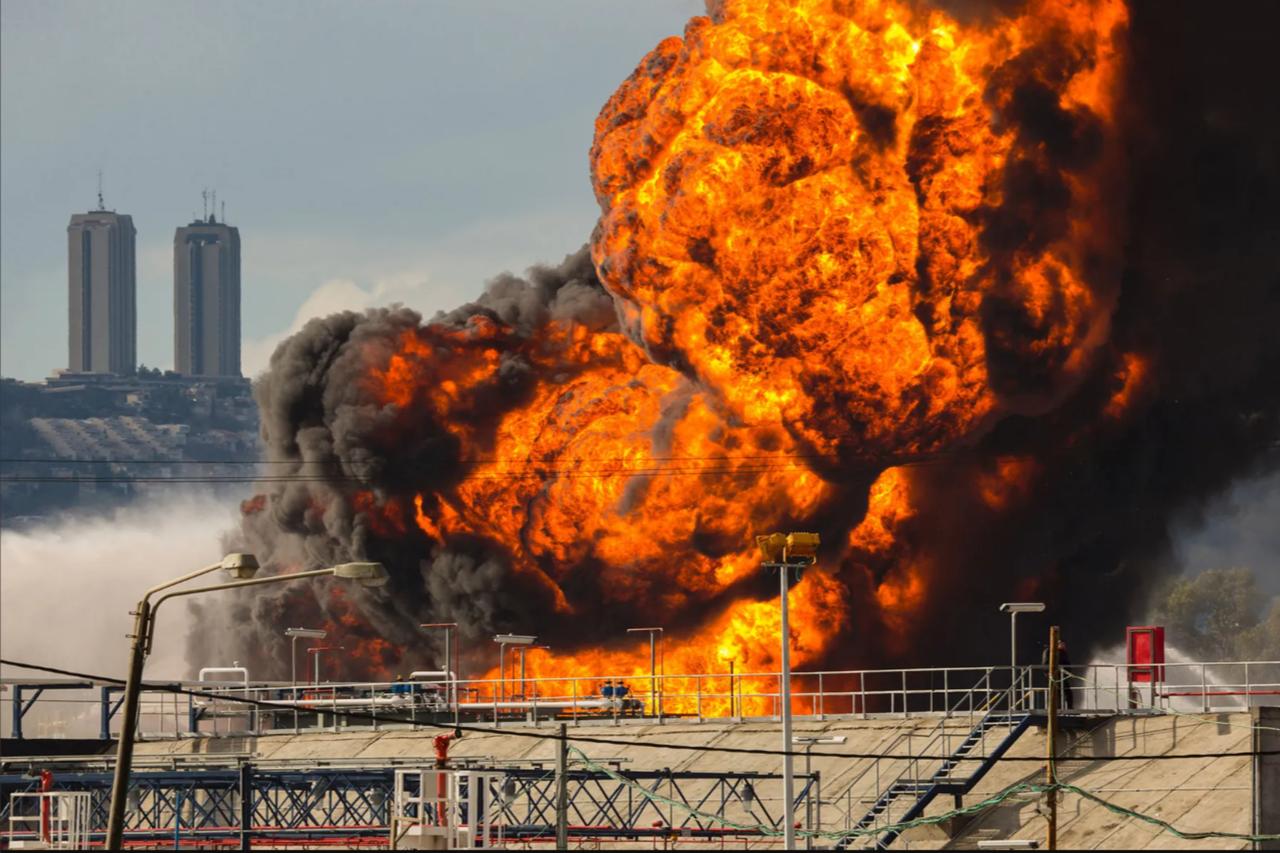


Iranian ballistic missiles struck oil refineries and multiple sites in the northern Israeli city of Haifa on Thursday, sparking fires and knocking out power across the adjacent Krayot suburbs in what Israeli media described as the ninth Iranian missile barrage of the day.
Medics responded to reports of an impact in the Krayot suburbs of Haifa following the attack, though it was not immediately clear whether the reports referred to a direct missile hit or falling fragments from an interception.
Israeli Channel 12 reported that the latest barrage specifically targeted oil refineries in the northern port city, while the daily Yedioth Ahronoth confirmed that cluster munitions struck multiple sites across the Haifa area. Israel's public broadcaster reported fires burning in the city and power outages rippling through the Krayot district in the barrage's aftermath.
No injuries were reported in the day's ninth Iranian missile salvo, though impacts and falling fragments were spotted across the Haifa area.
The Bazan Group refinery complex in Haifa Bay, Israel's largest oil refining facility, has become a recurring target throughout the conflict. In 2024, the company supplied 65 percent of Israel's diesel fuel for transportation, 59 percent of its gasoline, and 52 percent of its kerosene.
The sprawling complex, with its distinctive cooling tower looming over the densely populated bay area, has for years drawn warnings from residents, environmental activists, and military planners about the catastrophic consequences of a direct hit.
The facility has already endured significant damage in the current war. The Bazan Group sustained damage to conduit piping from Iranian attacks at the outset of hostilities, requiring it to shut down some facilities.
On March 7, the IRGC claimed it struck the refinery using Kheibar Shekan solid-fuel ballistic missiles in retaliation for US-Israeli strikes on an oil depot in Tehran. During the Twelve-Day War with Iran in June 2025, all of Bazan's facilities were temporarily shut down after an Iranian missile strike killed three employees on site.
 1 min read

Thursday's attack continued a pattern that has come to define Tehran's strategy against Israeli population centers. About half the ballistic missiles launched by Iran at Israel in the current war have carried cluster bomb warheads, according to the Israeli Military.
The weapons, which burst open at high altitudes and scatter dozens of smaller bomblets across areas as wide as 10 kilometers, present a challenge that no missile defense system can fully neutralize.
Chaim Rafalowski, disaster management coordinator of Magen David Adom, Israel's national emergency medical service, described the operational reality of responding to such weapons: each missile creates numerous simultaneous emergencies rather than a single blast site, with impacts scattered across neighborhoods and towns.
Each submunition weighs roughly two and a half kilograms, and unexploded bomblets remain hazardous on the ground long after civilians leave their shelters.
By the tenth day of the war, Iran had fired a total of 300 missiles at Israel, of which nearly half carried cluster submunitions. The use of cluster munitions is banned under the 2008 Convention on Cluster Munitions, an international treaty signed by over 100 nations, though neither Iran, Israel, nor the United States is a signatory.
Amnesty International previously condemned Iran's use of these weapons against residential areas during the 2025 Twelve-Day War, calling them inherently indiscriminate.


 Set as preferred source
 Set as preferred source




 1 min read