Newsletters


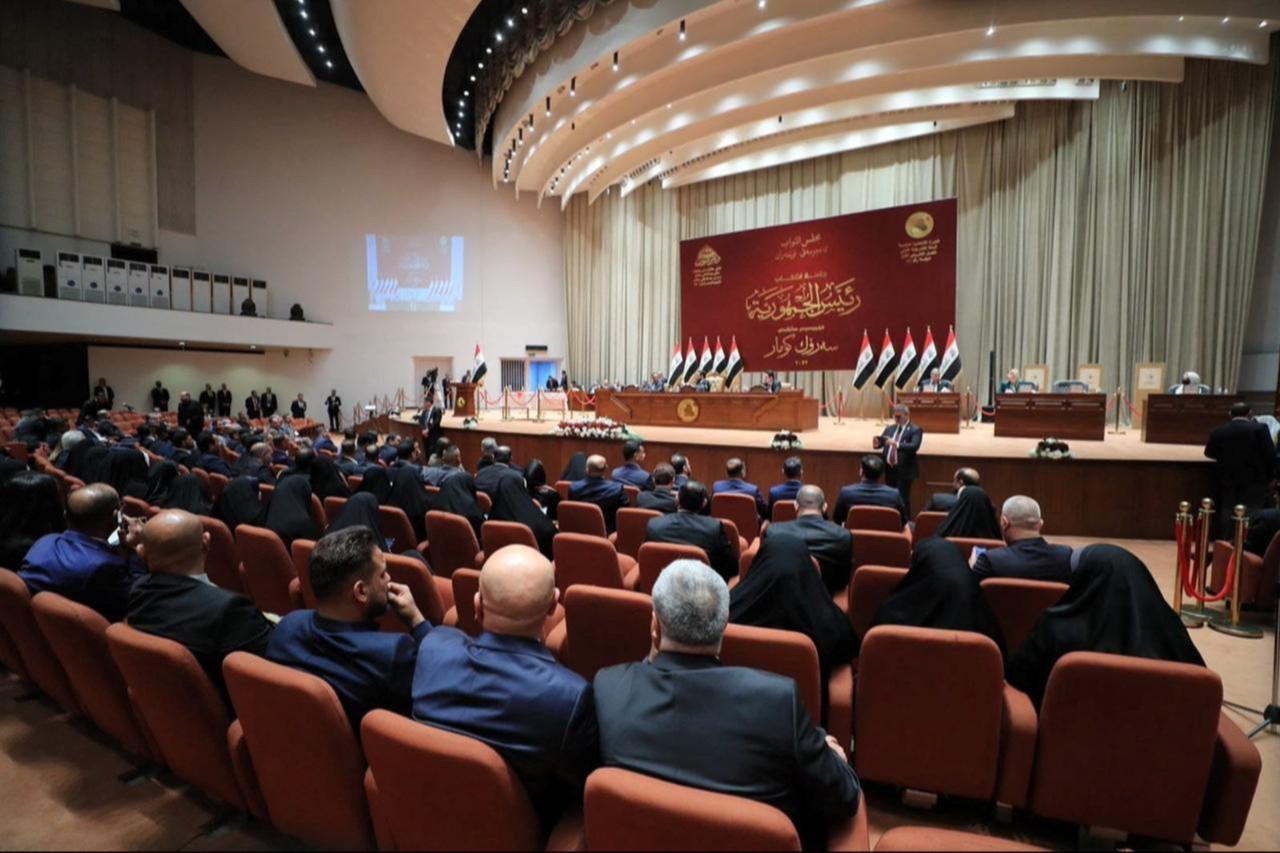


Iraq’s parliament announced the final list of candidates for the post of president of the republic, which includes 19 contenders, led by current President Abdul Latif Rashid and Foreign Minister Fuad Hussein.
According to a statement by parliament published by the Iraqi News Agency (INA) on Friday, the list includes Iraq’s current president, Rashid, who assumed office in October 2022, and Hussein, who is considered the leading candidate of the Kurdistan Democratic Party.
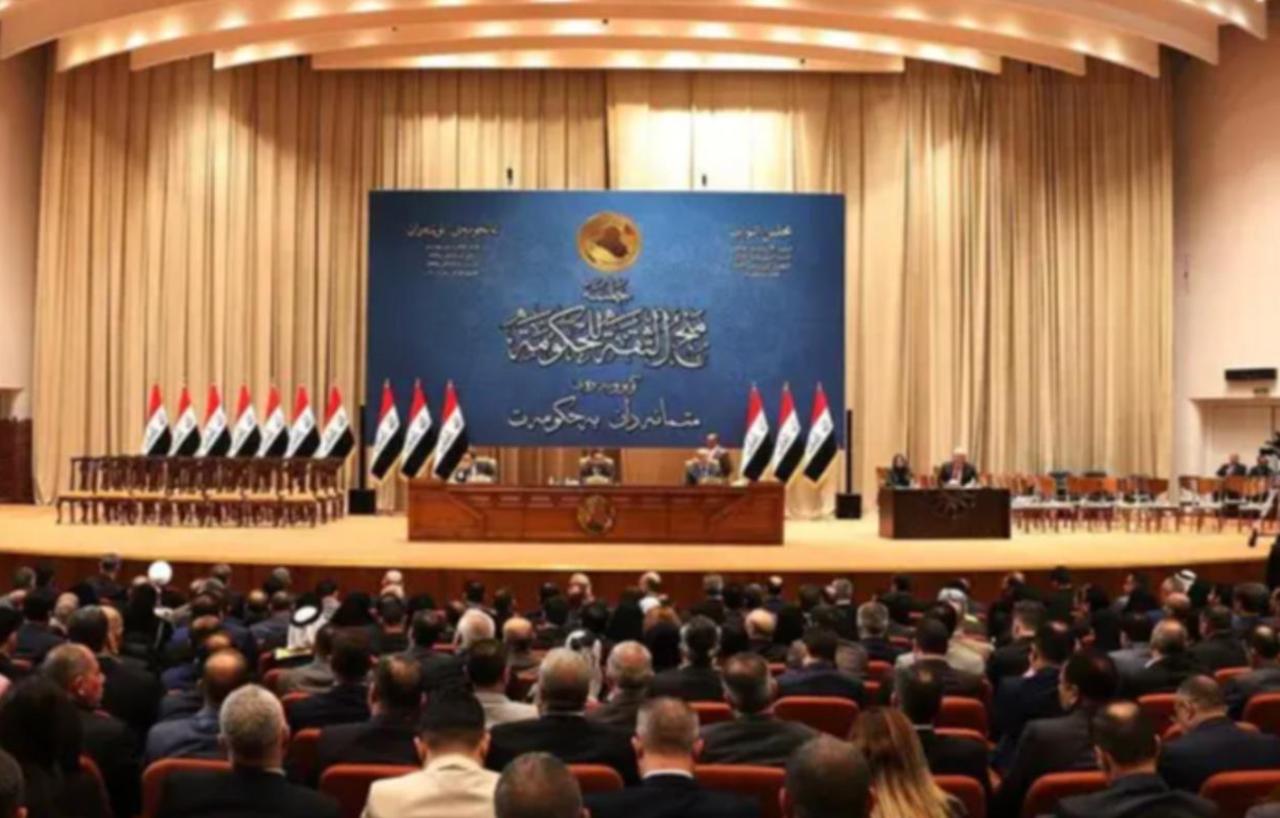

In addition, the list includes former Erbil governor Nawzad Hadi, current lawmaker Muthanna Amin and Nizar Mohammed Saeed Mohammed Kanji, known as Nizar Amidi, a Kurdish political figure and the leading candidate of the Patriotic Union of Kurdistan.
The list of candidates also includes Shwan Huweiz, Ahmed Abdullah, Hussein Taha Sinjari, Najm al-Din Nasrallah, Aso Fereydoun, Saman Shali and Sabah Saleh.
In addition, the list includes Abdullah al-Aliawi, Iqbal Haliwi, Sardar Taimz, Khaled Sadiq, Azad Majid, Rafi Mousa and Salem al-Saadi.
Under a power-sharing system among the country’s influential political forces, the presidency is allocated to the Kurdish component.
The post is typically contested by the Kurdistan Democratic Party and the Patriotic Union of Kurdistan, the two main Kurdish parties in the Kurdistan Region of northern Iraq.
The prime ministership is held by a Shiite, while the speakership of parliament goes to the Sunni component.
Lawmaker Haibet al-Halbousi was elected speaker on Dec. 29.
Under the constitutional timeline, parliament is required to elect the president within one month of the first session that concluded with al-Halbousi’s election. The deadline expires at the end of January.
In late 2025, the Iraqi parliament elected Haibat al-Halbousi as speaker of the Council of Representatives.
Members of the Council of Representatives are responsible for electing Iraq’s president and granting confidence to the government.
The elected president will task the nominee of the largest bloc in parliament with forming the government within 15 days of the president’s election.
In November last year, representatives of the “Coordination Framework,” which includes most of the Shiite parties and political forces that won more than 175 of the 329 seats in the Council of Representatives, agreed to present themselves as the “largest parliamentary bloc” eligible to form the next government.
Over the following 30 days, members of parliament must elect the president of the republic. The president, in turn, instructs the largest political bloc to nominate a candidate for the post of prime minister.
The deadline for electing the president is Jan. 28.
It is worth noting that the Iraqi constitution stipulates that the presidency is held by an Iraqi Kurd, the post of prime minister by a representative of the Shiite community, and the speakership of parliament by a representative of the Sunni community.


 Set as preferred source
 Set as preferred source


 1 min read
 1 min read