Newsletters


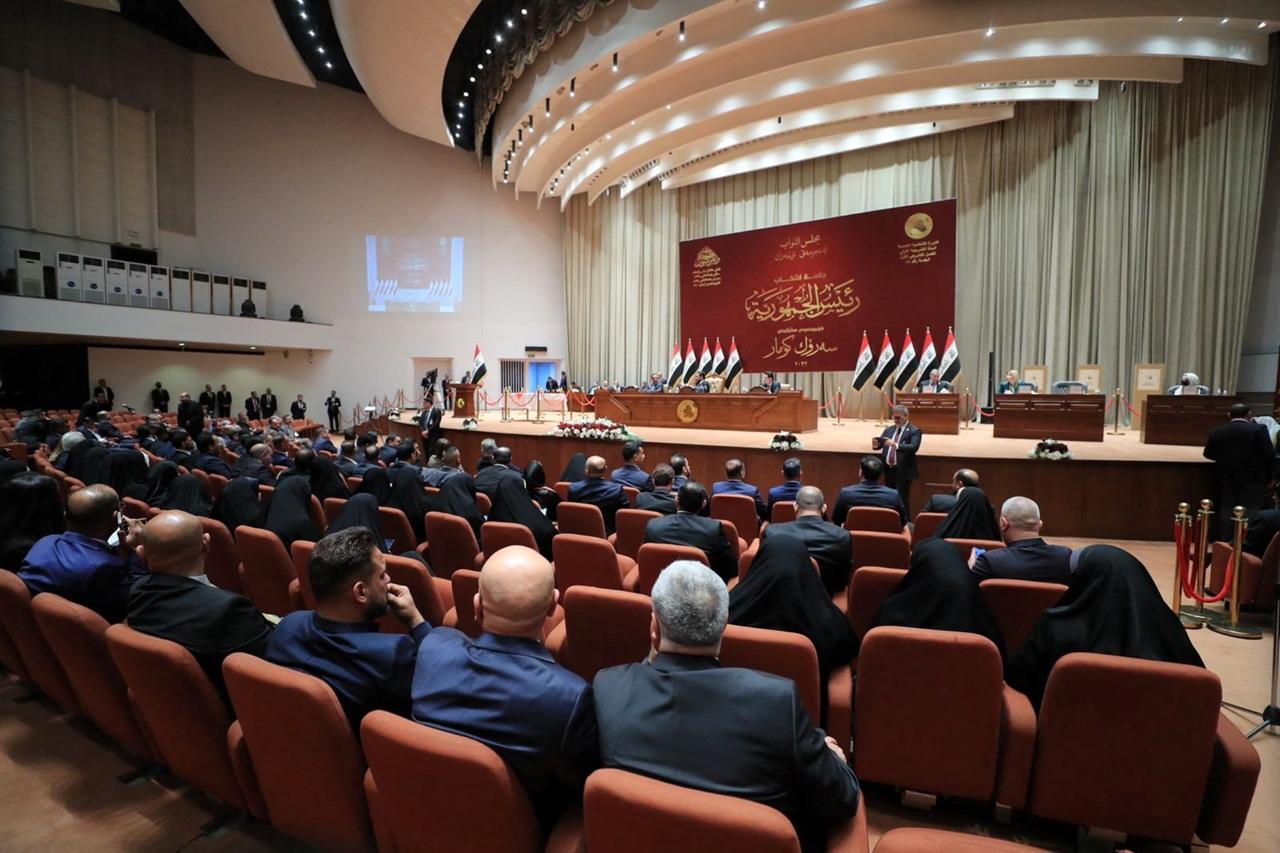


Iraq’s Council of Representatives published a list of 81 candidates for the country’s presidency on Monday after nominations closed, including four women, as Kurdish parties put forward nominees for the largely ceremonial post.
Under Iraq’s power-sharing system, in place since the first multiparty elections in 2005, two years after the U.S.-led invasion that toppled Saddam Hussein’s rule, the premiership, the most powerful executive post, is held by a Shiite politician, while the speakership of parliament goes to a Sunni and the presidency is occupied by a Kurdish politician.
Within Kurdish political circles, there is a longstanding rivalry between the Kurdistan Democratic Party, whose stronghold is Irbil, the capital of Iraq’s self-governing Kurdistan Region, and the Patriotic Union of Kurdistan, whose stronghold is Sulaimaniyah, the region’s second-largest city.
On Monday, Iraq’s Council of Representatives published a list of 81 candidates for the country’s presidency.
The Kurdistan Democratic Party announced the nomination of Fuad Hussein, the foreign minister in the caretaker government, 76, and former Irbil governor Nawzad Hadi, 63, for the post.
The Patriotic Union of Kurdistan, for its part, said its sole candidate is former environment minister Nizar Amedi, 57.
Among the other prominent contenders are Iraq’s current president, Abdul Latif Rashid, 81, former Patriotic Union of Kurdistan leader Mala Bakhtiar, 71, and Jwan Fouad Masum, 56, the daughter of former President Fouad Masum.
Iraq typically experiences political fragmentation and complexities that prolong consensus-building over candidates for top state posts, while familiar political wrangling often hinders compliance with constitutional deadlines.
The new parliament held its first session on Dec. 29, nearly two months after the election, and chose a speaker and a first deputy speaker.
The following day, after two failed rounds of voting due to disagreements, it elected a second deputy speaker, who, by political convention, is a Kurd.
Under the constitution, parliament is expected to elect a president within 30 days of the first parliamentary session, by a two-thirds majority.
The president must then designate a prime minister within 15 days of being elected. The nominee is, under the constitution, the candidate of the “largest parliamentary bloc” and the effective head of the executive branch.
Once designated, the prime minister-designate has 30 days to form a government.


 Set as preferred source
 Set as preferred source


 2 min read