Newsletters





Iranian Foreign Minister Abbas Araghchi said Israel remains the biggest obstacle to implementing the agreement reached between Tehran and the other side following the war, according to a post on his Telegram account.
Araghchi made the remarks at the 39th national conference of education directors, where he offered his assessment of the diplomatic process pursued after the conflict.
"The biggest opponent and obstacle to the implementation of the memorandum of understanding was, and is, the Zionist regime," Araghchi said.
"They did everything in their power to prevent such an understanding from being reached, did everything in their power to make sure this agreement would fail, and did everything in their power to ensure it would not be implemented, and they continue this effort even now," he added.
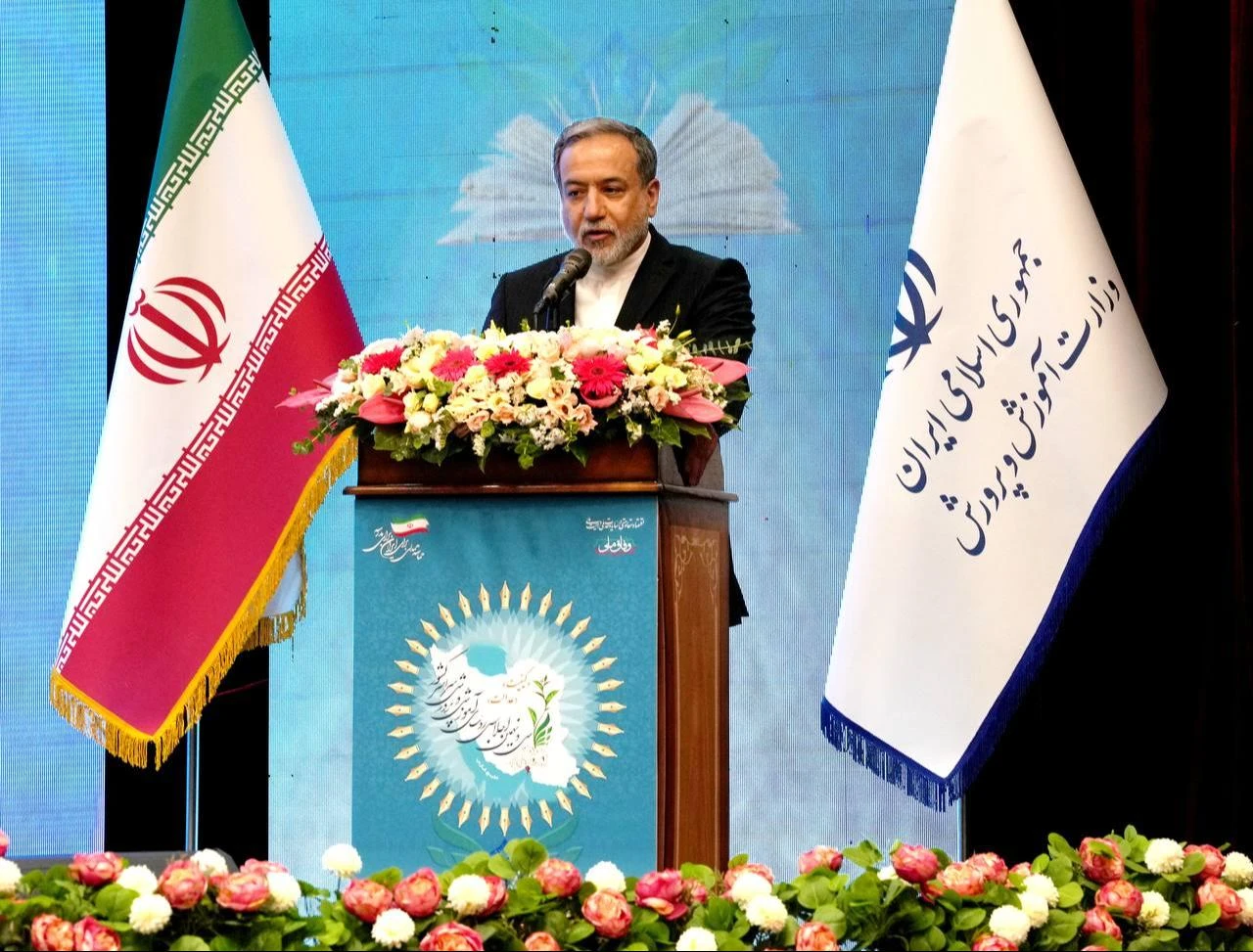

Araghchi said foreign ambassadors had repeatedly told him that almost all of the terms in the memorandum favored Iran, with only a small portion favoring the other side.
"As I've just said, several respected ambassadors from various countries told me many times that of all the provisions in the memorandum, nearly all of them favor Iran, and only a small part favors the other side," he said.
"You witnessed that less than two weeks later, they began violating the memorandum, precisely because everything written in it served Iran's interests," Iran's top diplomat noted.
Araghchi claimed that the war would never be forgotten in history.
He said Iran resisted for several days against what he called "the largest apparent military in the world," alongside another army also claiming power, backed by nearly all Western countries and some other states inside and outside the region.
"They pounded Iran, but they could not achieve any of their objectives," he said, adding, "The people of Iran resisted, relying only on the boundless power of Allah and their own strength."
He recalled that in the war's early days, the U.S. president said in a brief message: "Unconditional surrender."
"That was their entire goal: Iran's unconditional surrender. Iran did not surrender," Araghchi said, noting, "When they saw this illusion would not be realized, they tried to pursue regime change; it did not happen. They tried to break Iran apart; it did not happen. They tried to arm various groups in cities and in the west of the country, and they themselves admitted they had given them weapons; but this too did not succeed."
"Those who were seeking unconditional surrender, within a short time after the war began, begged for negotiations," he said.
"It was we who said we did not accept a ceasefire, and we continued the war until we reached a point where they accepted that a ceasefire and negotiations would take place on Iran's terms. These matters will be recorded in detail and in writing in history. They gave a multi-point proposal, and we presented another proposal. They changed their proposal again, and we changed ours as well. Ultimately, they accepted that negotiations would proceed based on Iran's proposal. That was when Iran accepted the ceasefire," the top Iranian diplomat said.
He said that from the time negotiations were requested, talks continued for several months, longer even than the war itself, until a multi-point understanding was signed.

Araghchi said many foreign ministers had told him: "You won both the war and diplomacy."
He said this success did not belong to him personally or even to the Foreign Ministry.
"I call Allah as my witness, and I want to emphasize that this victory does not belong to the Ministry of Foreign Affairs. We were merely its instrument," he said, adding, "This victory belonged to the people of Iran. This was the result of resistance in the war, which forced the enemy to accept Iran's demands."
"So when we say we won diplomacy, it is clear that Iran has won, not the Foreign Ministry, not even the government, but all of us together," he said, concluding, "The achievements of power are consolidated and secured through diplomacy. It is diplomacy that picks the flower grown by power."


 Set as preferred source
 Set as preferred source


 1 min read


 1 min read