Newsletters


Israel is considering expelling British and potentially other European officials from the U.S.-led coordination center for post-war Gaza, in what multiple people familiar with the matter described to the Financial Times (FT) as retaliation for criticism of Israeli Prime Minister Benjamin Netanyahu's policies in the Palestinian territories.
Multiple people familiar with the matter told the Financial Times that the Israeli government had discussed in recent weeks removing the United Kingdom from the International Gaza Support Center (IGSC), the multinational headquarters in Kiryat Gat established to monitor the U.S.-brokered Gaza ceasefire.
Similar measures were also considered against Italy and Germany, some of the people said.
An Israeli official confirmed the deliberations to Israeli public broadcaster KAN, describing the potential move as a step under consideration in response to British policy toward Israel and its recent actions.
The IGSC, formerly known as the Civil-Military Coordination Center, is led by U.S. military officers working alongside the IDF and diplomatic and military officials from roughly 50 countries and international organizations.
Israeli Foreign Minister Gideon Saar this week announced the expulsion of Dutch representatives from the center over the Netherlands' move to ban imports from Israeli settlements in the occupied West Bank, East Jerusalem and the Golan Heights.
"Representatives of the Netherlands will be expelled immediately from the International Support Center for Gaza in Kiryat Gat," Saar wrote on the social media platform X, saying the decision followed Netanyahu's request in response to what he called "a series of anti-Israel measures taken by the Dutch government."
He said Dutch representatives were instructed to leave Israel within a week.
"Israel will not allow measures to be taken against it without a response," Saar said.
Netanyahu backed the decision, saying Israel would not stay silent toward those who "attack" the country, according to KAN.
Earlier this year, Israel also expelled Spanish representatives from the IGSC, citing what Saar called Madrid's "obsessive anti-Israel bias."
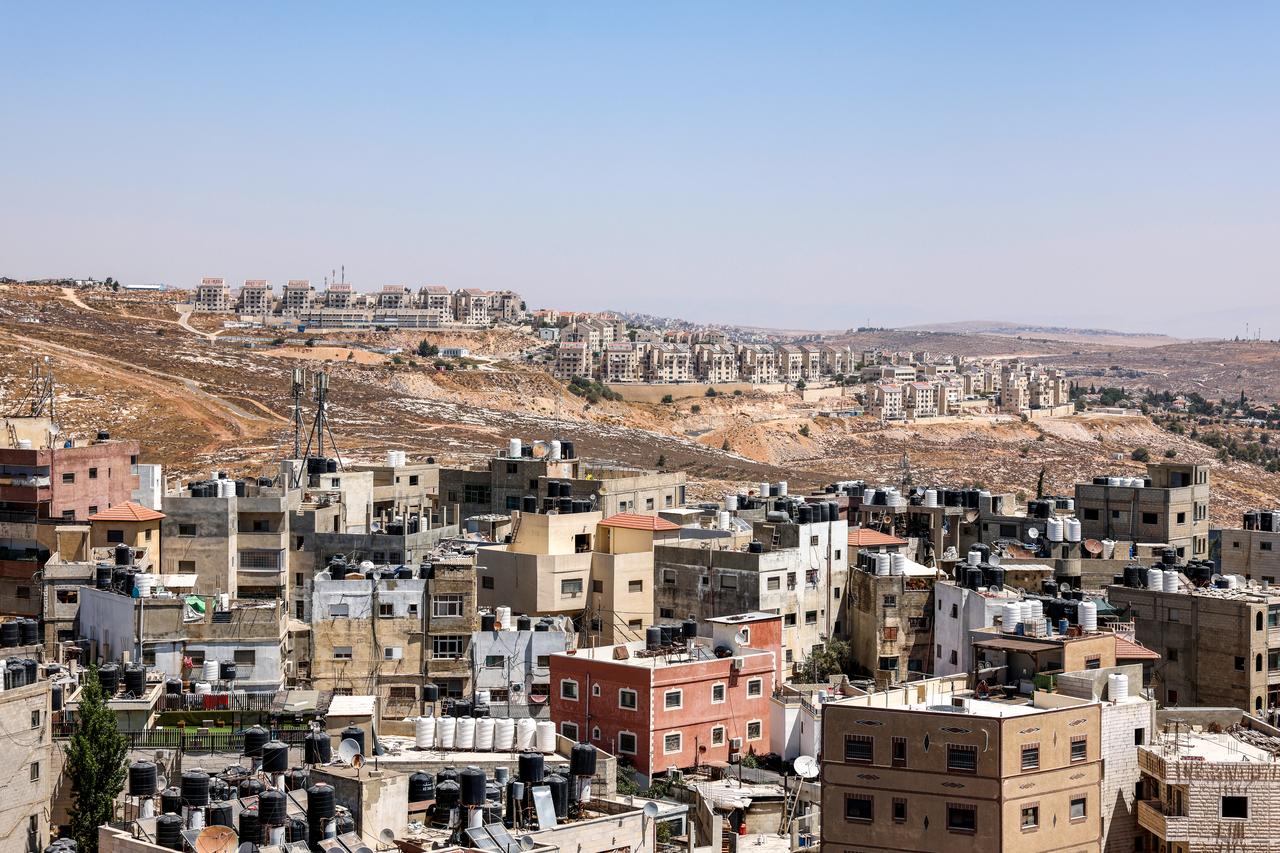

Two people familiar with the matter told the Financial Times that expelling additional representatives from the IGSC could require approval from the U.S.-led Board of Peace, the body established by U.S. President Donald Trump to oversee Gaza's post-war transition.
A third person disputed that requirement, saying Israel had full sovereign authority to decide who enters and remains in its territory.
A Board of Peace spokesperson said the body continues to engage Israeli counterparts on ways to maintain multilateral coordination and accelerate Trump's Gaza peace plan.
Italian government official cited by the FT dismissed the prospect of Italy and Germany being ejected from the center.
British officials appeared largely unconcerned about the possibility of being pushed out, with one person familiar with the matter telling the Financial Times that after Spain and the Netherlands, some "payback" for Britain's hardening stance was expected.
More than 140 U.K. lawmakers have signed a letter pressing Burnham to proceed with a ban on settlement goods.
The prospect of further expulsions reflects a deepening rift between Israel and its longtime European allies over the Gaza war, settler violence in the West Bank and settlement expansion, which is illegal under international law.
U.K. Prime Minister Andy Burnham has sought to toughen Britain's stance toward Israel, saying last month he would push to pressure the Israeli government through a possible ban on trade in settlement goods.
The U.K., Germany, Italy and nearly 20 other countries, along with the European Commission, issued a joint letter last week criticizing Israel's plan to advance construction tenders for the E-1 settlement project near Jerusalem, which analysts have warned could split the West Bank and undermine prospects for a Palestinian state.
U.K. Foreign Secretary Ed Miliband said Britain would not accept the "destruction" of a two-state solution, prompting Saar to say the U.K. should not lecture Israel on where its people may live.
Efforts to advance the U.S.-brokered Gaza ceasefire, which took effect in October, have stalled, according to multiple people familiar with the matter cited by the Financial Times.
Israeli forces continue to occupy more than half of Gaza and carry out regular strikes into territory still controlled by Hamas, while Hamas has yet to disarm and reconstruction has not begun.
A renewed push by Board of Peace officials this summer to secure Hamas's disarmament and an Israeli withdrawal has also faltered.
A visit last week by senior U.S. envoy Jared Kushner for meetings with Hamas and Netanyahu failed to break the impasse, with several sources describing his four-hour meeting with the Israeli prime minister as having gone poorly.
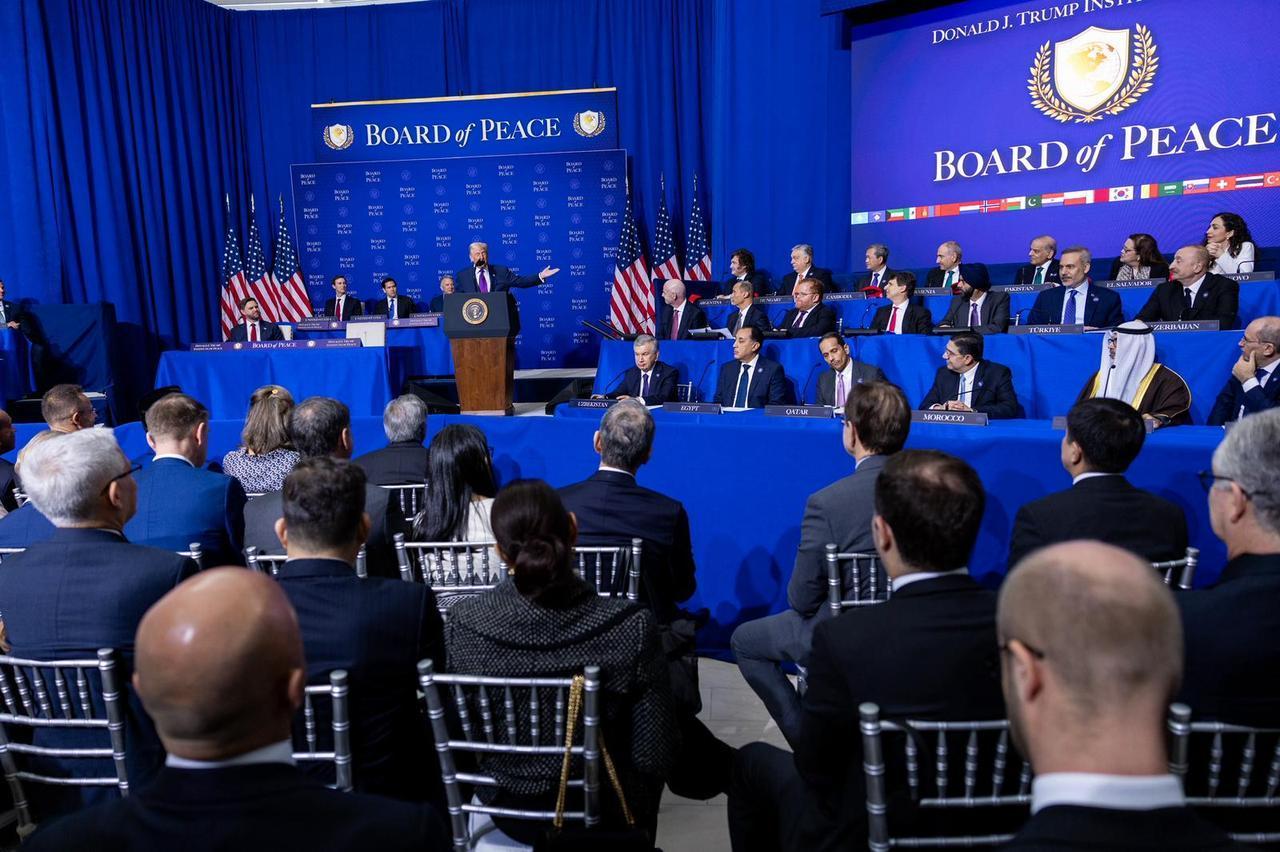
Separately, Nikolay Mladenov, the Gaza Peace Board's high representative, told a U.N. Security Council briefing Wednesday that Hamas and other armed factions in Gaza have agreed for the first time to surrender their weapons and transfer full civilian and security authority to a U.N.-recognized transitional administration.
"For the first time, Hamas and the armed factions in Gaza have agreed to hand over their weapons and to transfer full governing authority, civilian and security, to a transitional administration recognized by the United Nations," Mladenov said, according to a statement from the Board of Peace.
Mladenov said the roadmap, unveiled in late July, calls for removing "every category of weapon in Gaza," covering heavy weapons and production facilities, arms depots, tunnels, personal firearms and factional weapons. Under the plan, the National Committee for the Administration of Gaza would become the only body authorized to possess or control weapons.
"Withdrawal follows verified decommissioning and proceeds in phases. It is sequenced and reciprocal," Mladenov said, adding that progress would be "performance-based, not calendar-based" and that implementation would follow a principle of "trust nothing and verify everything."
He identified three conditions for advancing the process: deployment of the International Stabilization Force, Israeli implementation of its commitments under the Sharm al-Sheikh Protocol, and Hamas's adherence to its own commitments.


 Set as preferred source
 Set as preferred source


 3 min read