

 Newsletters


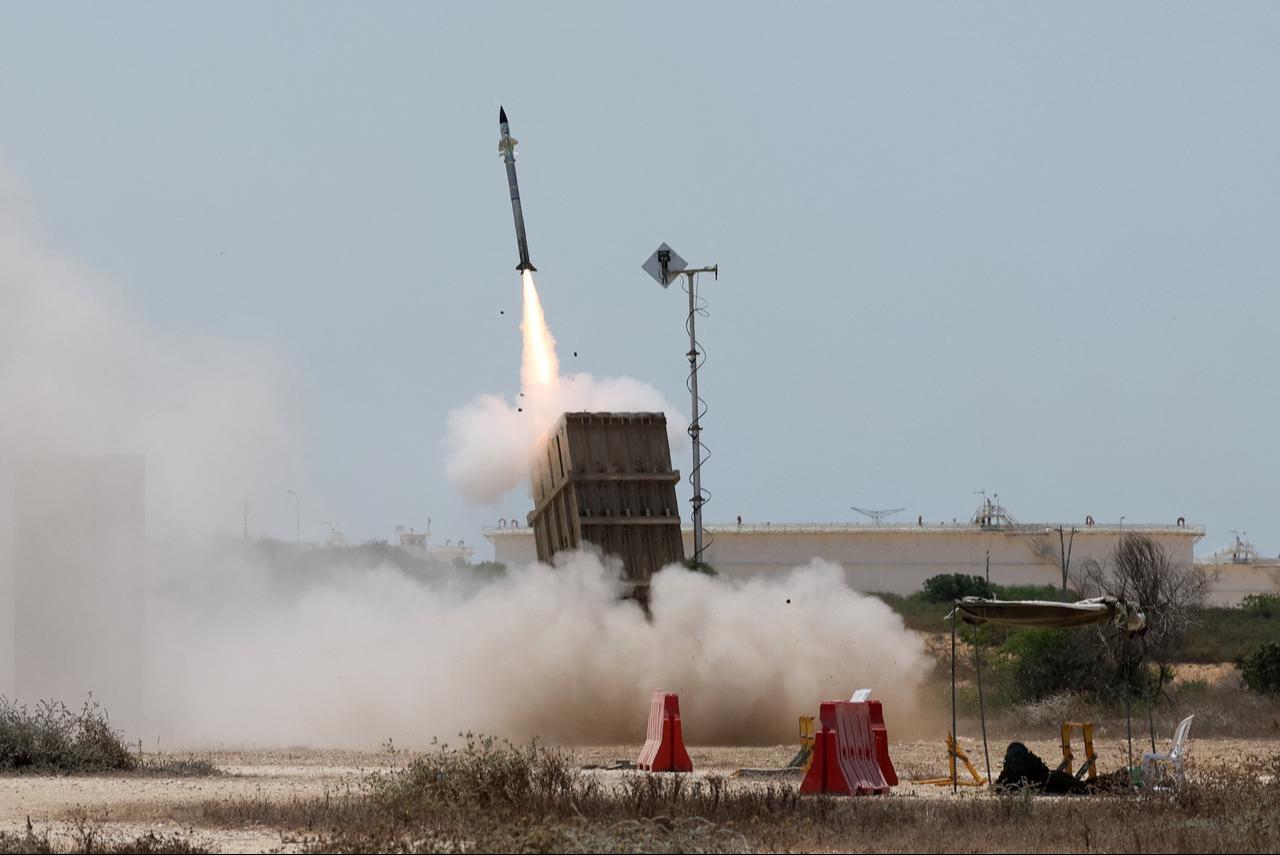
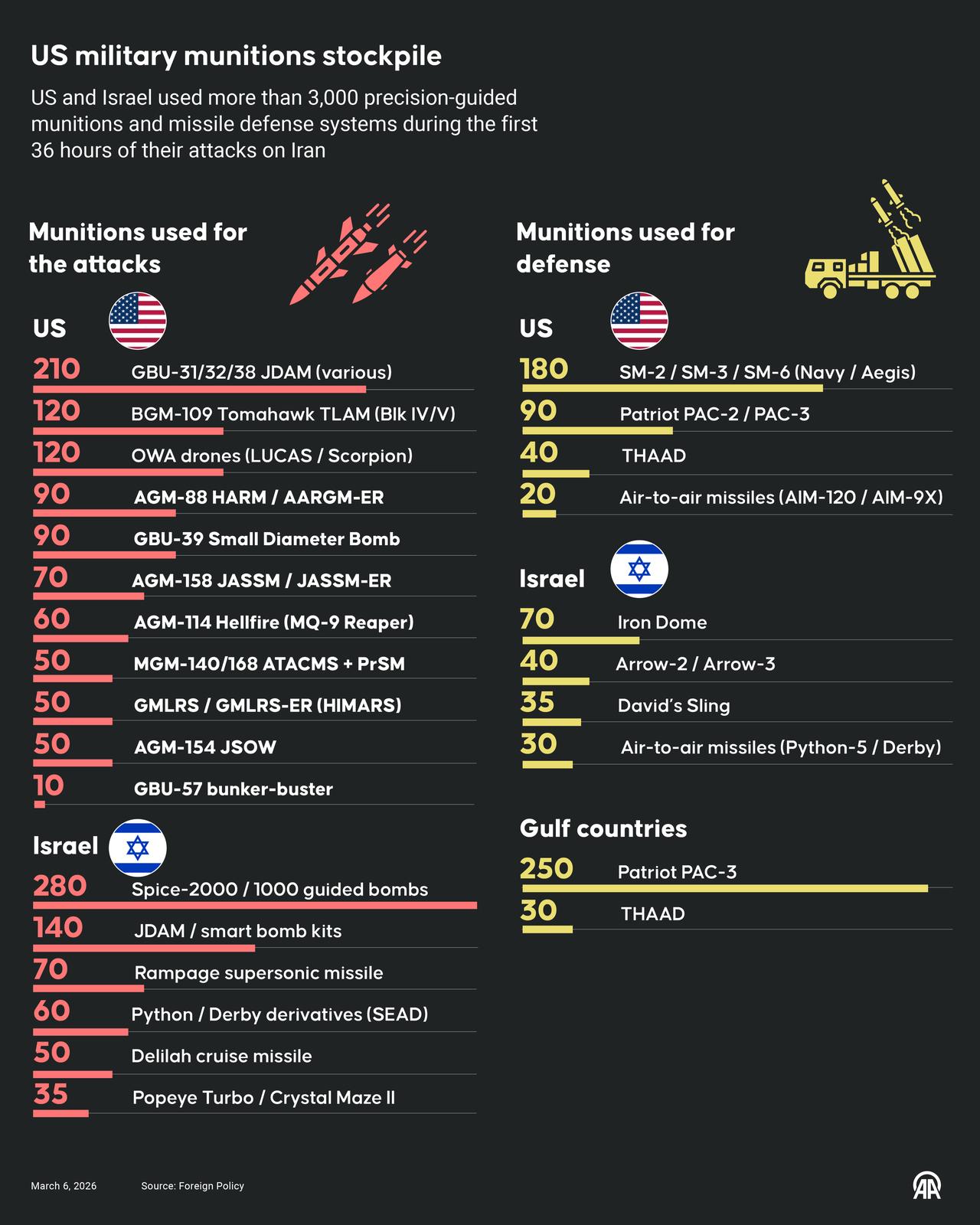
Israel has warned the United States that it is running critically low on ballistic missile interceptors as the war with Iran continues, according to a report by Semafor citing unidentified U.S. officials, as the Israeli government approved an emergency defense budget of approximately $830 million.
The United Kingdom is also considering deploying thousands of interceptor drones to the region.


Tel Aviv informed Washington earlier this week that its supply of long-range missile interceptors has been significantly depleted, Semafor reported.
Israel is believed to have entered the war already low on interceptors following last summer's confrontation with Iran.
Its long-range missile defense systems have been heavily strained by barrages, with CNN previously reporting that Iran has begun adding cluster munitions to some missiles, potentially increasing pressure on Israel's defenses.
One U.S. official told Semafor that Washington had been aware of Israel's limited interceptor capacity for months and had anticipated the situation.
"This is something we anticipated and assessed would happen," the official said, adding that Israel is "developing solutions to address" the shortage.
The official said the U.S. is not facing a similar shortage. "We have everything we need to protect our bases, our people in the region and our interests," the official said.
Israeli senior defense officials pushed back on the Semafor report in comments to Israel's Channel 14, saying there was "no basis" for the reports.
"We have enough interceptors for all defense systems, even over a long period of time," the officials said, adding that air defense systems are prepared for all scenarios and that interceptor stockpiles fully meet Israel's security needs.
The Pentagon and the Israeli government did not officially comment on the report.
It is not currently clear whether the U.S. intends to sell or share interceptors from its own stockpile with Israel, a move that could, according to the report, strain domestic supply in the U.S.
White House spokesperson Caroline Leavitt said last week that the U.S. has "enough weapons stockpile to meet operational needs."
The Israeli government approved an additional budget of 2.6 billion new Israeli shekels, approximately $830 million, for "classified, urgent and vital defense procurement for war management needs" in 2026, Israeli media reported.
The Israeli cabinet voted on the budget by telephone.
The funding will come from a reduction in government spending: 1.5 billion shekels ($47 million) from the interest and commission payments budget and 1.1 billion shekels ($349.8 million) from ministry budgets.
Israeli ministers Zeev Elkin and Gideon Saar voted against the decision, according to Israeli state broadcaster KAN.
Israel's Finance Ministry also revised its 2026 growth forecast downward by 0.5% points, from 5.2% to 4.7%, citing the impact of the strikes against Iran on the Israeli economy.
The forecast is based on a scenario in which strikes continue for several more weeks. If the war extends or expands, forecasts could be revised downward again, the report said.
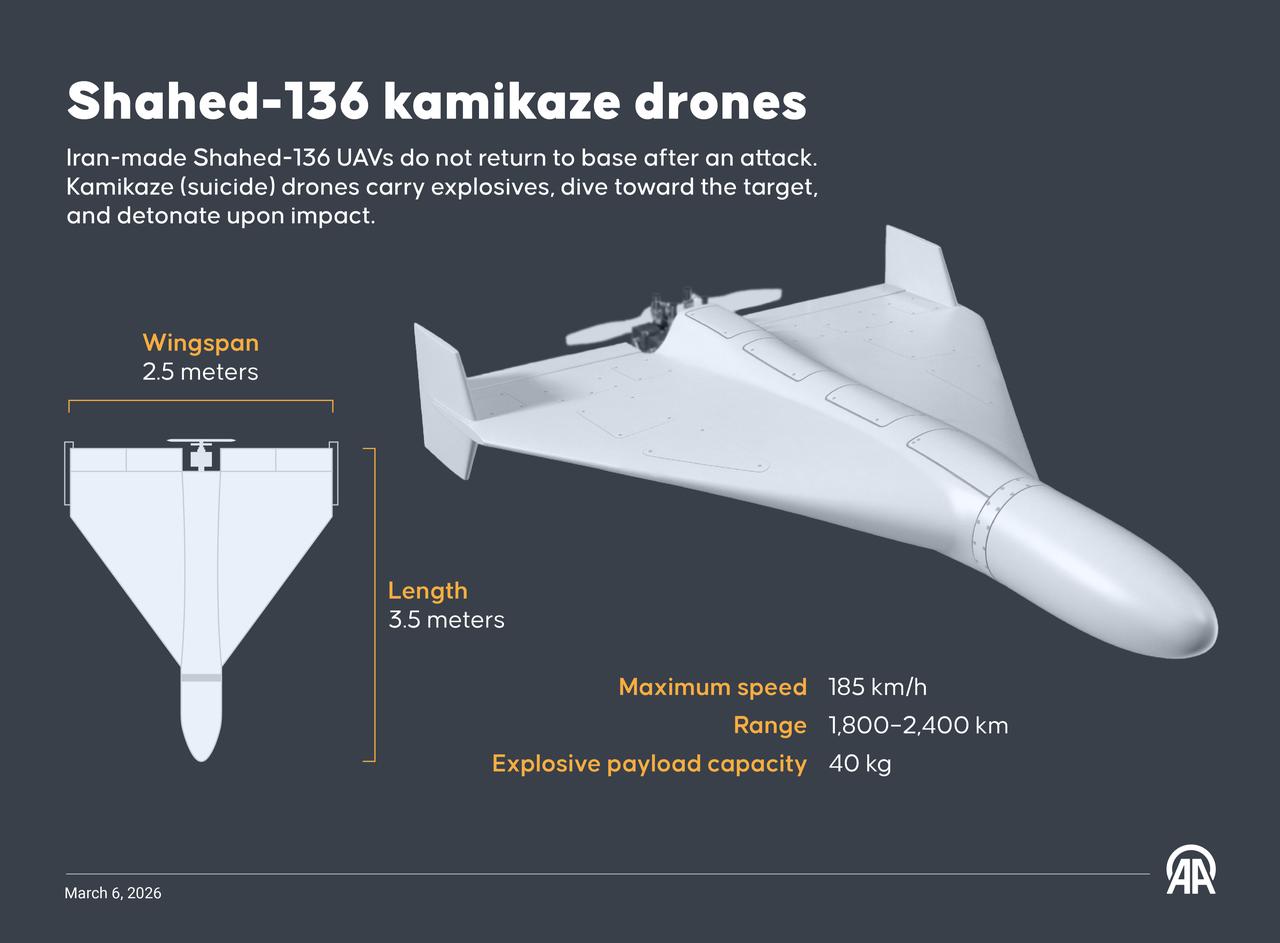
British officials are reportedly considering sending thousands of interceptor drones to the Middle East to counter Iranian Shahed drones, the Telegraph reported.
The "Octopus" anti-drone systems, currently manufactured in the UK for Ukraine's use against Russia, could be adapted to protect UK forces and allies in the region. Production of the interceptors has been ramped up to thousands per month.
"Ukraine is clearly the first priority for this capability. But beyond that, the axis of aggression between Russia and Iran is clear. Shahed-style drones are a key part of both their arsenals," a defense source told the Telegraph.
"As this conflict continues, we should absolutely be looking at how we can bring in Ukrainian expertise and innovation," the source added.
The potential deployment comes amid criticism from U.S. President Donald Trump and military officials about what they describe as a cautious UK response to the Iran conflict.
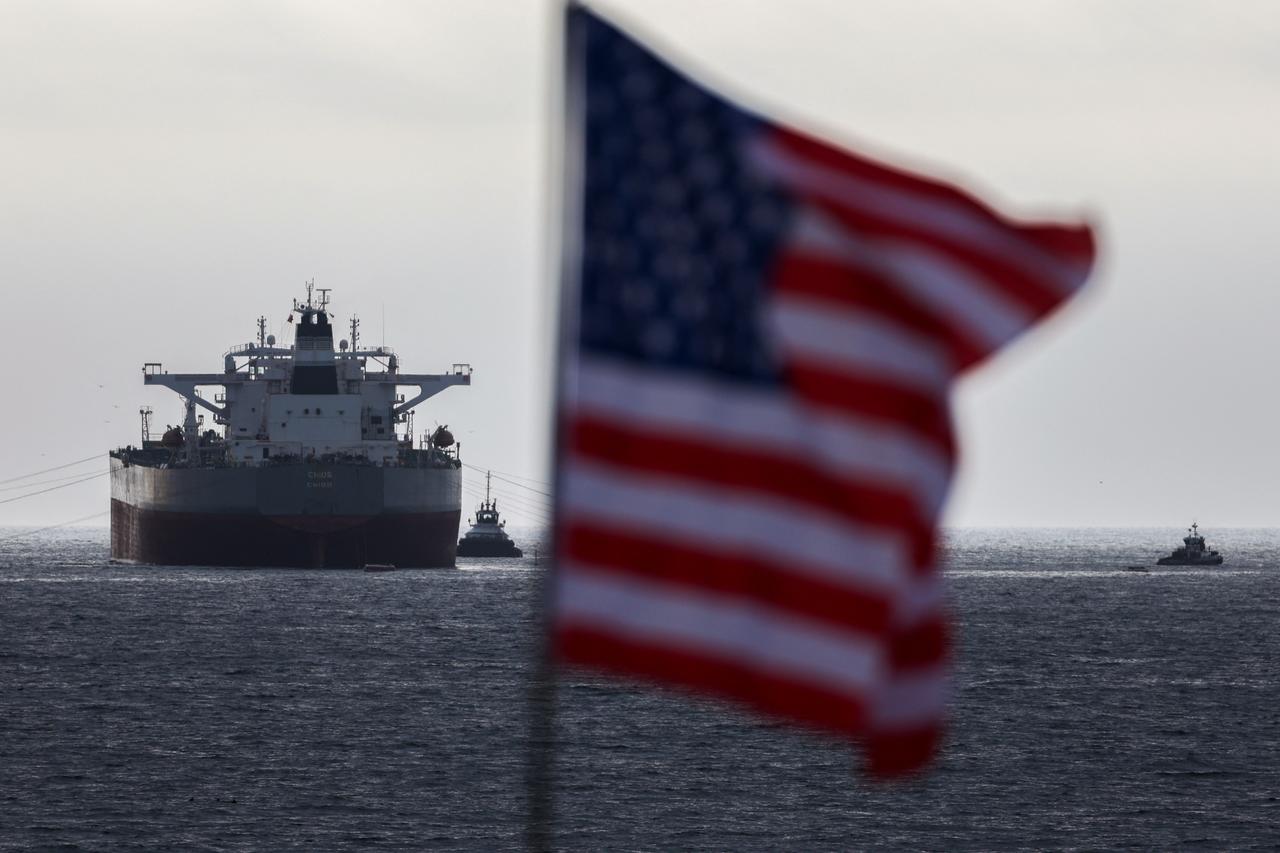
Trump has urged London to contribute ships to the Strait of Hormuz as part of an international effort to ensure safe passage for oil shipments.
The U.K. has said it is considering sending a ship but has not made a final decision.
Since the U.S. and Israel launched joint attacks on Iran on Feb. 28, killing at least 1,300 people, including then-Supreme Leader Ali Khamenei, Iran has retaliated with drone and missile strikes targeting Israel, Jordan, Iraq, and Gulf countries hosting U.S. military assets.


 Set as preferred source
 Set as preferred source


 2 min read
 1 min read



