Newsletters


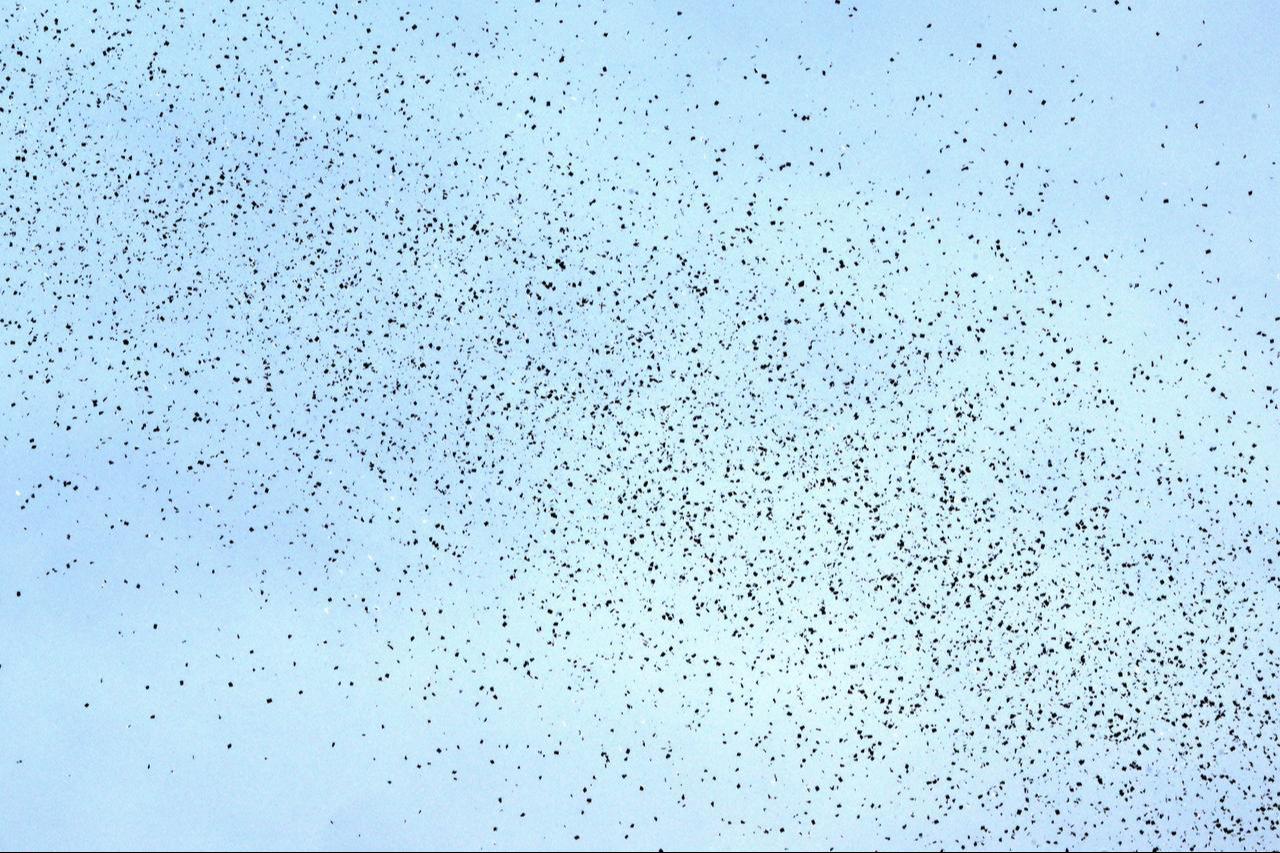
Israeli warplanes dropped propaganda leaflets over Beirut on Friday, causing loud sonic booms that terrified residents, as U.N. Secretary-General Antonio Guterres arrived in the Lebanese capital, calling on Israel and Hezbollah to "stop the war".
Israeli Defense Minister Israel Katz also threatened to cause increasing damage to the Lebanese national infrastructure.
 Breaking News, Direct to You.
 Follow Türkiye Today on WhatsApp
for real-time updates and key insights from Türkiye and beyond.
Follow Türkiye Today on WhatsApp
for real-time updates and key insights from Türkiye and beyond.
Agence France-Presse (AFP) correspondents in Beirut heard four successive booms at short intervals before clouds of paper leaflets appeared high in the air.
Lebanese state media said the noise was "caused by Israeli aircraft flying at a very low altitude and dropping leaflets over a number of areas, specifically in Verdun, Hamra, and Ain al-Mreisseh," in western Beirut.
One leaflet addressed to the Lebanese people read, "You must disarm Hezbollah, Iran's shield," and "Lebanon is your decision, not someone else's."
The leaflet included a QR code along with the phrase: "Unit 504 is working to secure the future of Lebanon and its people." Unit 504 is an Israeli military intelligence unit that specializes in human intelligence (HUMINT).
Leaflet drops are a tactic also used in Gaza by Israel.
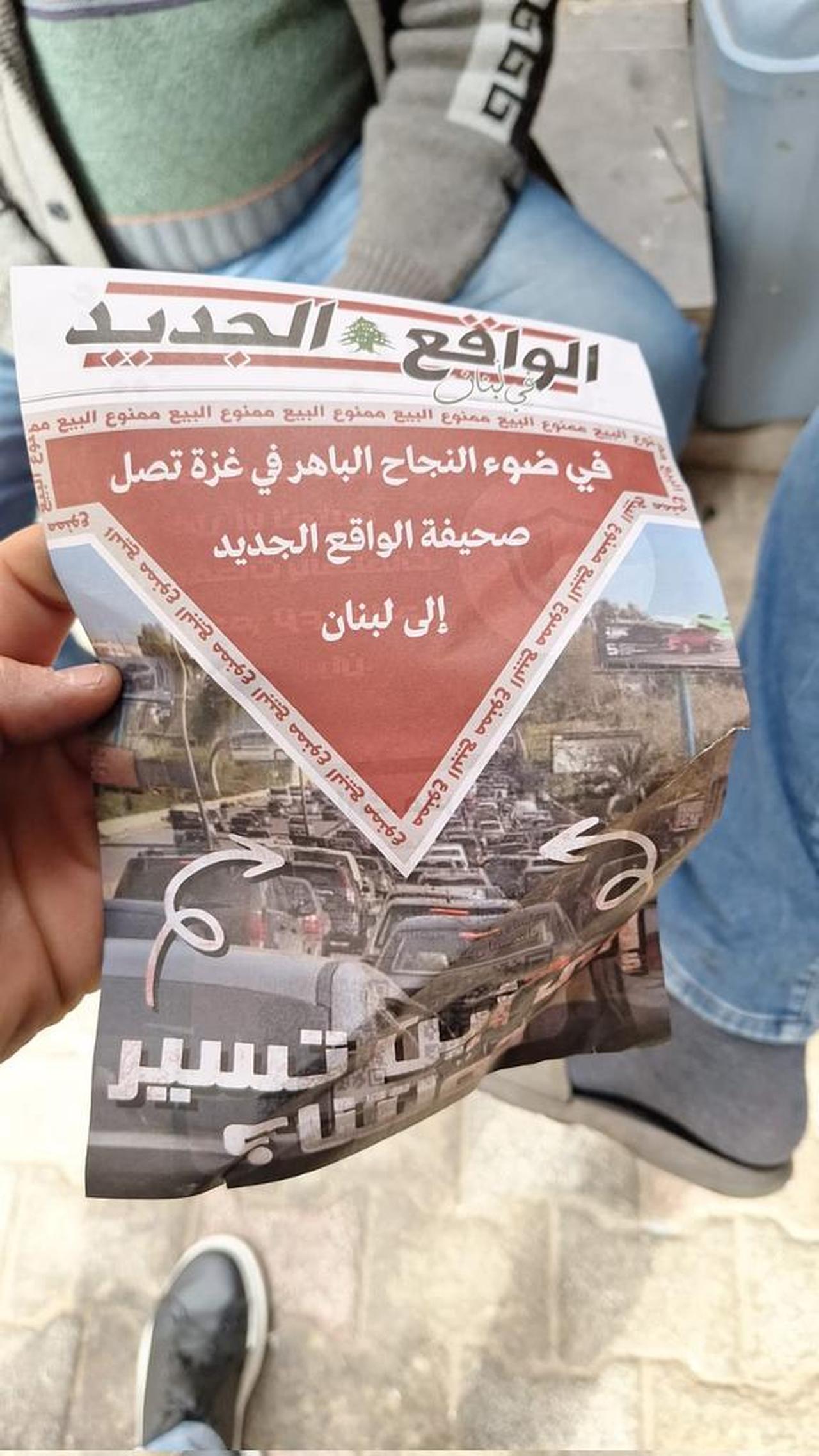
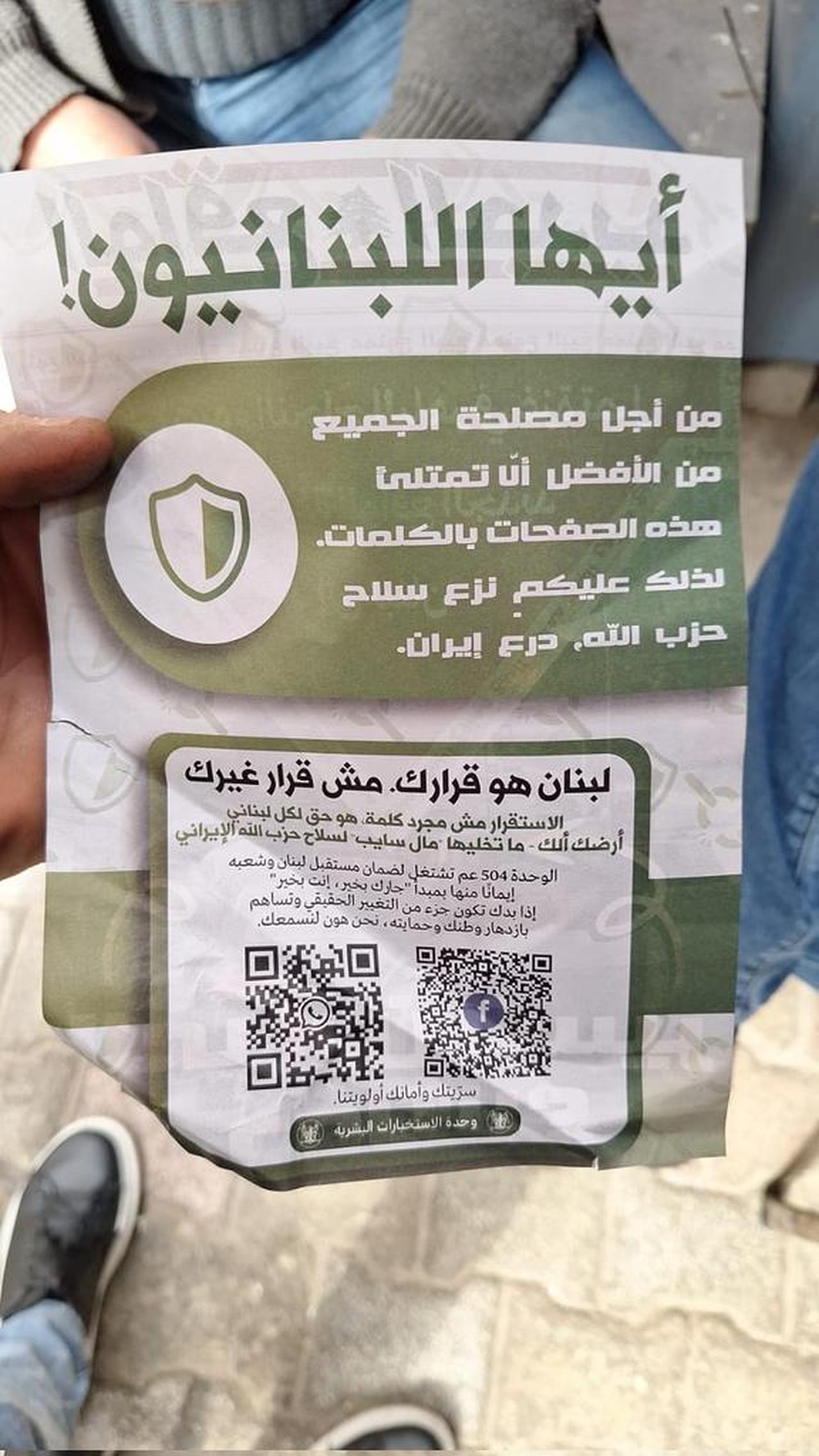
Other leaflets called on civilians to act against Hezbollah.
"If you want to be part of real change and contribute to the prosperity and defense of your country, we are here to listen," the leaflets read, which carried the logo of the Israel's Military Intelligence Directorate's Unit 504.
According to social media posts, additional leaflets carried the messages: "Lebanon is your decision, not someone else's. Stability must not remain a promise, it is the right of all Lebanese. The land is yours, do not let it become the property of Iran's Hezbollah."

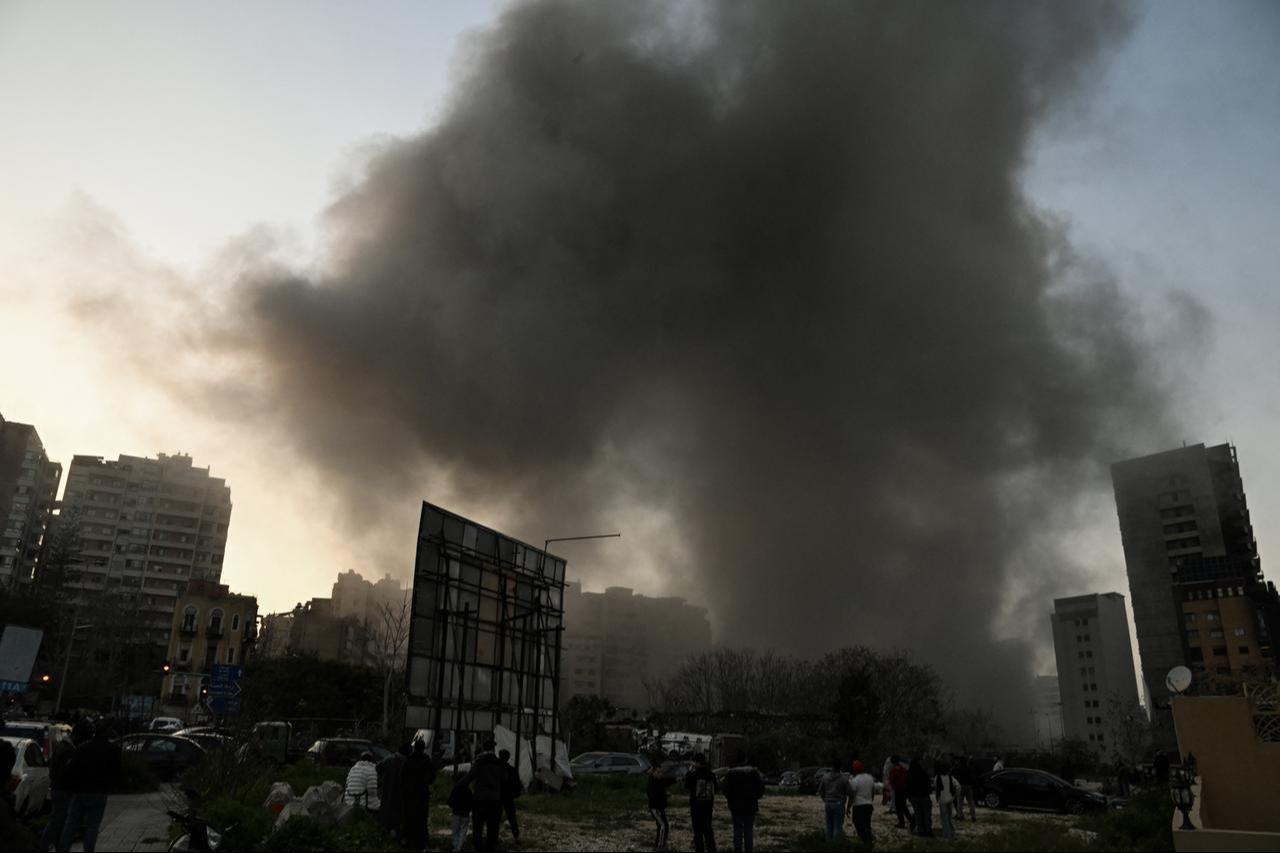
Israeli Defense Minister Israel Katz said Lebanon will suffer increasing damage to its infrastructure as Israel targets Hezbollah.
His remarks came after the Israeli army struck a bridge over the Litani River, saying Hezbollah had been using it to move operatives from north to south Lebanon.
"This is only the beginning, and the Lebanese government and the Lebanese state will pay an increasing price through damage to Lebanese national infrastructure that is used by Hezbollah terrorists," Katz said at a meeting with Israeli army Chief of Staff Lt. Gen. Eyal Zamir and the military's top brass.
"The Lebanese government, which misled and did not fulfill its commitment to disarm Hezbollah, will pay increasing prices through damage to infrastructure and the loss of territory, until the central commitment of disarming Hezbollah is fulfilled," he added.
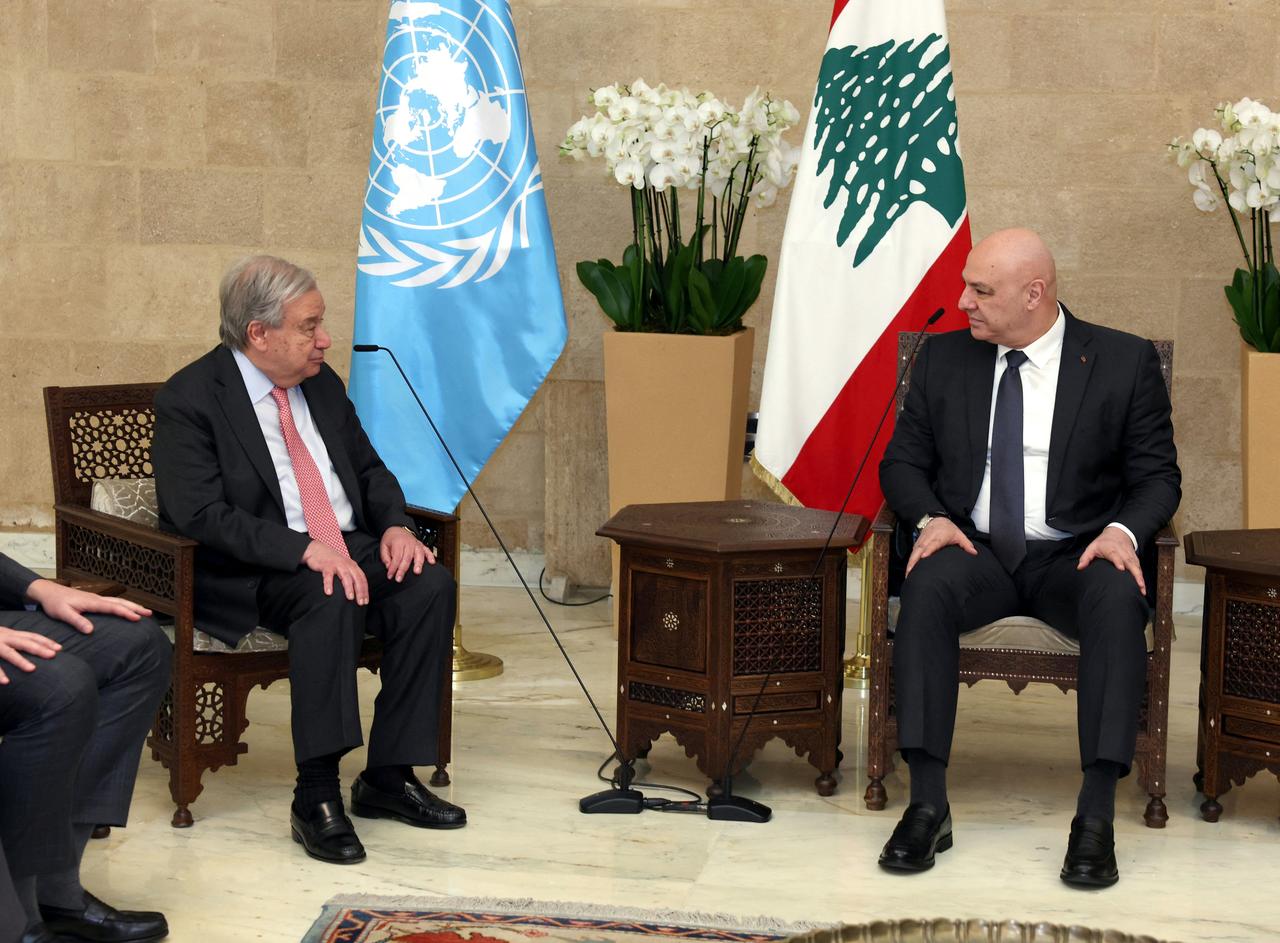
Guterres arrived in Beirut Friday for what he described as a "solidarity" visit.
"I have just landed in Beirut for a visit of solidarity with the people of Lebanon," he wrote on X.
"They did not choose this war. They were dragged into it." He pledged to "spare no effort" in working for the peaceful future that Lebanon and the region "so richly deserve."
Speaking from the presidential palace, Guterres called on both parties to end hostilities.
"My strong appeal to those parties, to Hezbollah and to Israel, is for a ceasefire to stop the war and allow Lebanon to become a country independent where its authorities have the monopoly on use of force," he said.
"This is no longer the time of armed groups. This is the time of strong states," he noted.
Guterres noted that the war erupted as Muslims celebrate Ramadan and Christians observe Lent. "Unfortunately, Lebanon was dragged into a war that is not a war that its people would be willing to have," he stated.
The U.N. said it will launch an urgent humanitarian fundraiser on Friday to assist the more than 800,000 people registered as displaced in Lebanon.
Lebanon's Health Ministry said on March 12 that 687 people have been killed and 1,774 wounded since Israel launched attacks on Lebanon on March 2.
Israel expanded its operations in Lebanon amid broader regional hostilities that erupted when the U.S. and Israel launched joint attacks on Iran on Feb. 28, killing some 1,300 people, including then-Supreme Leader Ali Khamenei.
Iran has since retaliated with drone and missile strikes targeting Israel, Jordan, Iraq and Gulf countries hosting U.S. military assets.


 Set as preferred source
 Set as preferred source


 4 min read