Newsletters


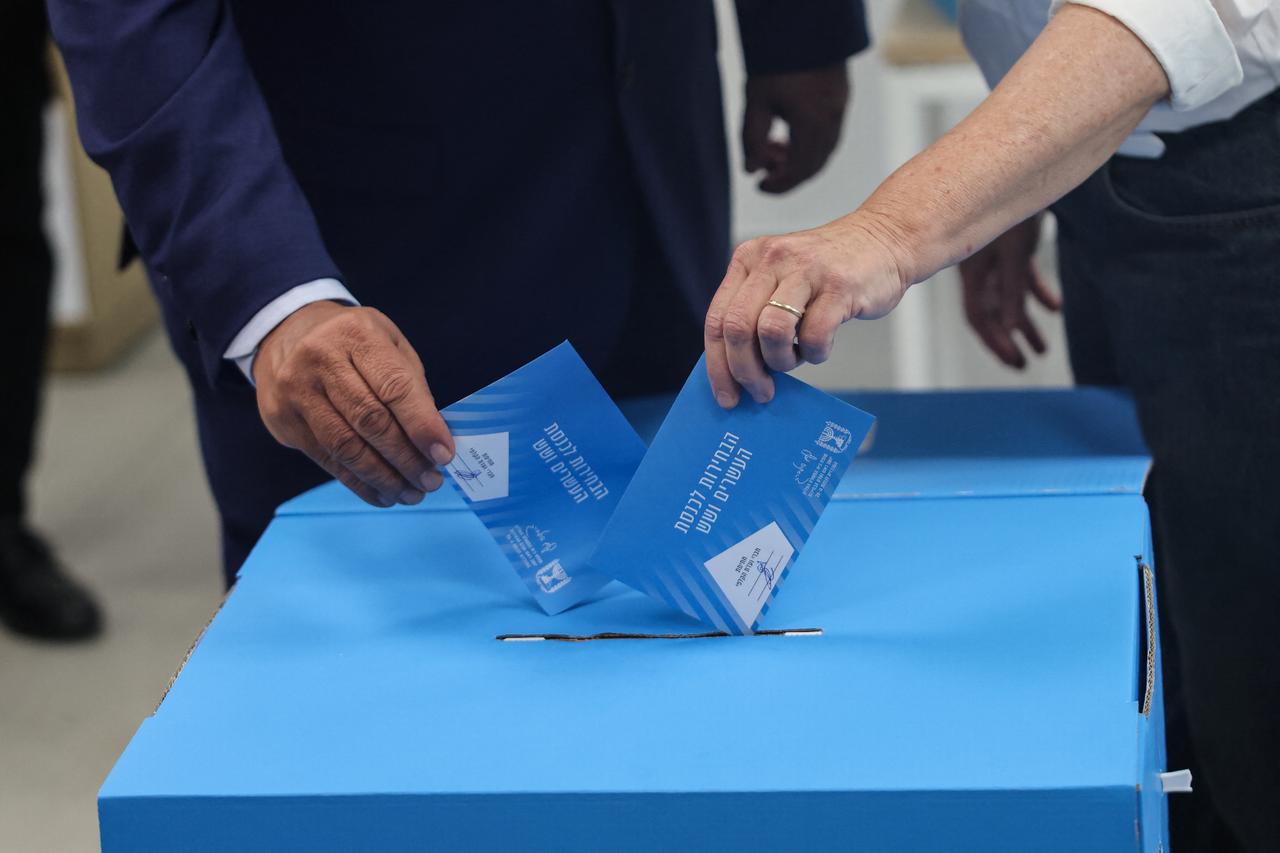


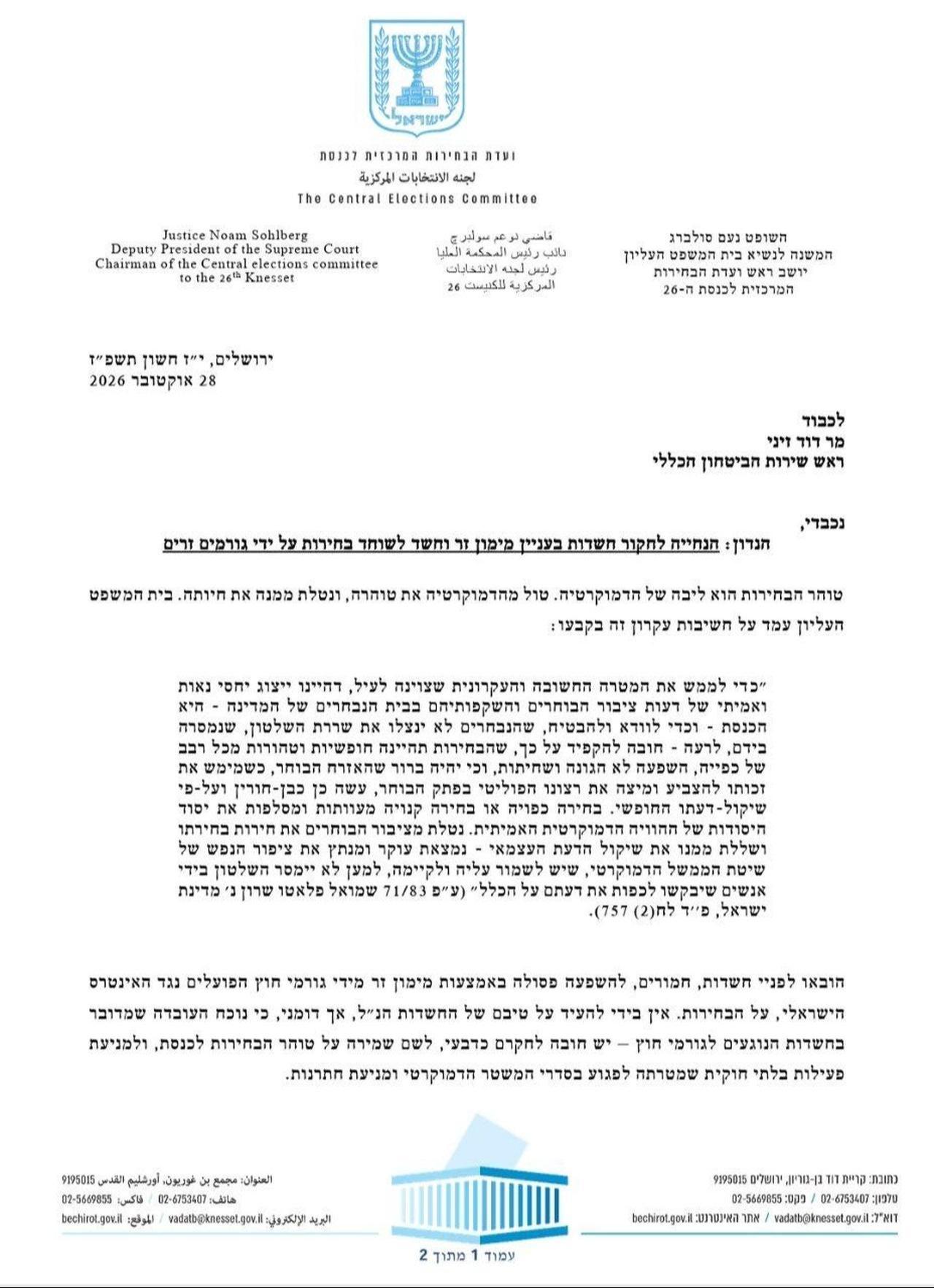
The chairman of Israel’s Central Elections Committee, Justice Noam Sohlberg, has ordered the domestic security agency Shin Bet to immediately investigate suspected foreign funding and election bribery after the security service presented information described as "exceptional in its severity," Channel 12 reported.
The suspicion is that large sums were channeled from Arab actors to illegally boost turnout among Arab voters, the broadcaster’s N12 news site reported. The Israeli media later said the suspected funding came from Qatar, some of it allegedly "through channels previously used to finance terrorism."

"The suspicion of election interference with foreign Islamist money is a litmus test for the State of Israel. The heads of the Arab parties must be interrogated by the Shin Bet today. The State of Israel will not be sold to radical Islam with terrorist money," the far-right Finance Minister Bezalel Smotrich wrote on X.
"The letter from Justice Solberg is a dramatic and unprecedented event. I call on the law enforcement authorities to act swiftly to arrive at the truth at the earliest possible time," Avigdor Liberman, leader of Yisrael Beiteinu, wrote on X.
Sohlberg sent a formal letter Wednesday to Shin Bet chief David Zini after Zini presented him with the information. The Shin Bet is subordinate to the committee chairman during the election period.
"I cannot attest to the nature of the above suspicions, but I believe, given that the suspicions concern foreign actors, there is a duty to investigate them properly, to safeguard the purity of the Knesset elections and to prevent illegal activity aimed at harming the democratic system of government and to prevent subversion," Sohlberg wrote.
Sohlberg did not specify which foreign actor allegedly intervened or which side allegedly received bribes.
"I instruct you to do everything in your power to get to the bottom of the above suspicions and to use the framework of the Shin Bet to locate evidence to substantiate the above suspicions or to refute them," Sohlberg wrote.
"Only in this way can we ensure public trust in the election process and the purity of the democratic process," he added.
Sohlberg asked Zini to present any findings within a week because of the vote-counting timeline.
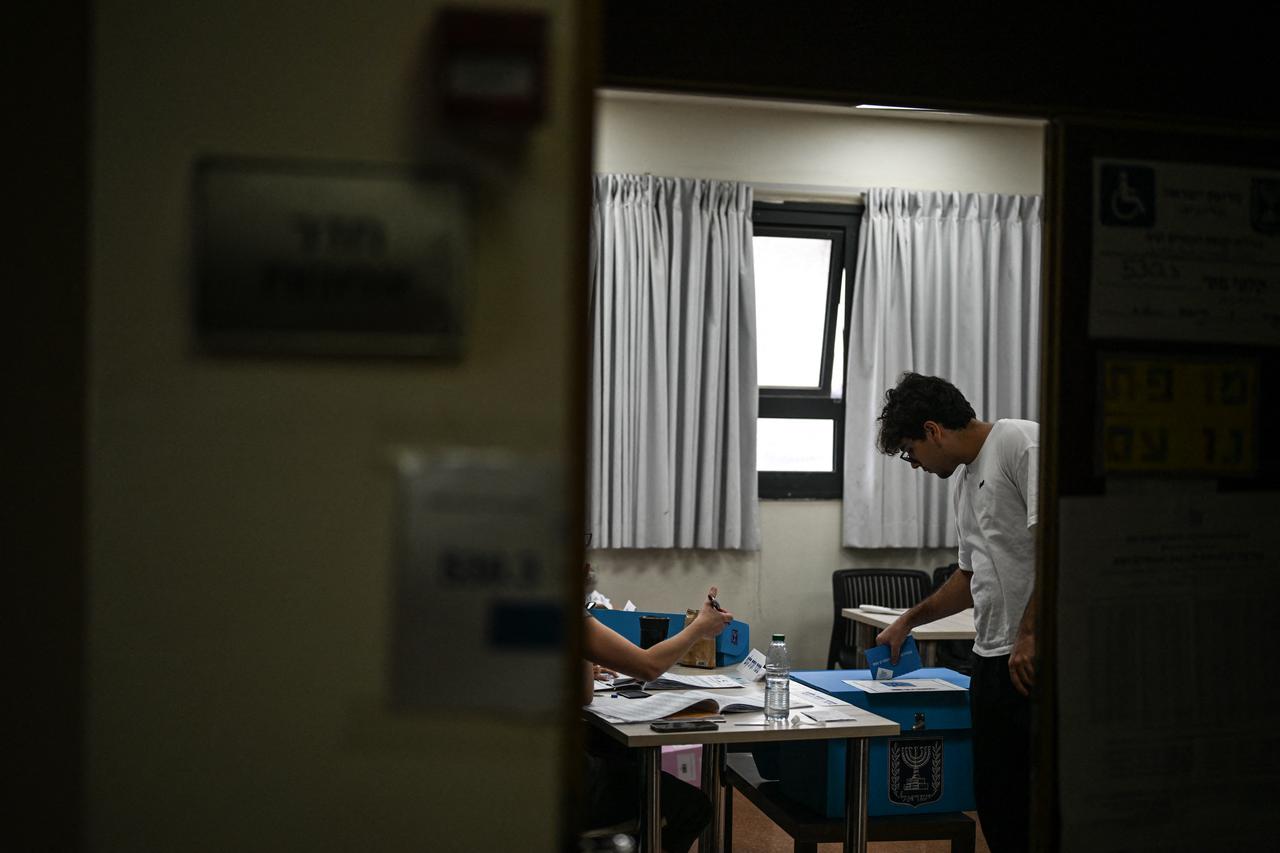
With about 92.7% of votes counted, Netanyahu’s coalition was at 53 seats, the opposition bloc at 48 and Arab parties at a record 19. Likud led with 26 seats, followed by Eisenkot’s Yashar with 21.
The Joint List was projected at 12 seats and the United Arab List (Ra’am) at seven. Neither main bloc reached the 61 seats needed for a majority.
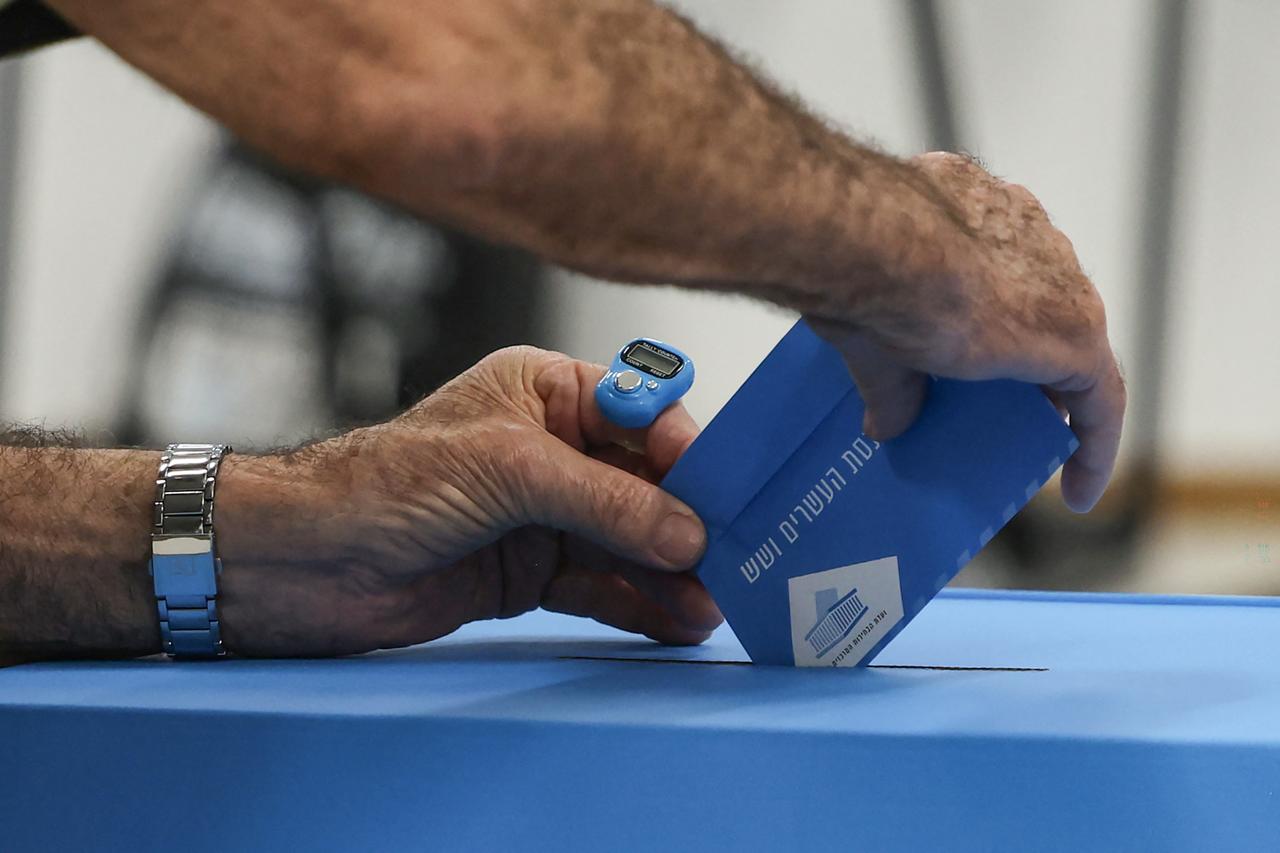
Officials began counting nearly 500,000 double-envelope ballots Thursday, which could shift seat totals. More than 29,000 had been counted by morning, with the count expected to finish by the afternoon.
Turnout reached 77.7%, the highest since 1999, according to the Central Elections Committee.


 Set as preferred source
 Set as preferred source


 1 min read
 1 min read