Newsletters





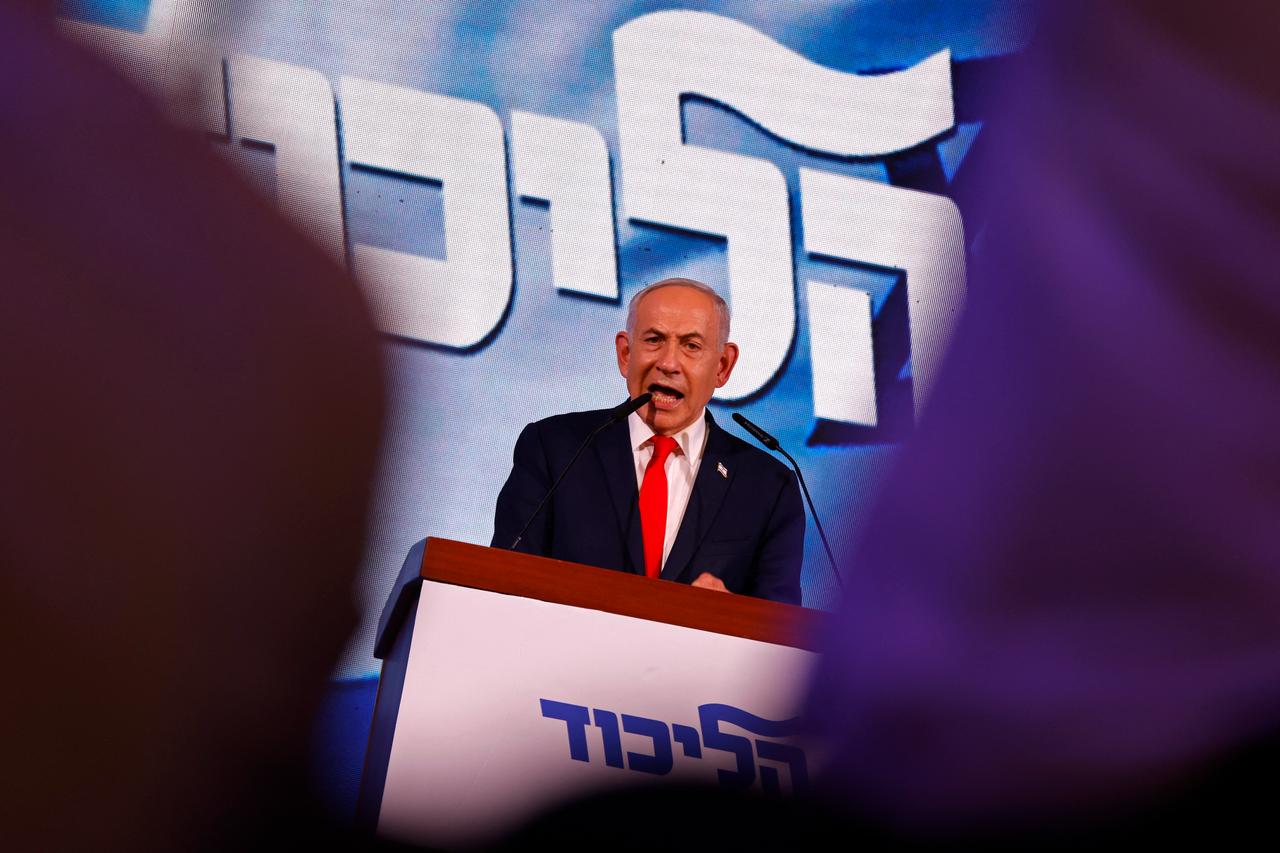
Israel began counting more than 500,000 special ballots Thursday that could reshape the final distribution of parliamentary seats, after preliminary results left both Prime Minister Benjamin Netanyahu's governing bloc and the opposition led by Gadi Eisenkot short of a majority.
With all regular ballots counted, Israel's Channel 12 projected Netanyahu's right-wing bloc to secure 53 seats in the 120-member Knesset, compared with 48 for Eisenkot's opposition and 19 for predominantly Palestinian-led parties.
Neither major bloc reached the 61-seat threshold needed to form a government, leaving the outcome of coalition negotiations uncertain as the remaining votes are tallied.
The final stage of counting involves more than 500,000 so-called double-envelope ballots, which could alter individual parties' seat totals and the balance between the rival political camps.
Israel's public broadcaster reported that the count began early Thursday and was expected to be completed by the evening.
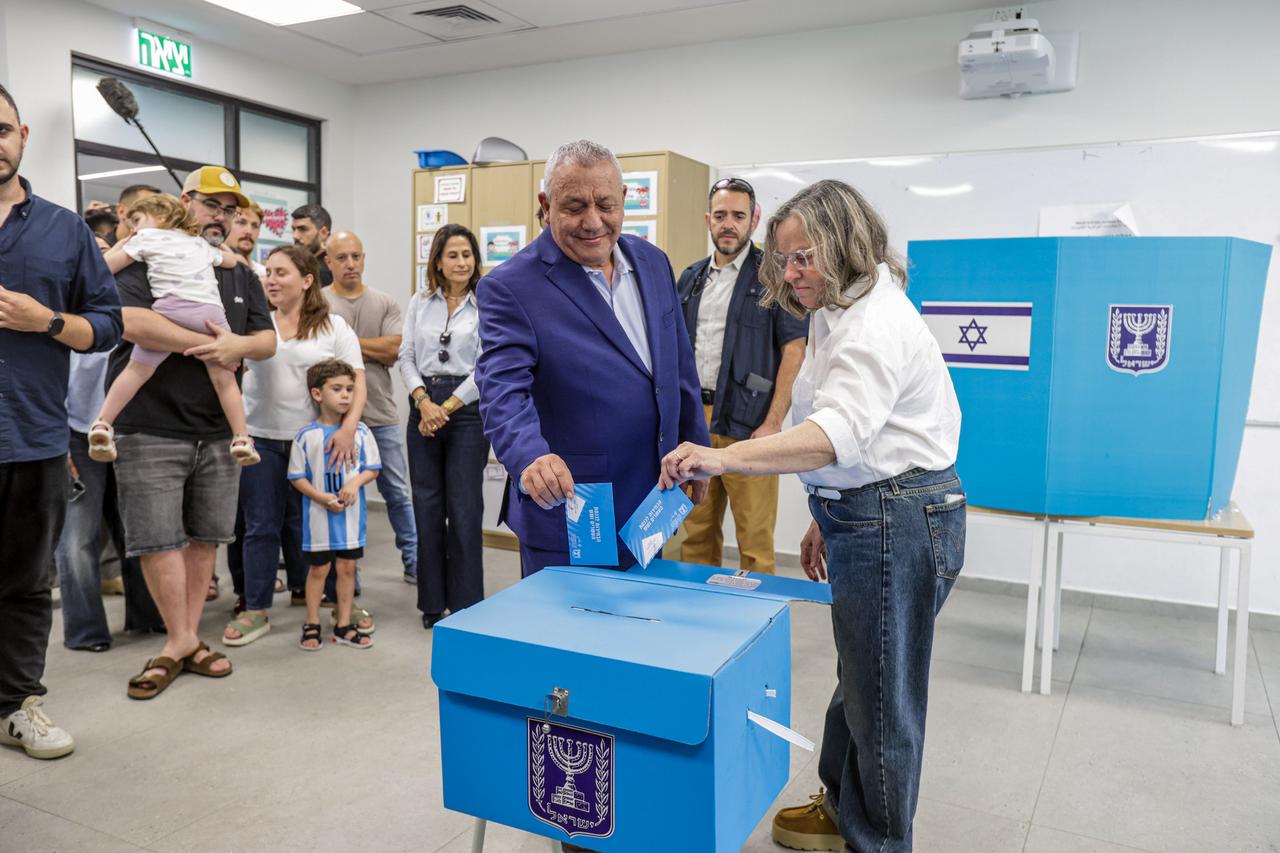

Double-envelope ballots are used by voters who cast their ballots away from their registered polling stations, including soldiers, diplomats, police officers and displaced residents.
Under the system, election officials first verify identification details on the outer envelope to prevent duplicate voting before separating it from the anonymous ballot for counting.
The latest projections, based on the completion of regular ballot counting, put Netanyahu's bloc at 53 seats, Eisenkot's opposition at 48 and Palestinian-led parties at 19.
The Joint List was projected to win 12 seats, while the United Arab List (Ra'am) was expected to secure seven, potentially giving Palestinian-led parties a record combined representation in the Knesset.
The figures mark a shift from earlier projections based on 89.8% of votes counted, which showed the same distribution of 53 seats for Netanyahu's bloc, 48 for the opposition and 19 for Palestinian-led parties.
Voter turnout reached 77.7%, the highest since 1999, according to the Central Elections Committee.
Meanwhile, Eisenkot declared late Wednesday that Israeli voters had rejected Netanyahu's governing alliance and pledged to continue efforts to establish a new administration.
In a post on X, the Yashar party leader said he had spent the day holding meetings and consultations aimed at translating the election results into a change of government.
“Long working days still lie ahead, but we are focused on the weighty task entrusted to us: bringing change to Israel and forming a Zionist government committed to conscription,” he wrote.
Eisenkot argued that voters had expressed no confidence in “the government of Oct. 7 and draft evasion,” as well as the broader “draft-dodgers’ bloc,” referring to Netanyahu's governing coalition.
He claimed the bloc had fallen to its weakest position in two decades.
“I feel the weight of the responsibility and the trust placed in me by hundreds of thousands of citizens who believe in the State of Israel and in Zionism,” Eisenkot said.
“Thanks to you, we made history,” he told supporters, highlighting the rapid rise of Yashar, which he said had established itself within a year as a political force representing different sections of Israeli society.
Eisenkot described his party as a credible and responsible alternative to Netanyahu's government and vowed to press ahead with efforts to form a new coalition.
“We will act and succeed,” he added.
The preliminary results leave Netanyahu's bloc eight seats short of a governing majority, while Eisenkot's opposition needs another 13.
With Palestinian-led parties projected to hold 19 seats, their parliamentary representation could prove important in determining whether either camp can assemble sufficient support to form a government.
However, the remaining double-envelope ballots could still change the distribution of seats among individual parties and the competing blocs.
The final composition of the Knesset will become clearer once the special ballot count is completed, with neither major political camp currently projected to secure a majority on its own.


 Set as preferred source
 Set as preferred source


 1 min read
 1 min read