

 Newsletters





Israeli Defense Minister Israel Katz said Thursday that the caretaker government would not seek permission from the opposition before ordering military attacks, as tensions mounted over concerns that Prime Minister Benjamin Netanyahu could launch a new strike against Iran before a new government takes office.
Katz responded to Gadi Eisenkot, the opposition leader tasked with forming Israel's next government, who had demanded regular security briefings from Netanyahu and urged him to refrain from launching nonurgent military operations.
"There is one prime minister, one defense minister who gives orders to the Israeli military, and one government responsible for making all decisions concerning Israel's security and the protection of its citizens, and which is, of course, subject to established and necessary oversight," Katz wrote on social media.
He claimed that the caretaker government did not need approval from the opposition or any legal authority to conduct military attacks in the Gaza Strip, Lebanon, Syria or the occupied West Bank.
Regarding Iran, he said the government was acting in full coordination with the Israeli military and would continue doing so as long as circumstances required.
His remarks came as Israel's security cabinet was reportedly preparing to meet Sunday amid growing opposition concerns over a possible military operation against Tehran.


Eisenkot, leader of the Yashar party, had urged Netanyahu to exercise restraint while negotiations to establish a new government continued.
In a letter to the caretaker prime minister, Eisenkot called on him to "exercise restraint and caution regarding dangerous steps that can wait until a new government is sworn in."
He also challenged Netanyahu's authority to make major security decisions without adequate parliamentary oversight.
“You currently head a transitional government that no longer enjoys the confidence of the Knesset; only 46 lawmakers still support your continuation as prime minister,” Eisenkot told Netanyahu.
Netanyahu's office dismissed the letter as “an irresponsible move and an overt attempt to politicize security issues.”
Eisenkot subsequently questioned why his request for an operational briefing had been rejected and why a meeting of the Knesset's Foreign Affairs and Defense Committee was being postponed until the following week.
“I will not allow a vacuum in oversight of a government that has lost the confidence of the Knesset,” he said.
Israeli public broadcaster KAN reported Thursday that the security cabinet was expected to convene Sunday for the first time since Oct. 5.
The planned meeting follows reports Wednesday that the cabinet had instructed the military to accelerate preparations for a possible strike against Iran and a broader military confrontation, according to KAN.
Opposition figures have expressed concern that Netanyahu could launch an attack against Iran to create conditions for a state of emergency and potentially facilitate the formation of a unity government with Eisenkot.
Eisenkot has opposed such an arrangement.
Those concerns followed remarks Netanyahu made to reporters at the Knesset on Wednesday.
“forming a unity government is possible, because the people know how to unite in times of hardship,” Netanyahu said.
There has been no confirmation that a new attack against Iran has been authorized.
Israeli law does not impose specific restrictions on caretaker governments launching military operations. However, such action requires approval from the security cabinet, which Netanyahu chairs and which includes ministers from his government.
The dispute comes as Netanyahu remains in office in a caretaker capacity following parliamentary elections that left his political alliance without a majority.
Israeli President Isaac Herzog tasked Eisenkot with forming a new government after factions representing 67 members of the 120-seat Knesset recommended him for the mandate, compared with 46 who backed Netanyahu.
The transition has coincided with continuing tensions between Israel and Iran.
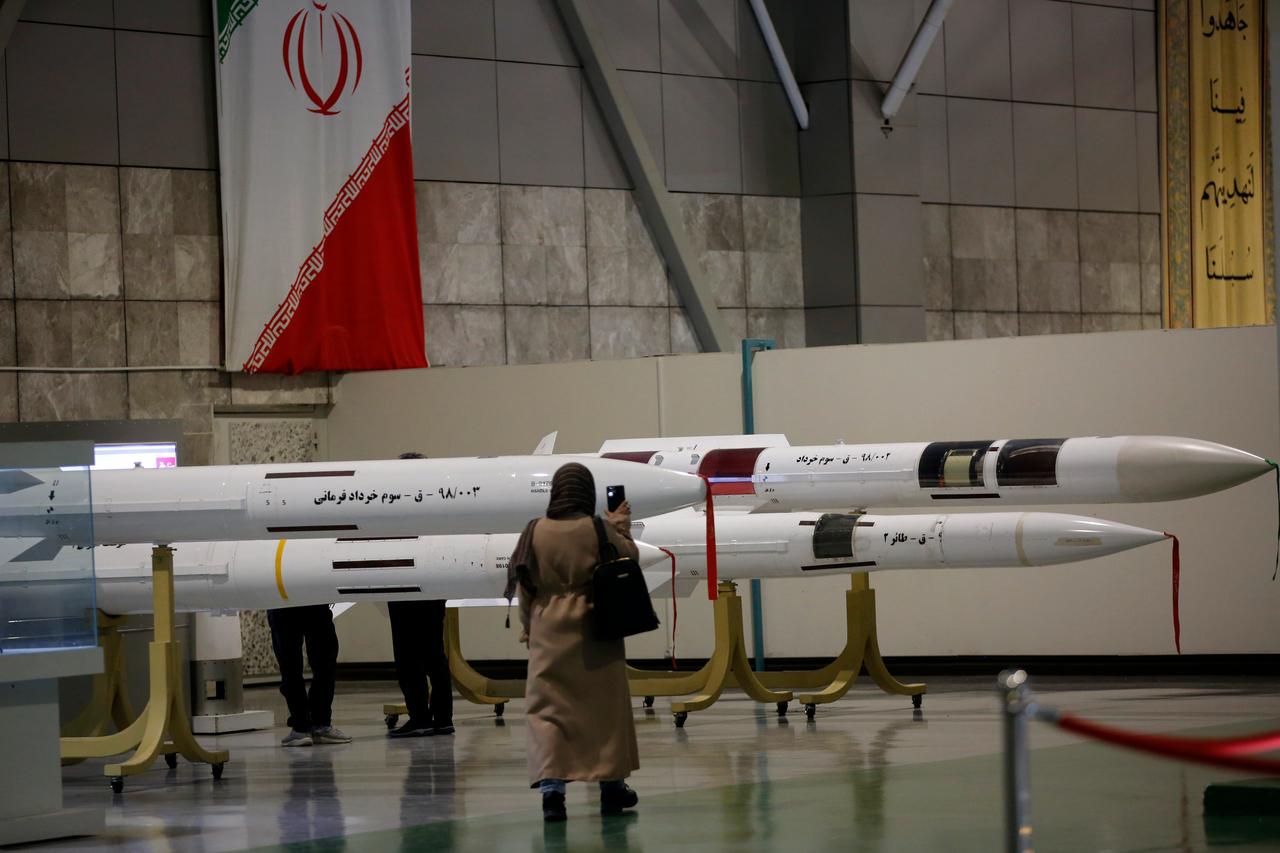
Since June 2025, Israel has fought two wars against Iran, with Tehran responding to Israeli attacks by launching ballistic missiles and drones.
Israel and the United States accuse Iran of pursuing nuclear and missile programs that threaten Israel and Washington's regional allies.
Tehran maintains that its nuclear program is peaceful and denies seeking nuclear weapons or threatening other countries.


 Set as preferred source
 Set as preferred source


 1 min read
 1 min read


