Newsletters





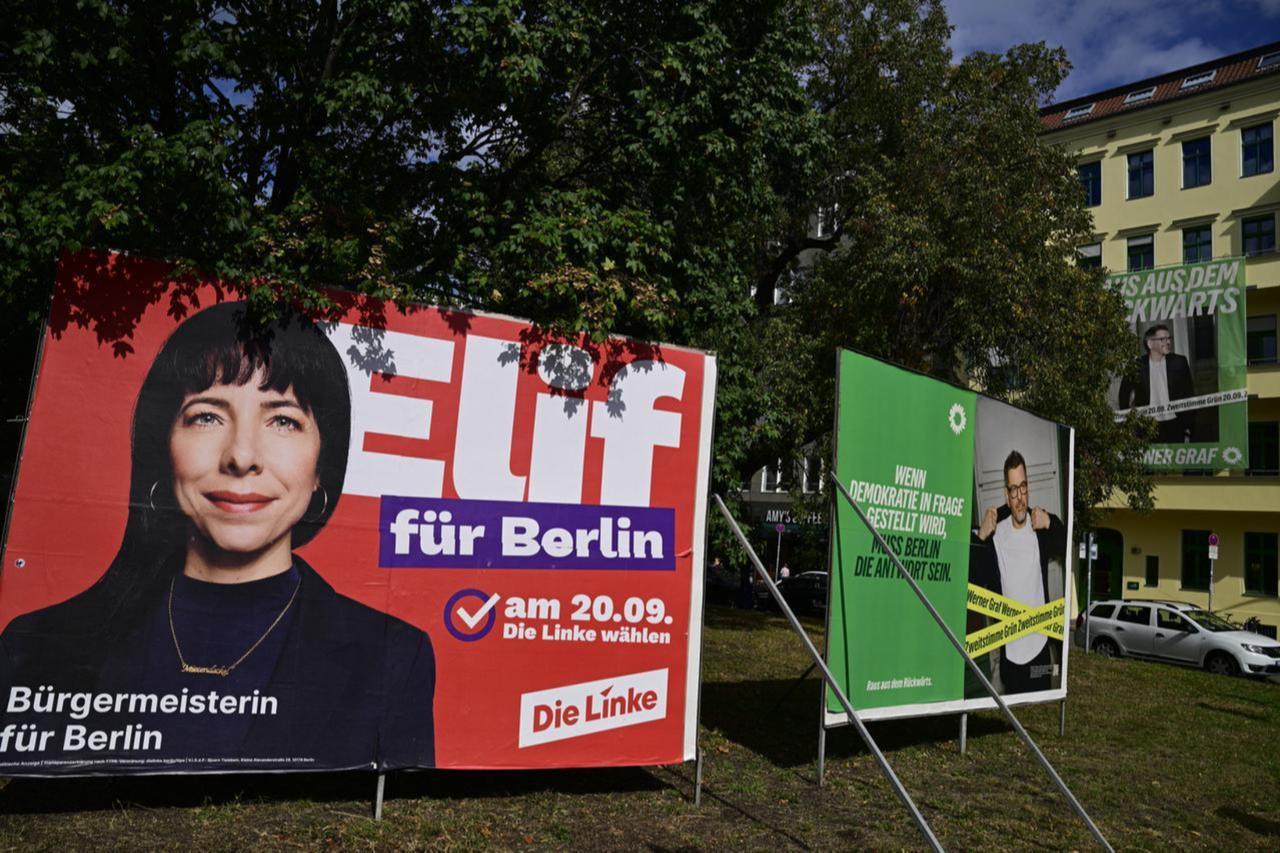
The president of Germany's Central Council of Jews said Sunday he opposes a Left Party-led government in Berlin, urging other parties to steer clear of coalition talks with the socialist party after it appeared headed for a historic first-place finish in the German capital's state election.
Josef Schuster said he was troubled by the Left Party's solidarity with pro-Palestinian demonstrators protesting the Israeli government, accusing the party of antisemitic statements during the campaign, a charge its officials have repeatedly denied.


According to a projection from German public broadcaster ARD, the Left Party stood at 25.3% of the vote, more than double the 12.2% it won in the 2023 election and over six points ahead of Chancellor Friedrich Merz's Christian Democratic Union (CDU), which polled at 19%.
The anti-immigrant Alternative for Germany followed at 16.3%, the Greens at 14.4% and the Social Democratic Party (SPD) at 12.1%.
The left-populist Sahra Wagenknecht Alliance stood at 4.8%, leaving its entry into the Berlin state parliament uncertain pending official results, since parties in Germany typically must clear a 5% threshold to win seats.
Despite the lead, the Left Party fell well short of an absolute majority and would need at least two coalition partners to form a government. Having campaigned on a change of course and against CDU policy, party officials see a three-way coalition with the SPD and the Greens as the most viable path to power.
If those talks fail, the second-place CDU could attempt to form a government with the SPD and the Greens instead, an option that would only produce a parliamentary majority if the Wagenknecht Alliance fails to clear the 5% threshold.
The Left Party's lead candidate, Elif Eralp, is a Turkish-German lawyer whose political outlook traces back to her parents, trade unionists who fled Türkiye for Germany as political asylum seekers shortly after the country's 1980 military coup.
Her mother is from Adana and her father from Kayseri. Eralp was born in Munich in 1981, about a month after her parents arrived in the country.
Now 45 and a Berlin resident for 16 years, Eralp has served in the Berlin House of Representatives since 2021, rose to deputy chair of the Left Party's parliamentary group in 2024 and became the party's deputy state chair in 2025.
Before entering state politics, she spent roughly 11 years as a legal adviser for the party in the Bundestag, after studying law in Hamburg and interning with the U.N. High Commissioner for Refugees while working on migrant and refugee rights.
Eralp has described her political awakening as beginning in childhood, when experiences of racism and a sense of injustice drew her toward activism, though she has said her parents never pushed their own politics on her.
Around age 10, she and two friends founded an environmental club in a garage; she later joined movements opposing nuclear power and campaigning against racism and gentrification.
Should she become Berlin's governing mayor, Eralp would be Germany's first female state leader with a migration background, a milestone she has framed as central to her candidacy.
Housing affordability has anchored Eralp's campaign. A longtime tenants' rights activist, she has campaigned on lowering rents and addressing the influence of large housing companies in Berlin, backing implementation of the result of the city's 2021 referendum, in which 57.6% of voters supported a legal process to bring the housing stock of companies owning more than 3,000 apartments into public ownership.
Her platform has also included capping rents in apartments owned by Berlin's public housing companies, a task force targeting excessive rents, a free bulky-waste collection day and a New Year's reception for homeless residents at Berlin's Red City Hall.
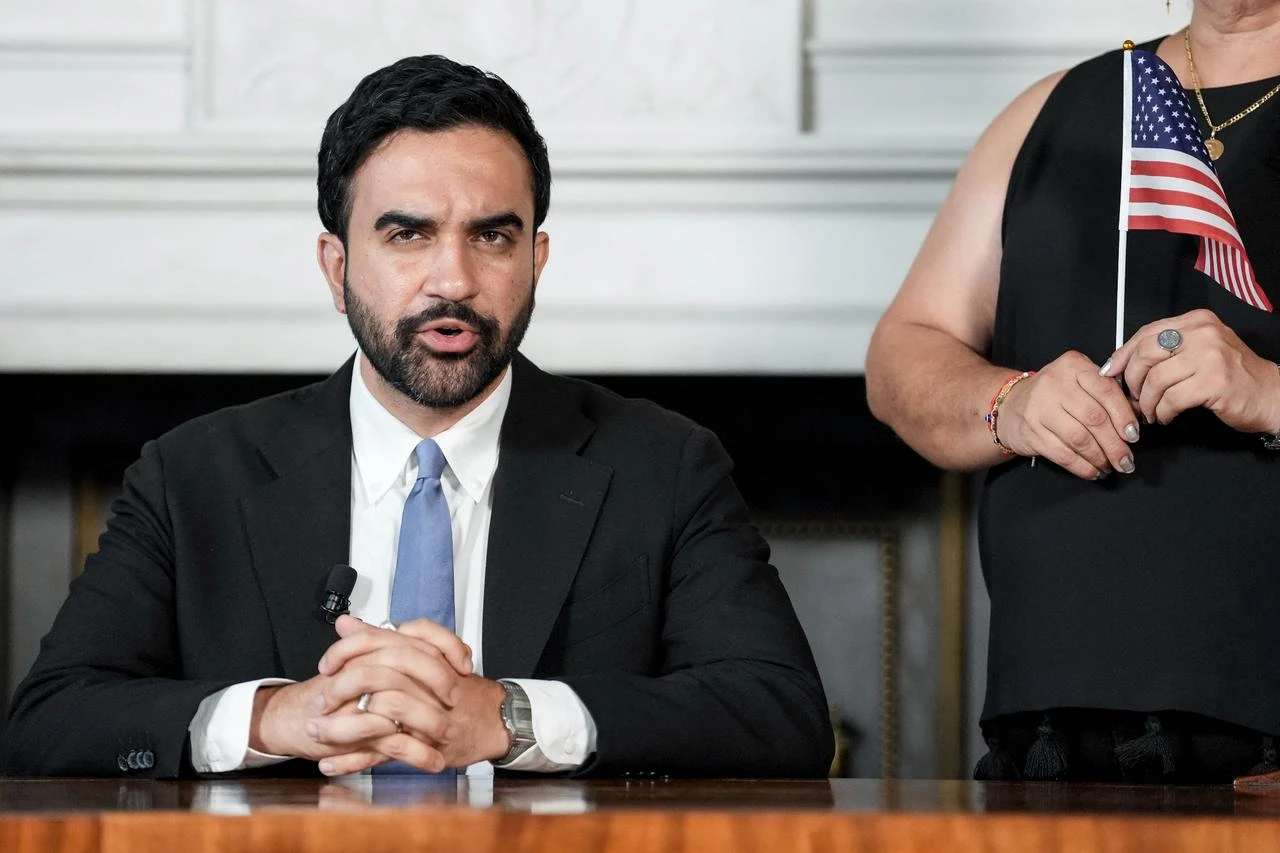
Media coverage has frequently likened Eralp to New York City's Zohran Mamdani, citing their shared immigrant backgrounds, left-wing politics and focus on affordability, a comparison she has said pleased her, adding she hoped Berlin might see a similar outcome.
She has also called for greater political inclusion of people with migration backgrounds and increased funding for organizations combating racism, while arguing that the rise of the far-right AfD stems less from migration itself than from what she described as flawed policy on housing and social rights.
Eralp has also spoken out on the war in Gaza and Germany's stance toward Israel. Referring to the international arrest warrant issued for Israeli Prime Minister Benjamin Netanyahu, she has said she would push for its enforcement should he visit Berlin.
She has separately criticized police conduct at pro-Palestinian demonstrations in the city, saying such measures should end.
Those positions have drawn criticism from Schuster, the Central Council of Jews president, who said the Left Party "repeatedly crossed the line with antisemitic remarks" during the campaign and warned that bringing the party into government would amount to promoting what he called the "ongoing normalization of hatred against Jews."
Eralp has rejected the characterization, saying party leaders distanced themselves from a handful of isolated incidents and pointing to her own record on projects combating antisemitism.
"It is absolutely clear that we stand for the protection of Jewish life," she said in a recent televised debate with her rival, adding, "Just as we stand for the protection of Muslim and Palestinian life."
Eralp has maintained close ties to Türkiye, where her father and other relatives still live and which she has called her "second home" after Berlin. Final, official results from Sunday's election were still pending as coalition negotiations were expected to begin in the coming weeks.


 Set as preferred source
 Set as preferred source


 1 min read

 1 min read