Newsletters




The Netherlands will skip next year’s Eurovision Song Contest, public broadcaster NPO announced Tuesday, pointing to “sensitivities” surrounding Israel’s participation. Eurovision is an annual international music competition in which countries are represented by singers and broadcast live across Europe and beyond.
The Dutch exit is the latest in a string of boycotts by countries opposed to Israel’s inclusion, which stems from its military campaign in Gaza launched after the Hamas attacks of Oct. 7.
“We have known for some time that Israel’s participation elicits various reactions in society and causes discussion and division,” said Jurre Bosman, NPO’s media director. He said the broadcaster decided, after consulting the Board of Broadcasters, to forgo participation in 2027.
The decision ends months of back-and-forth. In August, AVROTROS, the broadcaster that normally selects the Dutch entry and airs the show, withdrew, saying the contest could “no longer be considered neutral.” A month later, NPO took over responsibility for participation, only to reverse course Tuesday.
NPO Executive Chairman Jet de Ranitz acknowledged the move would disappoint many Dutch fans and said the contest would still be shown on public channels.
“We must conclude that it is currently too early to participate in the Eurovision Song Contest in 2027,” he said.
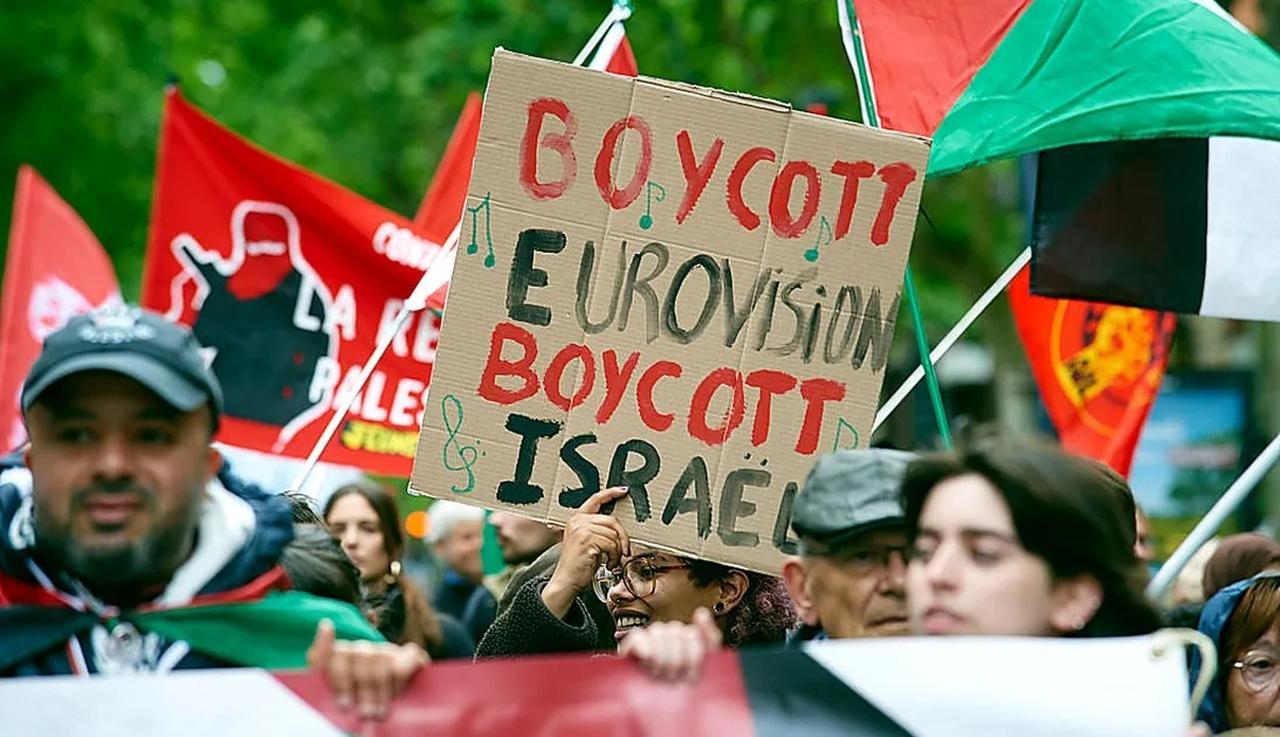

In August, organizers announced that any country involved in an armed conflict would be barred from hosting the contest. Withdrawals have continued nonetheless. Ireland has said it will not take part, and the head of Spain’s public broadcaster has backed a boycott. Earlier this month, the Czech public broadcaster pulled out but cited spending cuts.

Next year’s contest will be held on May 15 in Burgas, a Black Sea city in Bulgaria, which will host for the first time. Bulgarian singer Darina Yotova, known as Dara, won this year’s edition in Vienna, Austria, with “Bangaranga.”
The 2026 contest drew 131 million viewers, down 35 million from the year before, after five countries boycotted it over Israel’s participation. The Netherlands, Iceland, Spain, Ireland and Slovenia all withdrew, and the last three refused to broadcast the show.
The Dutch competed in the first contest in 1956 and have won five times, most recently with Duncan Laurence’s “Arcade” in 2019.
Martin Green, head of the European Broadcasting Union (EBU), which organizes the show, said he was “deeply sorry” about the decision.
“We understand their decision, and we respect the strength of feeling behind it in the Netherlands,” Green said. “At the same time, we believe the Eurovision Song Contest matters in a divided world.”


 Set as preferred source
 Set as preferred source


 1 min read

 1 min read