Newsletters


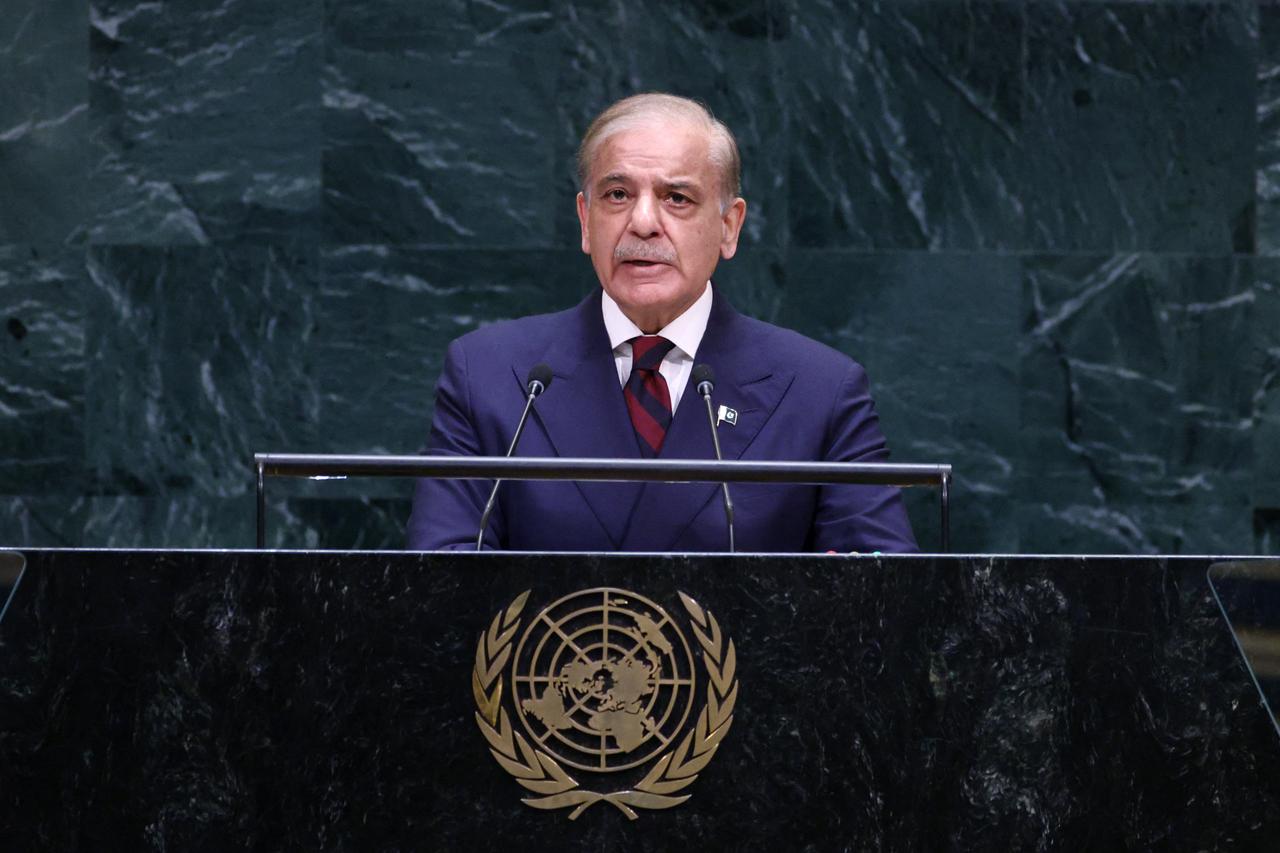


Pakistani Prime Minister Shehbaz Sharif said Friday that any threat to the safety and sanctity of Mecca is a "red line" that must not be crossed, strongly condemning recent Houthi attacks on Saudi Arabia during an address to the 81st U.N. General Assembly in New York.
"We once again condemn, in the strongest possible terms, the recent deplorable attacks by the Houthis against the Kingdom of Saudi Arabia," Sharif said.
"The attempted drone attack on the holy city of Mecca al-Mukarramah has outraged Muslims across the globe," he added. "Any threat to safety and sanctity ... is a red line that must never be crossed. No Muslim can even dare to think of committing such a heinous act."
Saudi Arabia last week accused the Houthis of targeting Mecca for the first time since 2017 with a drone that was intercepted. The Houthis denied carrying out the attack.
Saudi Arabia also intercepted Houthi ballistic missiles Thursday after warnings were issued for several regions, including Mecca.
The attacks were the latest in an escalation that began in July, when renewed hostilities ended a years-long truce and drew Yemen into the wider conflict in the Middle East.
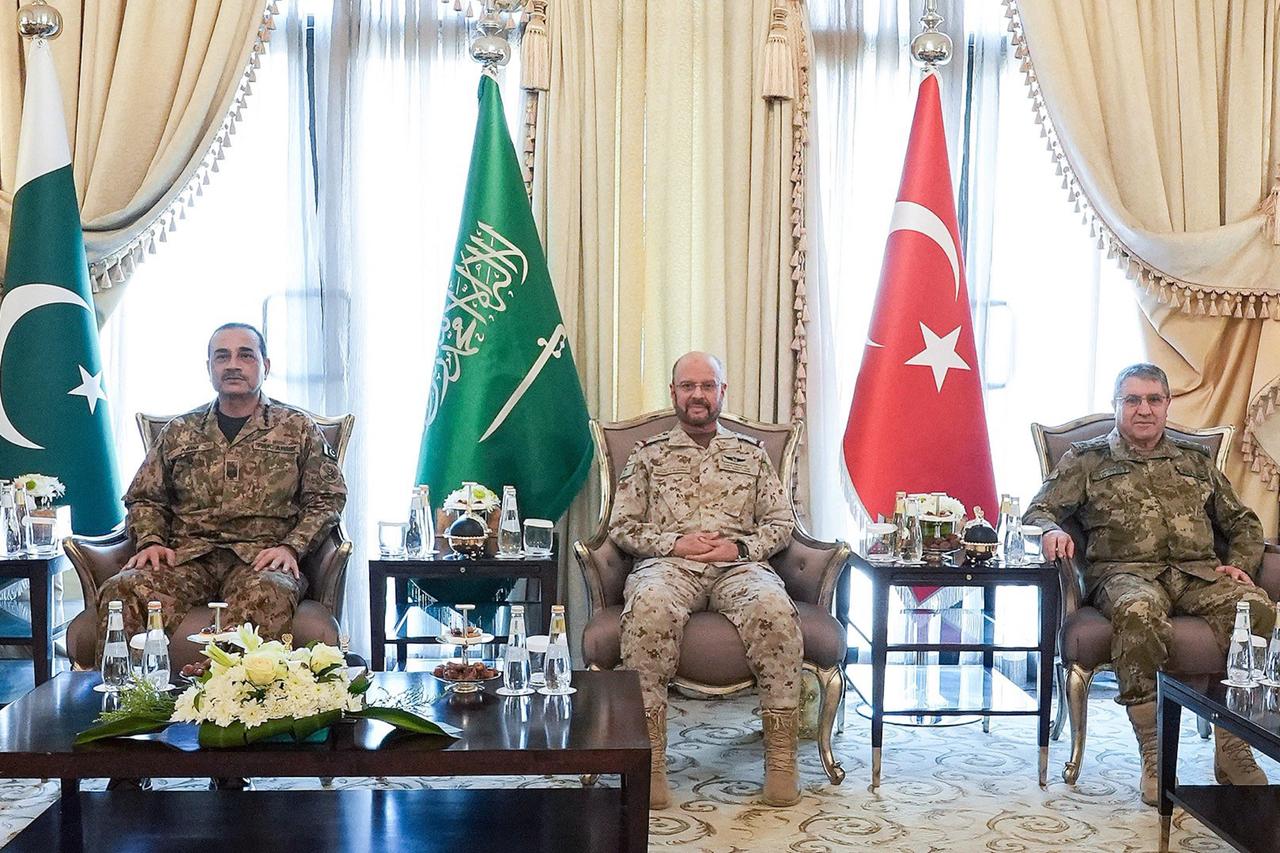
Pakistan maintains ties with Iran, which backs the Houthis, while Islamabad is also strategically close to Saudi Arabia and signed the Mecca Joint Defense Agreement with Saudi Arabia and Türkiye last month.
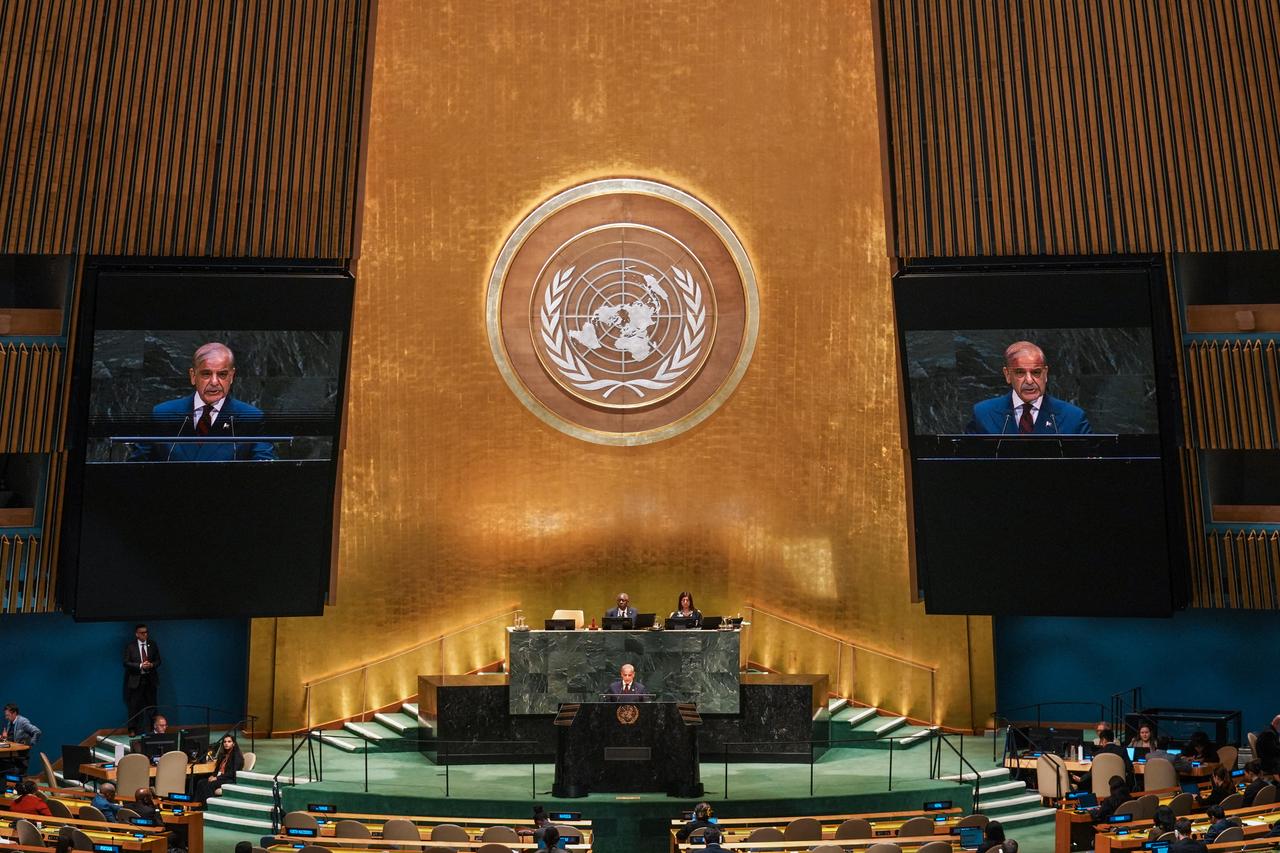

Sharif said conflicts that began between the U.S. and Iran in February had spread across the Middle East, causing casualties, harming the global economy and disrupting critical maritime routes, particularly the Strait of Hormuz.
He said Pakistan had moved quickly to bring U.S. and Iranian officials together in Islamabad as part of efforts to end the conflict.
Pakistan helped secure a ceasefire on April 8 and later hosted more than 20 hours of talks between U.S. and Iranian officials. A June agreement brokered by Pakistan provided a framework and 60 days for negotiations on a longer-term settlement, but retaliatory strikes later resumed.
"We are witnessing a dangerous escalation in conflicts," Sharif said. "Amid the roar of missiles, drones, and guns, the voice for diplomacy must echo even louder and stronger."
He described the Strait of Hormuz and the Bab al-Mandab Strait as "arteries" of the global economy and said both must remain open rather than become points of confrontation.
Sharif also reiterated that the Mecca Joint Defense Agreement signed by Türkiye, Saudi Arabia and Pakistan is "not directed against any country."
He described the pact as "a collective commitment for defense, stability and peace in the region, and nothing more."
"Pakistan has chosen dialogue over confrontation, cooperation over coercion, and peace over war," Sharif said.
Turning to the Palestinian issue, Sharif said Palestinians had faced occupation, forced displacement and death for generations and expressed concern over Israeli violence spreading in the occupied West Bank.
He said a just and lasting settlement required the establishment of an independent, sovereign and territorially contiguous Palestinian state.
Sharif also condemned continuing Israeli attacks on Lebanon and Syria and called for them to end immediately.
He urged all sides to restore trust, preserve peace and promote unity, while also expressing concern over what he described as an "alarming rise in Islamophobia."
Sharif said religious hatred "must have no place in this world."


 Set as preferred source
 Set as preferred source


 1 min read
 1 min read