Newsletters


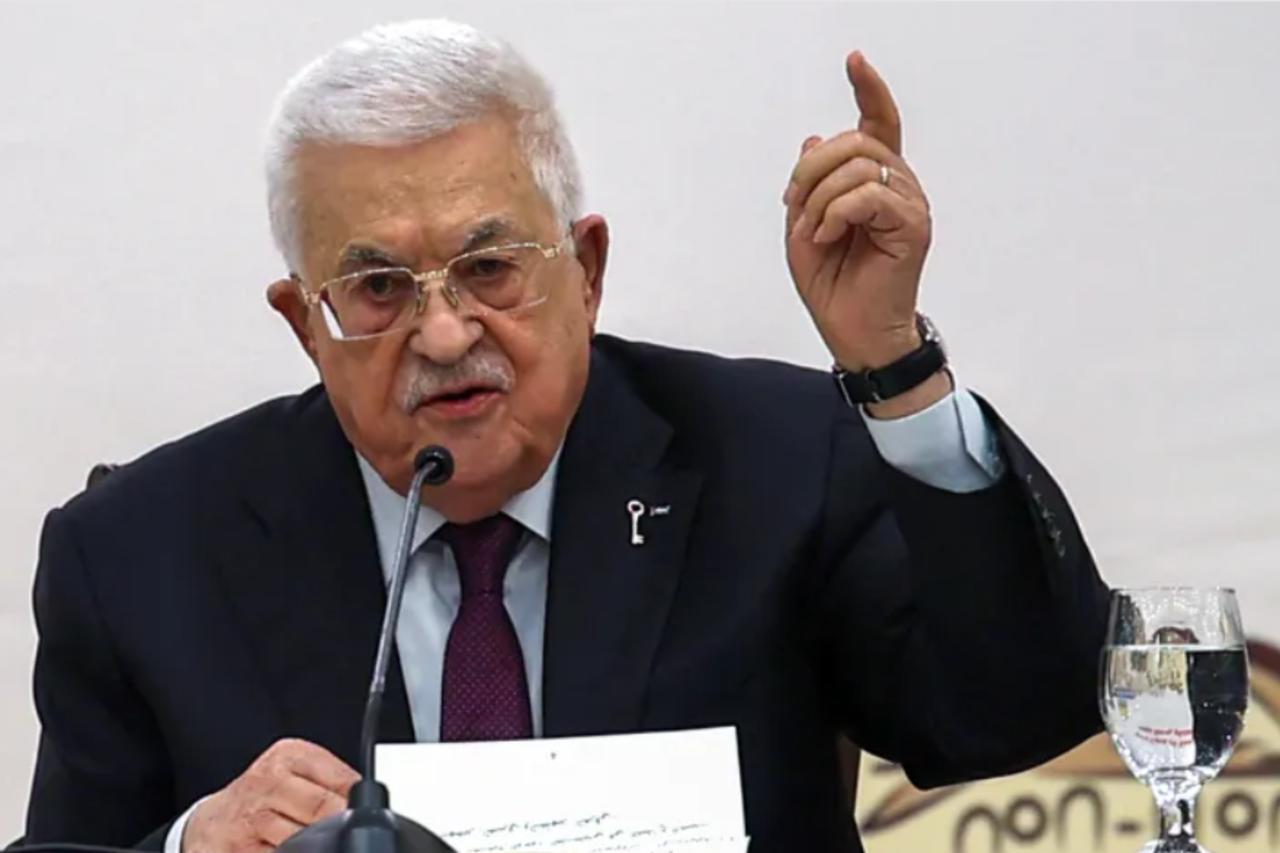


Palestinian President Mahmoud Abbas announced on Wednesday that he will proceed with implementing a national reform program, including a review and update of educational curricula to promote values of tolerance and to reject violence and incitement, according to his remarks.
Abbas said in an official statement that issuing decree laws falls exclusively within the president’s constitutional powers, including the preparation of constitutional frameworks for a transition to a statehood phase.
The Palestinian president also reaffirmed his commitment to updating election laws and issuing a political parties law in a way that ensures adherence to the Palestine Liberation Organization’s program.
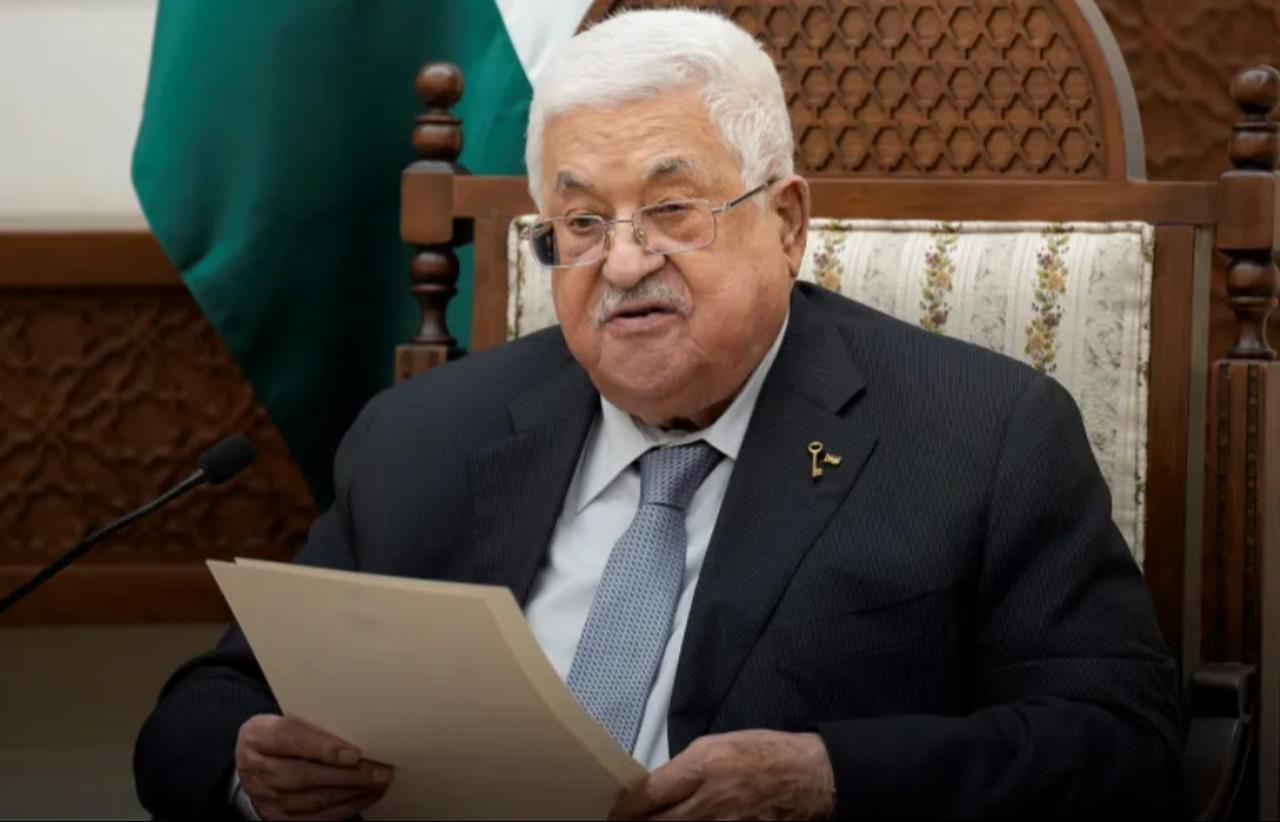

He said the current phase facing the Palestinian cause demands the highest level of national responsibility, warning of incitement campaigns and the distortion of facts on some social media platforms, which he said pose a threat to national unity amid the occupation’s policies.
Abbas stressed that honoring the sacrifices of the dead, prisoners, the wounded and their families is a firm national and moral commitment that must not be subjected to political one-upmanship or exploitation, or used to stoke division or undermine legitimate national institutions.
Abbas said issuing decree laws falls within the exclusive constitutional powers of the president of the State of Palestine under the Basic Law, and that such measures should serve the supreme national interest, protect the political system and ensure the continuity of state institutions.
He said he is pressing ahead with a comprehensive national reform program aimed at modernizing the legal and institutional framework, entrenching the rule of law, strengthening good governance, transparency and accountability, and ensuring the separation of powers to boost public trust in state institutions.
Abbas said the program includes a review of laws governing political, administrative, economic and social life, with a focus on financial governance, public administration, the judiciary, anti-corruption efforts and strengthening the independence of oversight bodies.
Abbas also reaffirmed his commitment to completing constitutional and political reforms, including updating election laws and issuing a modern political parties law, based on adherence to the Palestine Liberation Organization’s program, international legitimacy, the two-state solution, one law and one legitimate weapon.
Palestinian President Mahmoud Abbas said the Palestinian National Foundation for Economic Empowerment, “Tamkeen,” is an official executive body operating under existing policies and legal decisions, with no legislative or political authority. He warned against assigning it responsibilities beyond its legal mandate.
Palestinian Commission of Detainees and Ex-Detainees Affairs head Raed Abu Al-Hummus on Sunday criticized Tamkeen, calling for it to be excluded from the detainees file and the payment of their stipends. He said its policies “deny the struggles of the Palestinian people.”
In a statement published by the commission, Abu Al-Hummus urged Fatah’s Central Committee to adopt as an official party position the stance of Central Committee member Tawfiq al-Tirawi on halting payments for the families of those killed, detainees and the wounded.
Al-Tirawi said days earlier that Tamkeen should be removed from the detainees file and that the issue should return to a comprehensive national approach involving relevant institutions.
Abbas issued a presidential decree in February transferring detainees allowances paid by the Palestinian Authority to Tamkeen.
Former commission head Qadura Fares called for the decree to be reversed. Abbas later forced Fares into retirement and appointed Abu Al-Hummus as his successor.
Commenting on Abbas’ statement, Hamas spokesperson Hazem Qassem told Al Araby Television that the reforms and decree-law measures cited by the Palestinian president require “a joint, consensus-based national dialogue, not a unilateral one,” in his words.
Qassem said the Palestinian president’s statement addressed major national and constitutional issues, but that handling them through decrees and individual decisions is “a major mistake that strikes at the core of national work.”
Qassem said constitutions and major reforms “are not built through committees or decrees, but through comprehensive national consensus,” warning that continuing with a unilateral approach deepens what he described as the “national and constitutional flaw” affecting decisions issued since the Palestinian split.
He stressed that Hamas is ready to show greater national flexibility to reach a unified Palestinian political system that represents all Palestinians, based on elections and partnership, while holding the Palestinian Authority’s leadership responsible for obstructing that path by refusing to include others in political decision-making.


 Set as preferred source
 Set as preferred source



 3 min read