Newsletters


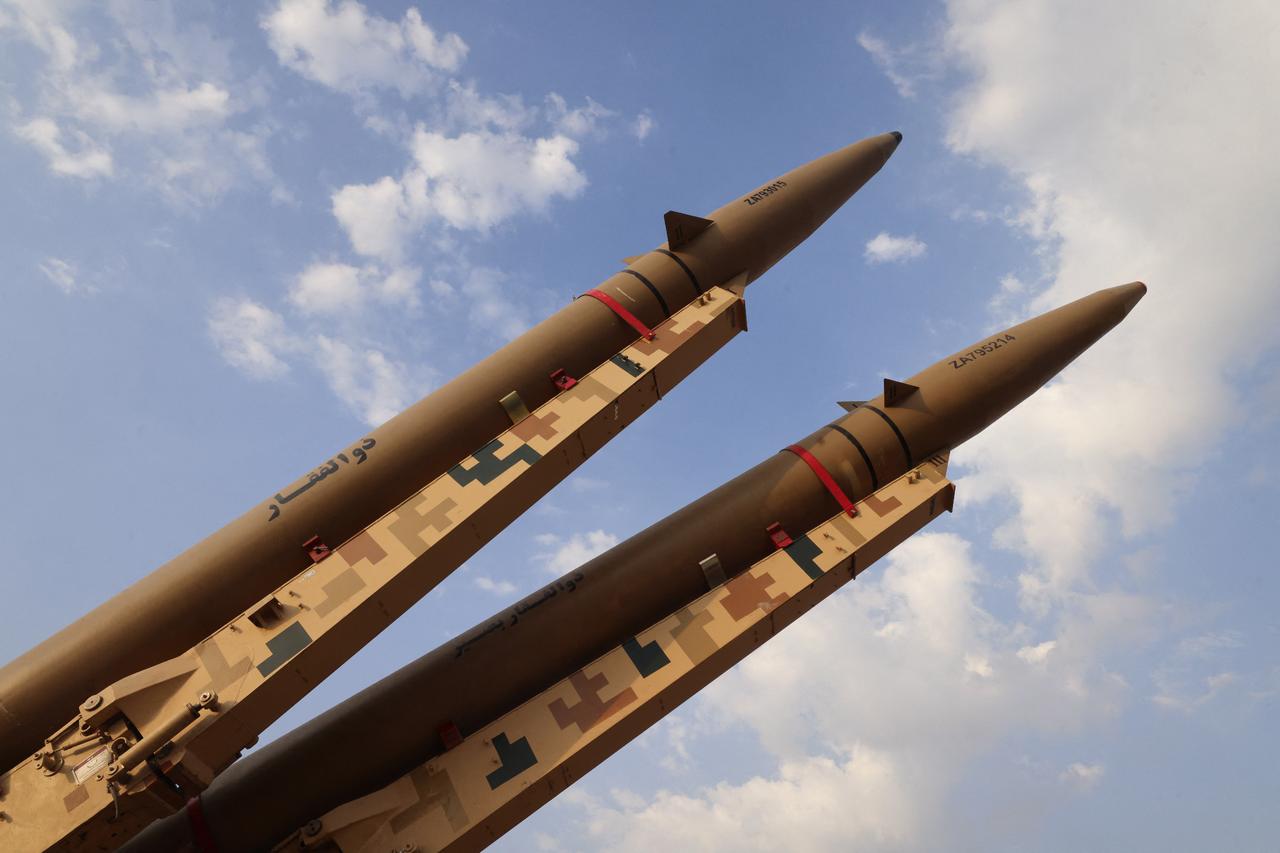


Iran remains an "emerging" space power able to challenge U.S. forces in the Middle East despite American strikes on its key space-related facilities, according to a report by the Defense Intelligence Agency (DIA).
Iran took offensive action against U.S. space capabilities during Operation Epic Fury and has several land-based jamming systems that can degrade satellite-based GPS, the DIA said.
In September, the U.S. Transportation Department warned of "significant" interference to global navigation systems in the Strait of Hormuz.
U.S. officials are also concerned about Iran’s use of space-based intelligence to strike military sites more accurately.
"Space is accessible and affordable today," Brig. Gen. Todd Benson, commander of Space Forces Central, said at a Mitchell Institute webinar last month. "It used to be that you had to be a world power to have any space capability or access to space."


U.S. Central Command (CENTCOM) chief Adm. Brad Cooper said the military achieved “space superiority” over Iran in March after striking the country’s space command. Some analysts doubt the claim given Iran’s persistent electronic warfare and jamming assets.
If Iran can degrade U.S. space capabilities, "we don’t have superiority" over it, said Todd Harrison, an aerospace expert at the American Enterprise Institute.
"Us declaring space superiority in this conflict is kind of like declaring air superiority when the adversary is consistently able to shoot down your planes," he told Axios.
Iran does "have some capabilities that are challenging our use of space," said Kari Bingen, a senior fellow at the Center for Strategic and International Studies, though she noted its assets pale next to those of the U.S., China and Russia.
Iran's Ministry of Defense and Armed Forces Logistics launched three satellites into low-Earth orbit in 2024, the first successful flight of its Simorgh rocket, the DIA said. Iran now has about a dozen operational satellites, according to AEI data, while the U.S. has more than 1,000 times as many.
Iran reportedly bought a Chinese spy satellite that aided ground targeting, according to the Pentagon’s Irregular Warfare Center (IWC). In May, the State Department sanctioned three Chinese entities for "providing satellite imagery that enables Iran’s military strikes."
Russia launched two sensing satellites for Iran in 2022 and 2024, the DIA said, with more Russian-backed launches reported in 2025.
Iran is pursuing military and civil space programs to "boost its national prestige, economic development, and military modernization," and is "focused on improving guidance and navigation systems resistance to electronic attack," the DIA said.
The report adds to concern in Washington over the Iran space threat as the U.S. weighs its next steps in the war.


 Set as preferred source
 Set as preferred source


 1 min read


 1 min read