Newsletters





Syria's Foreign Ministry on Sunday condemned Israeli excavation work near the separation line with the occupied Golan Heights, calling the project a "flagrant breach" of the 1974 disengagement agreement between the two countries.
The condemnation came after Israeli forces resumed excavation work west of the village of al-Asha in the southern Quneitra province, part of a long-running project known as "Sofa 53."
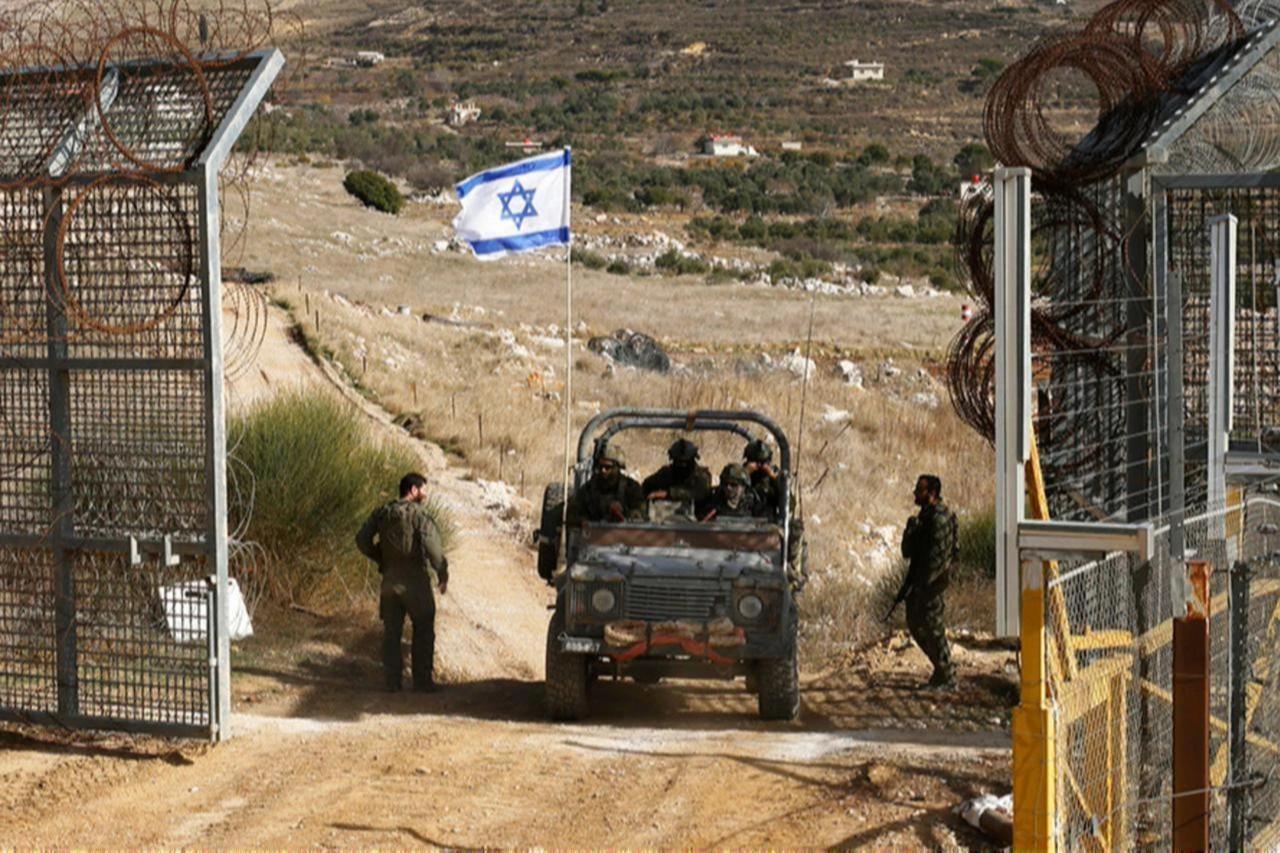

In a statement, the Foreign Ministry described the renewed work as part of a pattern of continuing Israeli violations within the buffer zone established under the disengagement agreement.
"The continuation of the Israeli occupation's aggressive approach, accompanied by attacks and incursions on the ground, poses a direct threat to regional security and stability and undermines international law," the ministry said.
The ministry called on the international community to take deterrent measures to halt the practices and prevent their recurrence.
It also reaffirmed Syria's right to exercise full sovereignty over all of its territory under international law and relevant United Nations resolutions, urging the international community to fulfill what it called its legal and moral responsibilities to protect state sovereignty and respect borders.
According to Syria's Al-Ikhbariya television channel, the work underway involves excavation and construction of a military road running along the separation line inside the buffer zone.
Israel began the project, also referred to as the "Great Storm," in mid-2022 near the town of Hader in northern Quneitra, Al-Ikhbariya reported.
The work has since extended through several areas, including Jabata al-Khashab, al-Hamidiyah, al-Qahtaniyah, Ruweihina, Bir Ajam and Bariqa, with its route continuing south through al-Asha toward the point where the Syrian, Jordanian and Israeli boundaries converge.
As part of the project, the Israeli army has built a military road roughly 8 meters wide, flanked by earth berms reaching about 5 meters in height, the broadcaster said. Israeli forces have also established observation posts and military positions along the route, adjacent to the ceasefire line in the occupied Golan Heights.
Syrian accounts cited by Al-Ikhbariya indicate that Israeli forces have advanced between 300 and 1,000 meters beyond the ceasefire line, with construction activity accelerating in late 2024, particularly after the fall of former President Bashar al-Assad's government.
Residents in the area have previously said the project's expansion has rendered thousands of dunams of agricultural land in rural Quneitra unsuitable for farming and grazing, while also disrupting water flows and altering the region's natural landscape.
Since Assad's fall on Dec. 8, 2024, Israel has expanded its military operations inside Syria, moving troops into the Golan buffer zone and nearby positions.
Syria has demanded the withdrawal of Israeli forces from the areas they have occupied and says it remains committed to the terms of the 1974 disengagement agreement. Israel has said its military movements in the area are driven by security considerations.
The Golan Heights, a strategic plateau along the Syria-Israel border, was seized by Israel from Syria during the 1967 Middle East war and annexed in 1981 in a move not recognized by the United Nations or most of the international community.
The 1974 disengagement agreement, brokered after the 1973 Arab-Israeli war, established a demilitarized buffer zone patrolled by U.N. observers to separate Israeli and Syrian forces.


 Set as preferred source
 Set as preferred source


 1 min read



 1 min read