Newsletters


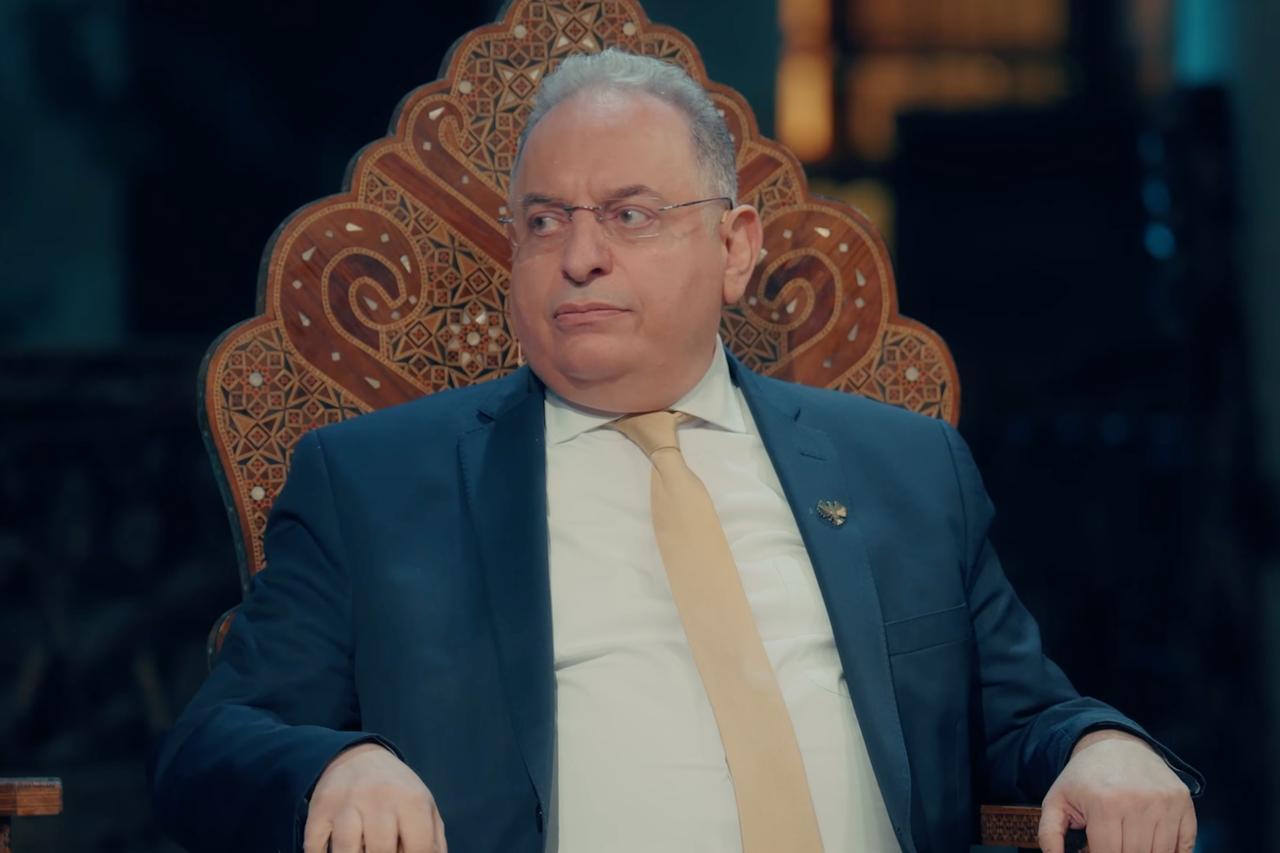


Syrian Finance Minister Mohammad Yusr Barnieh said the government has repaid all outstanding advances owed to the Central Bank of Syria and that "domestic debt is now zero," while outlining plans for a simplified tax system with lower rates and broader compliance in an interview on Saloon Al-Jumhuriya on Al Jazeera’s Syria Now platform.
The finance minister said the government recorded a budget surplus during the first 10 months of the year but stressed from the outset that the figure cannot be separated from the country’s social realities.
"Yes, we have a budget surplus," he said, "but this surplus does not reflect an ideal situation."
He said the surplus should not, in itself, be viewed as an achievement.
"No one can boast about having money in their pocket while their children are hungry, their schools are destroyed, and their hospitals need rehabilitation," he added.
Barnieh attributed the surplus to what he described as a direct result of anti-corruption efforts and tighter control over capital spending, saying the government had curbed spending on projects that were not ready to move forward.
He said the shift had had a clear fiscal impact but did not negate the urgent need to channel resources toward social sectors.
The minister linked the management of public funds to transparency as a prerequisite for public trust, saying, "Every lira that enters the state budget, you will know where it came from and where it was spent."
He said the government will publish regular financial reports after the budget is approved, describing citizens as partners in oversight and accountability.
In this context, Barnieh said fiscal discipline is fundamental to any economic stability, arguing that "the stability of the Syrian pound comes first and foremost from discipline in public finances and not financing the deficit through the central bank."
He said the policy is not a temporary measure but a long-term choice.
Speaking about public debt, the finance minister said the government has repaid all outstanding advances owed to the Central Bank of Syria, adding that "domestic debt is now zero."
He said the government is keen to avoid relying on the central bank for financing, in support of its independence.
He put external debt at about $4.5 billion, saying the government has entered into negotiation tracks to address it.
"We do not want to saddle future generations with any debt," he said, adding that easy borrowing is something "we have seen sink other countries."
He said any potential borrowing would be "on very concessional terms and for clear social or strategic objectives."
Domestically, the finance minister outlined the contours of a new tax system, saying it is built around simplification and lower rates, alongside a broader compliance base.
"We want to cut taxes but increase compliance," he said.
He added that a sales tax would be set at around 5% and that broad segments of low-income earners would be exempt.
At the same time, he said the state "will not compete with the private sector," adding that public-sector companies will be restructured or converted into joint-stock firms, with the option of merging or liquidating those deemed nonviable, in a bid to support economic growth.
The Syrian pound and dollarization as a temporary phase
On the currency, Barnieh denied there was any permanent shift toward dollarization, describing the use of the U.S. dollar as "a transitional phase."
"We want to reach a stage where the citizen trusts the Syrian pound and uses it without fear," he said.
He added that this shift would not be achieved through coercive or security-driven decisions but through fiscal stability and a coherent monetary policy that gradually restores confidence in the national currency.


 Set as preferred source
 Set as preferred source


 4 min read