Newsletters


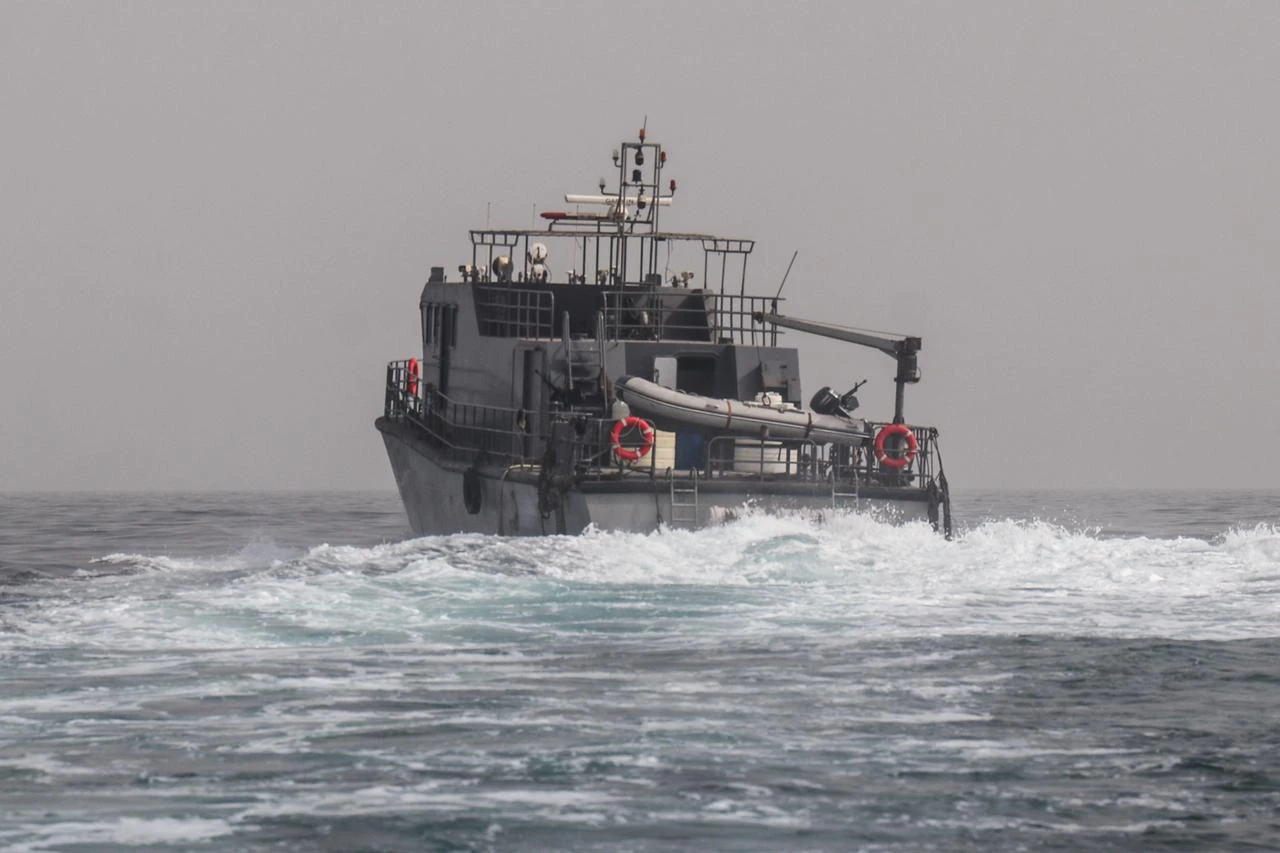


The United Kingdom Maritime Trade Operations (UKMTO) center said Tuesday evening that it received a report of suspicious activity after the master of a tanker reported hearing an explosion while transiting the southern Red Sea.
The center said the incident was reported by a company security officer after the vessel's master heard the explosion during transit.
UKMTO said the crew and vessel were safe and that no environmental damage had been reported.
It advised vessels transiting the area to exercise caution and report any suspicious activity.
The agency did not identify the tanker or attribute the reported explosion to any party.
The advisory came hours after Yemen's Houthi group said it targeted a Saudi oil tanker in the Red Sea with ballistic missiles for violating a blockade on the kingdom's ports announced by the Iran-backed group.
"The targeting of the Saudi vessel came after it ignored warnings," a Houthi military spokesman said.
He identified the ship as the NCC Ghazal and said it had been "forced to turn back."
Saudi Arabia had not commented on the tanker claim, but it reported intercepting drones targeting oil facilities in the country's east and blamed pro-Iran militias in Iraq.
MarineTraffic, a website owned by maritime tracking firm Kpler, listed the Ghazal as a Saudi-flagged tanker whose last known location was the port of Yanbu, the terminus of an important oil pipeline on the kingdom's Red Sea coast.
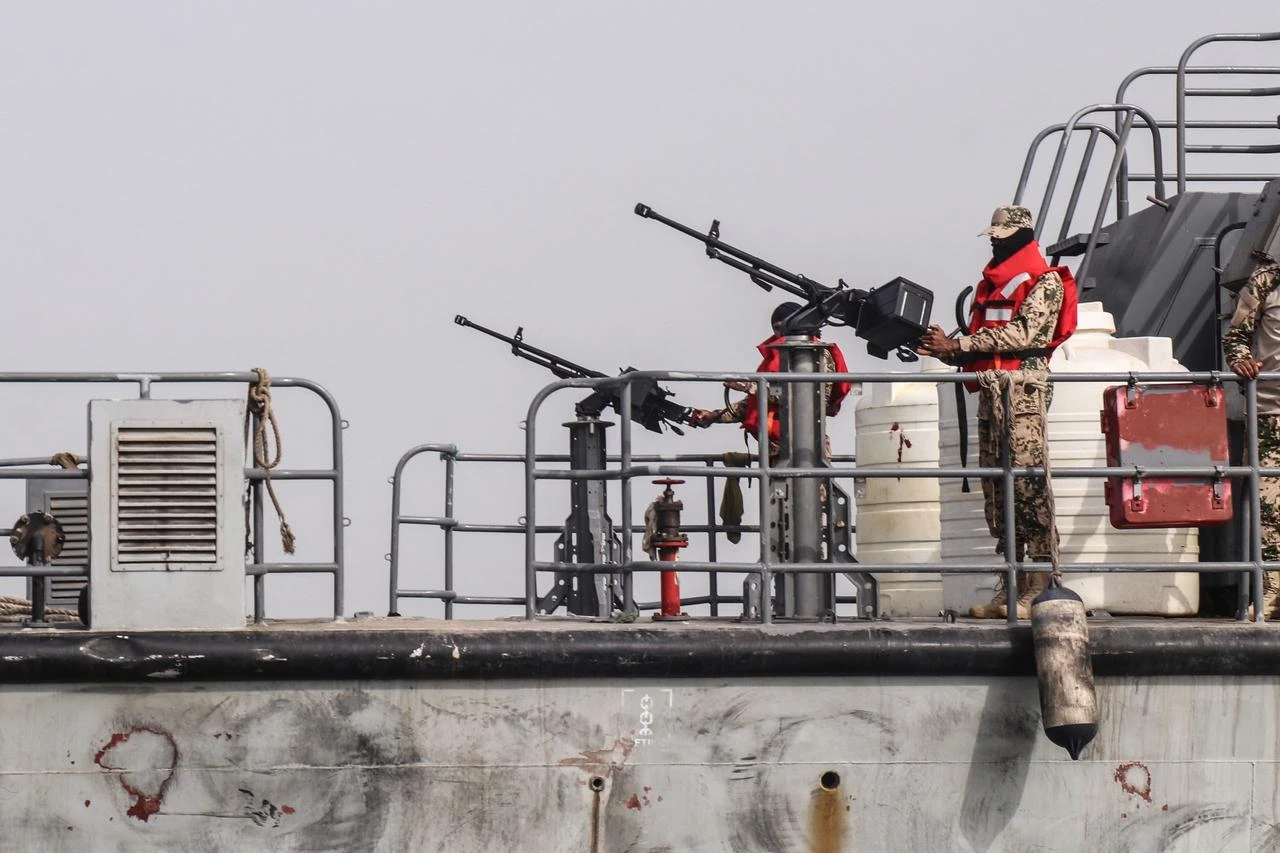

Last week, the Houthis declared a maritime blockade of Saudi Arabia and have since claimed attacks targeting Saudi tankers and oil infrastructure.
The blockade has threatened Saudi Arabia's ability to export supplies after Iran's parallel blockade of the Strait of Hormuz following renewed hostilities in the Middle East war, cutting off the kingdom's other main maritime route.
Riyadh last week struck Houthi targets in Yemen in response to threats to Red Sea shipping.
A Saudi-led military coalition fought the Houthis in support of Yemen's internationally recognized government after war broke out in the country in 2015.
The latest flare-up marks the first time in years that the two sides have traded blows, threatening a 2022 truce that has largely held despite expiring.
Saudi Defense Ministry spokesman Turki al-Maliki said late Tuesday that "aerial defenses intercepted and destroyed several drones that attempted to target oil installations" in the country's east.
He said "these new terrorist attacks were launched from Iraqi territory and carried out by militias linked to Iran."
It was the second day in a row that Riyadh blamed Iran-backed groups in Iraq for launching attacks.
Saudi Arabia and other Gulf countries had accused pro-Iran militias in Iraq of launching waves of attacks on their territory earlier in the Middle East war, though the groups have not claimed any attacks in the region since the resumption of hostilities.
On Monday, the Islamic Resistance in Iraq, an umbrella network of Iran-backed Shiite militias, called the Saudi accusations "fabrications" aimed at justifying what it described as Riyadh's inability to respond to Yemeni strikes.
Maritime traffic showed sharply diverging patterns at two of the world's most strategically important shipping chokepoints, with crossings through Bab al-Mandeb significantly outnumbering those through the Strait of Hormuz, according to MarineTraffic data.
The Strait of Hormuz recorded 29 verified crossings between July 24 and 26, including 21 vessels exiting the Middle East Gulf and eight entering, MarineTraffic said Monday on X.
Routing was evenly divided, with 14 vessels using the Iranian Unilateral Scheme and another 14 classified as "Route Undetermined." One vessel used the Hormuz Traffic Separation Scheme.
By comparison, Bab al-Mandeb recorded 100 verified crossings during the same period, with 51 vessels entering the Red Sea and 49 exiting.
Ninety vessels followed the Traffic Separation Scheme, while 10 completed "dark transits," meaning their movements were not fully visible through publicly transmitted tracking signals.
MarineTraffic said several ships that had previously delayed journeys or reversed course later completed their crossings, suggesting operators were reassessing risks rather than avoiding the Bab al-Mandeb route entirely.
Traffic in the Red Sea has become increasingly volatile after the Houthis announced the blockade targeting Saudi-linked shipping, prompting several oil tankers to reverse course or alter routes near Bab al-Mandeb.
Shipping through Hormuz, meanwhile, has remained restricted amid the U.S.-Iran conflict, attacks on commercial vessels and elevated insurance and security risks.
The strait carries around one-quarter of global seaborne oil trade, as well as significant volumes of liquefied natural gas and fertilizers.


 Set as preferred source
 Set as preferred source


 1 min read
 1 min read