Newsletters


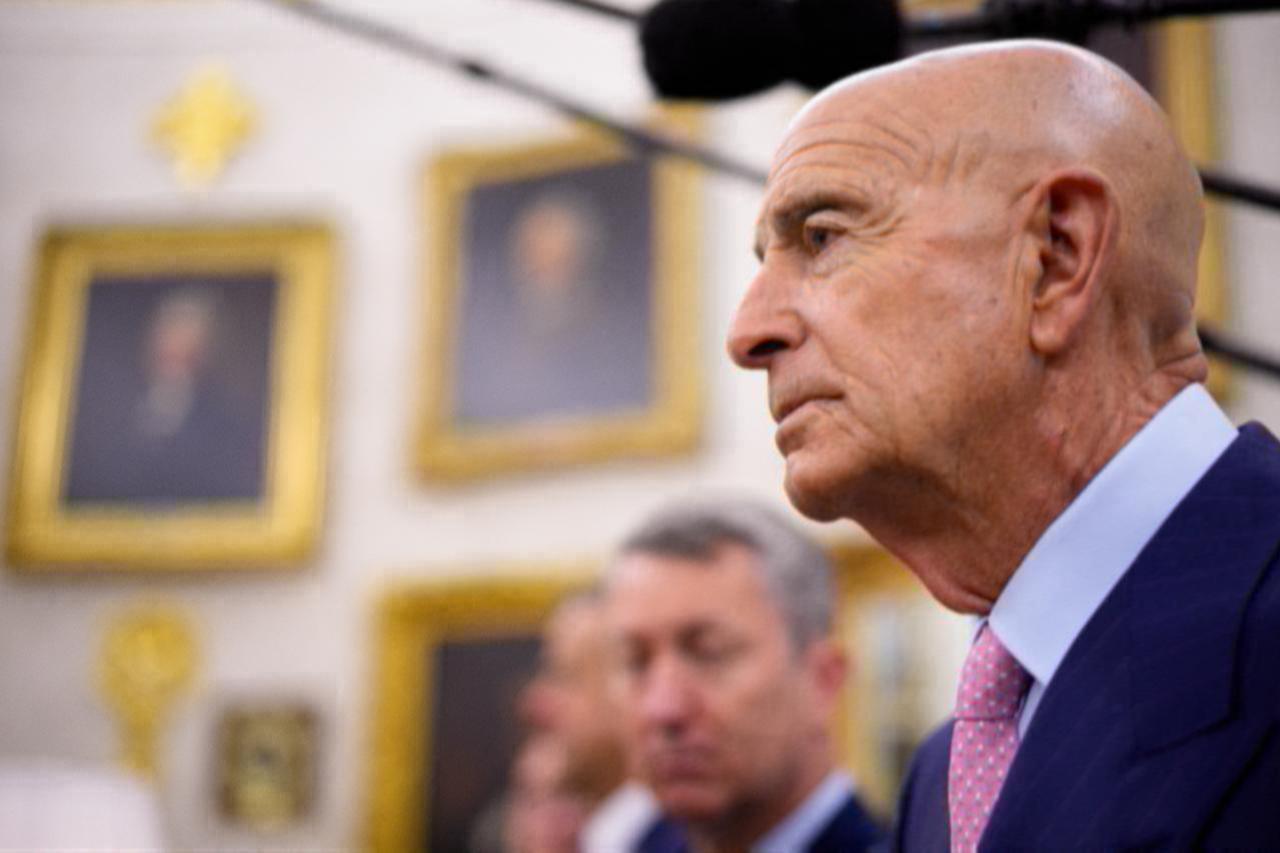


After the Democrats flipped Congress in the midterms, the big question on everyone's mind, and a hot topic for Middle East pundits, was just how much clout the new majority would wield over policy for the next two years, with the war in Iran being the exception.
Ambassador Tom Barrack tackled that head-on at Chatham House, making his first public comments on the matter.
He said President Donald Trump “still has the major mandate” on foreign policy, so the vision he spent the session describing stays in force.
That vision is the one he has repeated many times since the Doha Forum. America’s grand bargain with the Gulf, oil supplies linked to U.S. security guarantees, “hasn’t ended. It’s transitioning,” he noted.
“Owning doesn’t work. Controlling hasn’t worked. Every place we’ve tried to control: Libya, Afghanistan, Syria, Iraq. Iraq, what a disaster. So the bargain is not to own but to tend. Not to leave. We’re not leaving. We want to tend."
 1 min read
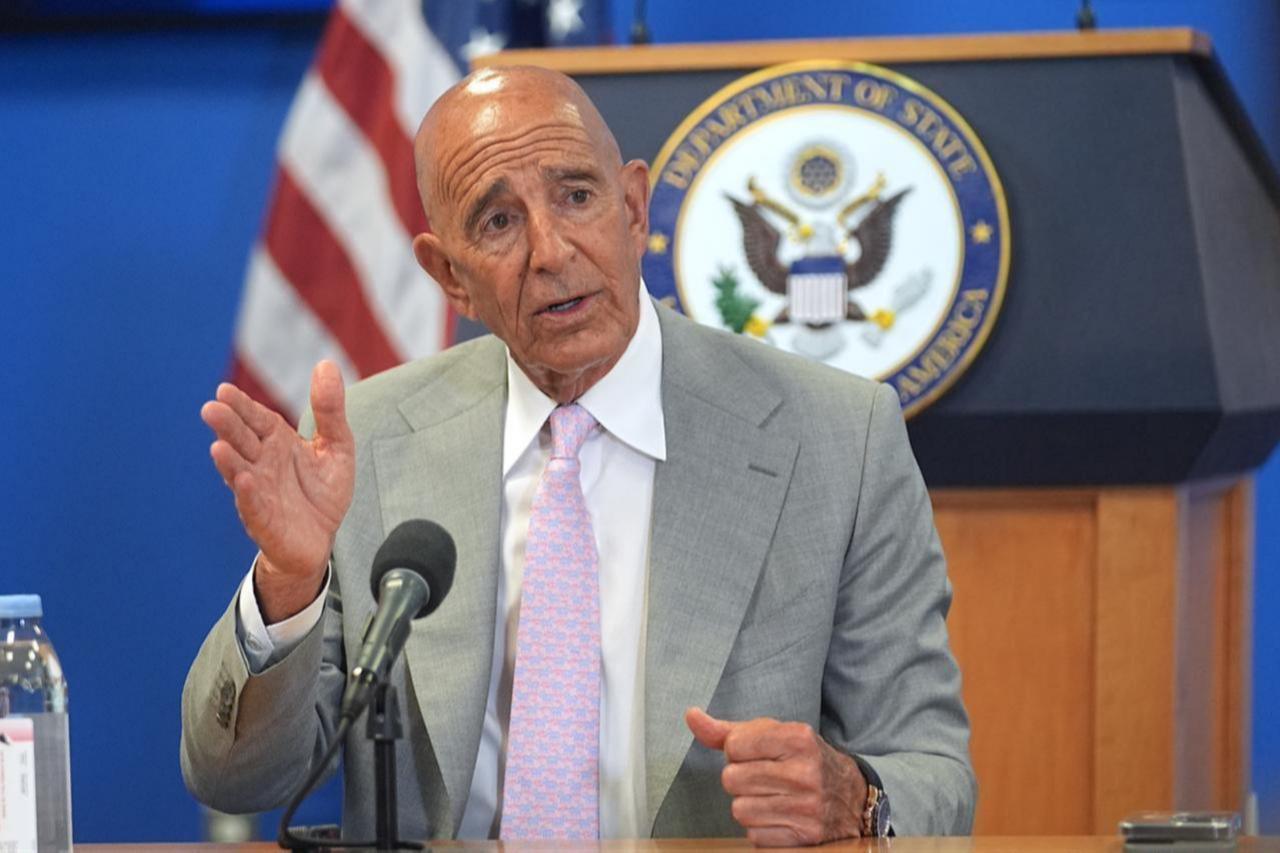
Recently, as an envoy of Iraq, Barrack reached back to the reed-built mudhifs of the southern marshes: no nails, no steel, three days of food, tea and coffee, and no business talk until the guest has been fed. The coffee is never poured to the brim. “We’ve lost our patience,” he told the room.
Yet the U.S. ambassador to Türkiye and special envoy for Syria and Iraq since May delivered the doctrine in the vocabulary of hospitality.
Then the confession. “We were bad guests. We thought we were the hosts.” The country that has been in and around Iraq for 23 years apologized to an audience that came for a policy briefing, with Arabic interpretation running through headsets and the session on the record.
The departure of coalition troops, he said, was not Trump’s decision but the accumulated decision of two presidents who were told by Baghdad that the welcome was over.
“We didn’t leave; we just extracted the military component.” The garrison goes home, the partner stays, and Iraqis will test that distinction in practice.

On Congress, Barrack opened by saying he is “not a politician.” A change in the House’s majority is “a good thing,” he said, “the voice of America.”
Vice President Vance’s recent statement on Iran was a good one, he added, and Trump’s single addition to it was that, given the chance to do it all again, he would, red Congress or blue.
Barrack reasoned that Trump “has more information and intelligence than any other human being on earth” and had judged the nuclear threat imminent.
He offered no forecast of what a Democratic majority might ask for on Iran. The new Congress, as he described it, contributes “sculpting and questioning” while the White House keeps the wheel.
His Iraq list is short: unity, prosperity, the rule of law and good relations with neighbors. The Iran file, he said, is “hand in glove” with it. Sanctions and financial pressure continue with the threat of kinetic action behind them, a threat he said “nobody wants.” Baghdad can be “the magic key” with Tehran, running a dialogue the U.S. can only conduct through interlocutors.
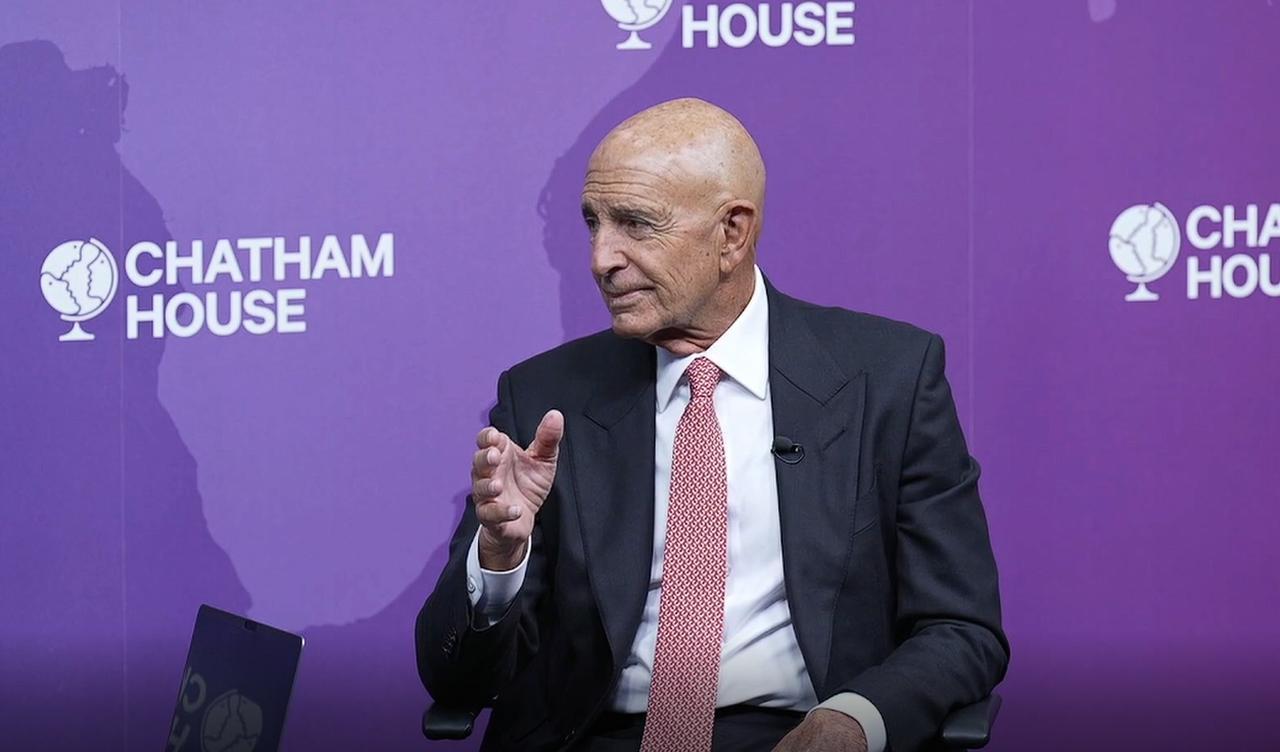
The economic argument starts with a grievance. The Strait of Hormuz, Barrack said, has become “an element of hostage taking,” and buyers have noticed. His answer is an insurance policy: pipelines and corridors through Iraq, Türkiye and Syria that do not replace the strait but give oil and gas a second door.
A pipeline like that costs $10 billion to $20 billion, and Barrack asked the question back: who invests that, over what period, without a predictable legal system, a dispute mechanism and a buyer at the other end?
Then he answered it himself. “What’s standing in the way, quite honestly, is Iraqi bureaucracy,” he said, citing American, French, Italian and regional companies waiting on approvals. “The biggest impediment is not the other countries; it’s your own country.”
He later softened it with praise for the prime minister’s efforts.
Nowhere is Washington’s recalibrated view of the region clearer than in its posture toward Kurdish politics. Pressed on what enforceable safeguards Kurds and minorities could expect if proposed constitutional reforms push Iraq toward a presidential system, Barrack flatly declined to play guarantor.
The matter is “an Iraqi decision,” he said, adding that he cannot explain the Baghdad-Erbil federal arrangement to Congress.
His prescription, which he emphasized was the president’s as well, was “get over it, full stop.” America will “encourage, counsel, mediate,” he maintained, yet it will not intervene.
He tied the point to money: investors cannot commit hundreds of billions of dollars while Kurdish families feud and the Khor Mor gas field comes under attack, which he called “untenable.” America’s only position in Kurdistan, he said, is unity.
Yet what “unity” actually entails needs an explanation. In the ambassador’s telling, it amounts to a single, legible decision-maker within a fractious system.
Comparing Iraq to Lebanon, Tom Barrack argued that the governing framework was “brilliantly born” to guarantee broad representation in a confessional society, only to descend into “functional dismay.”
He reached for a cappuccino metaphor to explain the rot: if five participants hoard the espresso while everyone else is left with foam, the drink is ruined. Inclusion, he suggested, requires leadership and the rule of law behind it, gesturing toward Judge Zaidan, seated in the audience, as the figure carrying that weight.

Since the 2003 invasion, Iraq’s oil revenues have been routed through a protected account at the Federal Reserve Bank of New York, with physical $100 bills periodically flown to Baghdad to keep the cash-heavy economy running.
That arrangement was halted to be used as a diplomatic leverage in April 2026, when Washington froze the cash airlifts for months over militia attacks and dollar smuggling to Iran before resuming them under a September agreement.
Even with the flights back on, Barrack made clear that the ritual itself has become absurd. American television routinely broadcasts images of bubble-wrapped pallets of cash being flown into Baghdad, he noted, prompting friends to call and ask whether Iraq has its own bubble-wrap factory.
“I can’t even explain this to Congress,” he said. He wants the mechanism dismantled, a shift that will require Iraq to build revenue streams, credit lines, and courts that no longer depend on cargo planes arriving from New York.
In a mudhif, a host pours slowly so the guest stays and talks. Barrack’s America sits at Iraq’s table with its military carved out, its opinions intact and its cup still being refilled. It tells the host to fix the bureaucracy, settle the Kurdish question, wrap fewer dollars and build the pipeline, while insisting it has no right to intervene.
A good guest, it turns out, may comment freely on the coffee.


 Set as preferred source
 Set as preferred source


 1 min read