Sign in
 Newsletters


U.S. President Donald Trump claimed Thursday that Iran is exploring chemical and biological weapons after being blocked on the nuclear front, while downplaying a reported dirty bomb threat to Washington and vowing a devastating response to any attack.
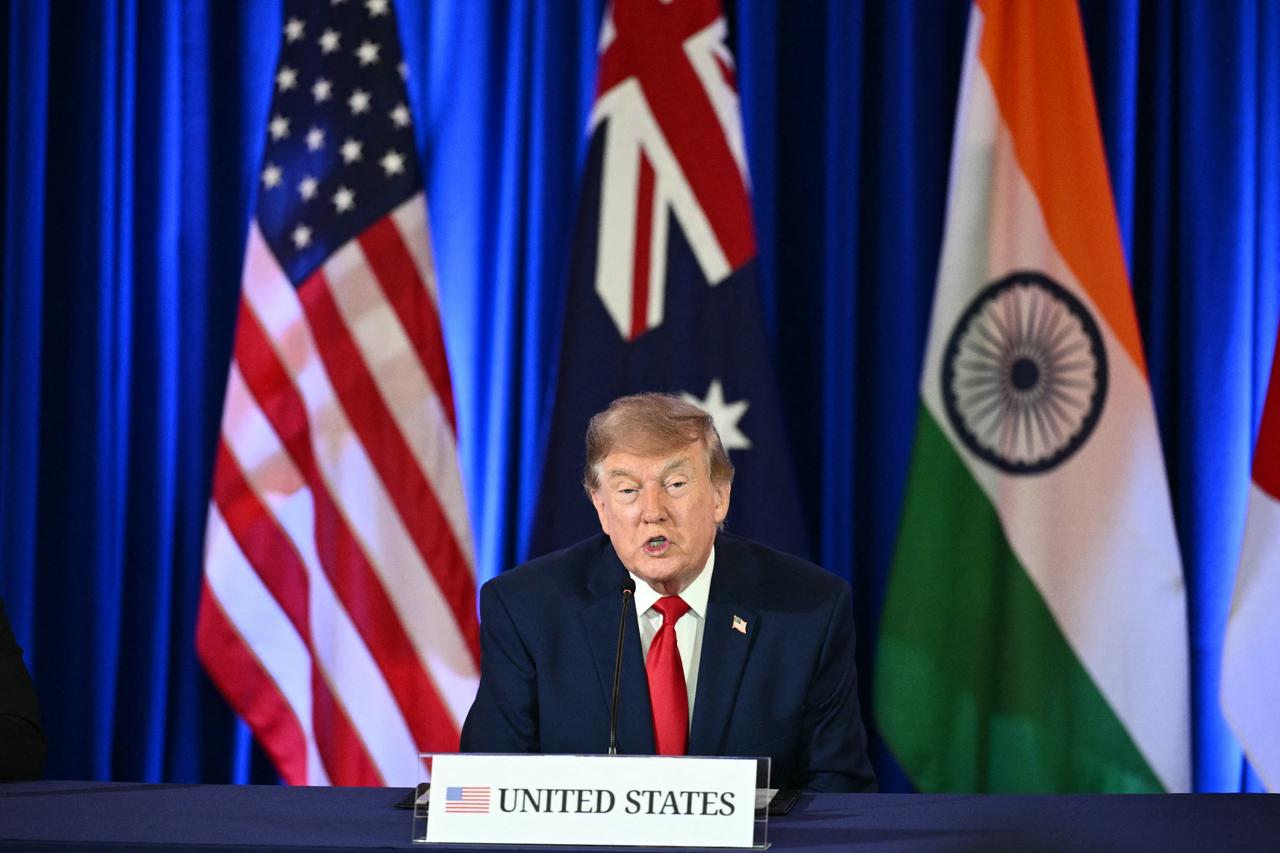
"Well, there is indication that Iran is looking at gases, looking at bio, because we’ve shut them out with the nuclear. Nuclear is much harder. And they’re looking at gas and they’re looking at the bio, you know, the biological weapons, not nice, and other things," Trump told Fox News on the sidelines of the APEC summit.
He did not provide evidence.
Asked whether people in Washington should be worried, Trump said: "I don’t think so. No, I mean, look, if it does happen, we wipe them out."
"These are nasty people," he said.
"We’re going to have a new year coming up and we’ll see what happens after January 1st," he added, without explaining the significance of the date.
CNN reported earlier this week that U.S. intelligence indicated Iran was developing plans to target senior officials with a dirty bomb or chemical weapon in Washington.
Sources told ABC News that the credibility of the underlying intelligence has not been verified.
Iran’s U.N. mission said Tehran considers the "use of chemical weapons under any circumstances to be wholly illegitimate." The White House said earlier this week there were "no credible threats to the homeland" at this time.
Trump is still considering a joint attack on Iran with Israel, despite saying last week a major new round of strikes was "quite unlikely," Axios reported, citing two sources.
Any operation could target suspected nuclear facilities such as Pickaxe Mountain, as well as bridges, power plants and military and civilian leaders, according to the report.
Israeli Prime Minister Benjamin Netanyahu is lobbying Trump to resume the war, while Gulf leaders, fearing a devastating Iranian response, are urging continued economic pressure instead.
"Our economic pressure campaign is devastating Iran to such an extent that the President does not have any need to conduct major combat operations," a U.S. official told Axios. "However, President Trump has all options at his disposal to ensure that Iran can never have a nuclear weapon."

Mossad Director Roman Gofman visited Washington and Miami last week and relayed Israeli concerns about Iranian chemical weapons development, U.S. and Israeli sources told Axios.
Israel claims intelligence shows Iran has boosted chemical weapons research and conducted tests, and Trump was briefed, a U.S. official said.
U.S. and Israeli officials say that while Iran has increased such work, it is not currently capable of conducting attacks, according to the report.
One senior U.S. official said Gofman’s assertions felt "driven by an agenda."
U.S. Central Command (CENTCOM) commander Adm. Brad Cooper met Israeli army chief Eyal Zamir and Gofman in Israel on Wednesday to discuss "strengthening coordination and joint readiness for different scenarios," the Israeli military said.
Qatari mediators met Iranian Foreign Minister Abbas Araghchi in Oman on Tuesday without significant progress.
The remarks come as regional tensions remain high amid the U.S.-Israeli war on Iran, which began with joint strikes on Feb. 28.
Tehran retaliated with attacks on Israel and Gulf countries that host U.S. bases.
The U.S. and Iran signed a memorandum of understanding in June, but it was never fully implemented because of disagreements over freedom and security of navigation in the Strait of Hormuz, a key route for energy supplies and goods. Clashes have resumed from time to time since July.
The war has killed thousands and pushed up oil and gas prices worldwide.


 Set as preferred source
 Set as preferred source


 1 min read
 1 min read