

 Newsletters


U.S. President Donald Trump said Thursday he is approaching a critical decision on whether to resume major military attacks on Iran, ahead of a planned meeting next Tuesday with leaders of six Gulf countries on the sidelines of the United Nations General Assembly (UNGA) in New York.
"I have a big decision coming up. Do I want to go in and annihilate them or do I not? It's a big decision. Anything could happen with me," Trump told Axios in an interview.
Trump is set to meet with leaders from Saudi Arabia, the UAE, Qatar, Bahrain, Kuwait and Oman, a gathering that could help determine whether Washington pursues renewed diplomacy or intensifies military action.
Trump said he wants to hear directly from regional allies before deciding on next steps.
"I want to find out where they are and how they are doing. We have been very protective of them," he said, declining to say whether he would decide on a path forward before or after the November midterms.
If Trump wants to resume major combat operations, he would need buy-in from his regional allies.
In early August, Trump held off on restarting major operations after Saudi Arabia and Qatar expressed concern that Iran would retaliate by bombing Saudi oil and gas facilities.
Since then, Trump has taken what Axios described as a "low-key" approach: suspending negotiations with Iran, launching a new economic sanctions campaign, maintaining a naval blockade on Iranian ports, and focusing the U.S. military on reopening the Strait of Hormuz and increasing oil flow to global markets.
The U.S. military has significantly increased oil and gas tanker transit through the strait, though traffic remains below prewar levels and oil prices remain elevated.
Trump and Defense Secretary Pete Hegseth have ordered the military to maintain its current force levels in the Middle East through the end of the year to remain ready for a potential return to full-scale combat, according to U.S. officials cited by Axios.
"At some point, you have to decide what is the endgame," one official said, adding that Trump needs to decide soon partly because the military cannot remain in its current holding pattern much longer.
Some officials have warned the conflict has settled into an unsustainable "neither-war-nor-peace" stalemate and believe Trump could return to major combat operations after the midterms if no deal is reached by then.
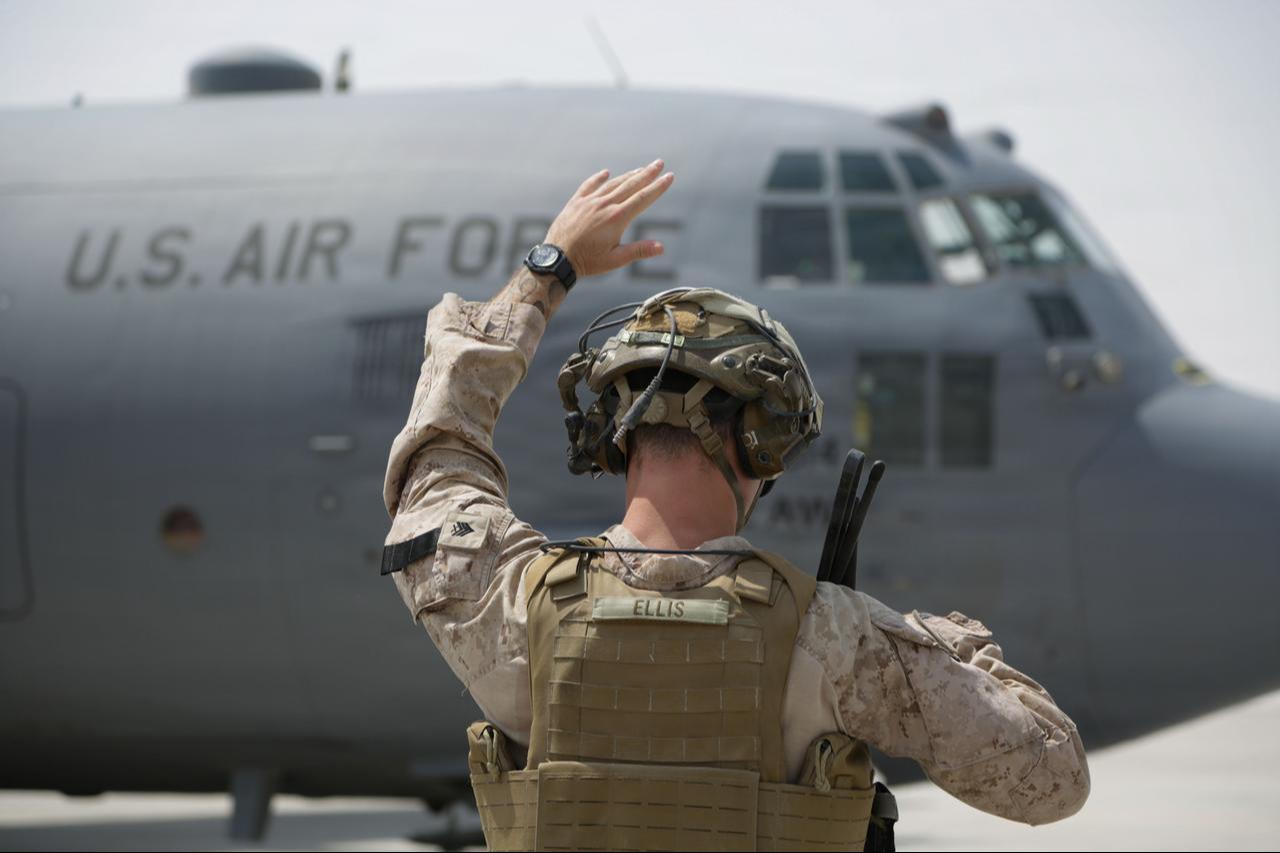

Trump said he was satisfied that the naval blockade has prevented Iran from exporting oil.
"Not one ship has gone to Iran since we started. They tried and we blew them up," he said, adding that Iran remains in direct contact with the U.S. and that Iranian officials still want to reach a deal.
Speaking to reporters upon landing in North Carolina, Trump said he believed the war was approaching its conclusion.
Asked to describe the current phase of the conflict, he said: "Hopefully we are towards the end of the war. They want to make a deal, and we'll see how that works out."
His remarks came despite ongoing tensions over the Strait of Hormuz, even after a June memorandum envisioned a deal to reopen the waterway as a prelude to a broader peace agreement.
The U.S. and Israel launched large-scale attacks on Iran in February, targeting government buildings, military sites, missile infrastructure and air defenses, prompting Iranian missile and drone strikes on Israel and U.S. bases across the region.
The conflict has since expanded regionally, with diplomatic efforts continuing alongside the fighting.
The White House has also been developing a postwar strategy calling for a regional effort to contain Iran while expanding normalization of relations between Israel and its neighbors, according to Axios.
The plan remains in early drafting stages but is intended to guide U.S. Middle East policy after the war ends and through the final two years of Trump's term, with Israel's Oct. 27 election and the U.S. midterms in November looming over the planning process.
Asked whether he would meet Israeli Prime Minister Benjamin Netanyahu in New York next week, Trump said: "I may."


 Set as preferred source
 Set as preferred source


 1 min read

 1 min read


