Newsletters


United States President Donald Trump said Monday that Iran would accept major weapons inspections as part of efforts to ensure what he described as "nuclear honesty" in the future.
"Everybody is fully aware that Iran will agree to have Major Weapons Inspections in order to ensure 'Nuclear Honesty' long into the future," Trump said in a post on his social media platform Truth Social.
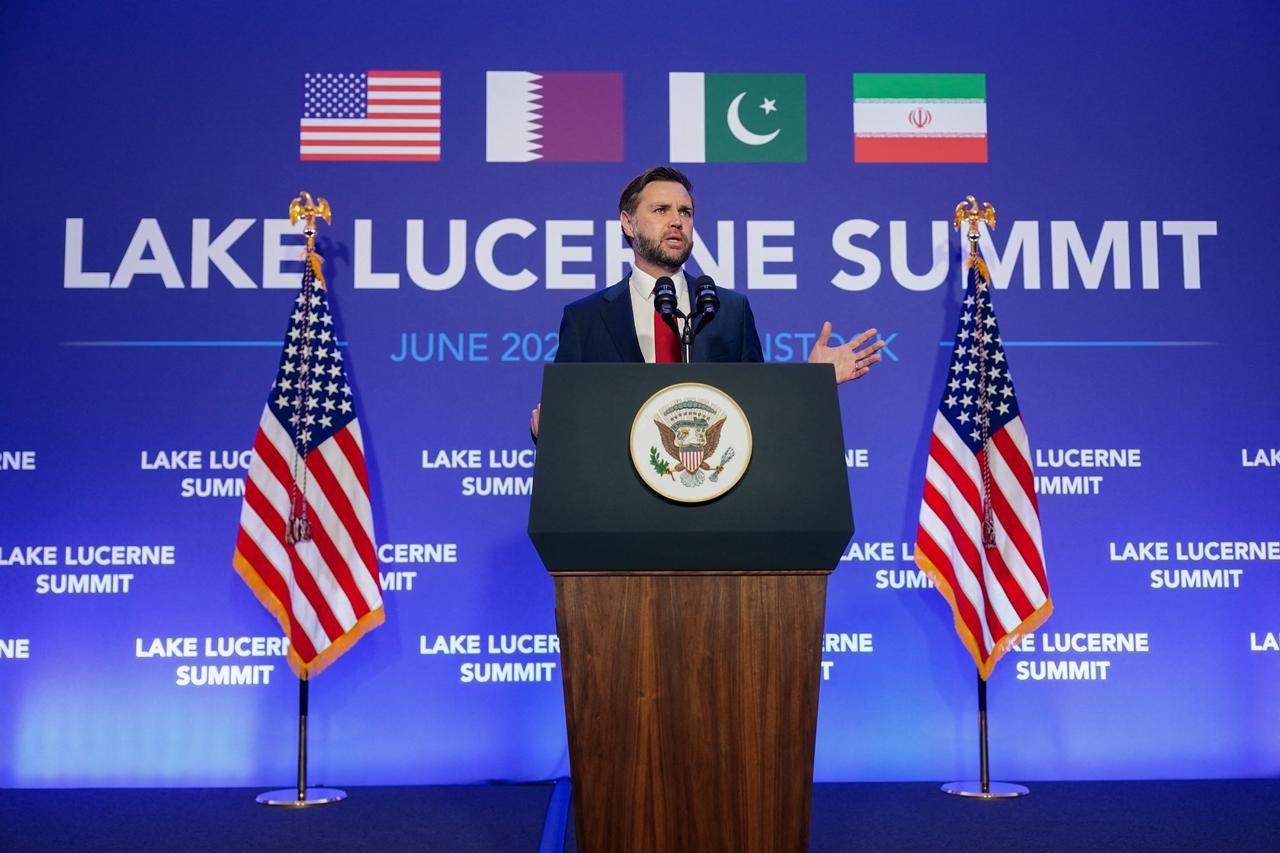
The remarks came hours after Vice President JD Vance said talks with Iran in Burgenstock, Switzerland, had produced a "very good foundation" for a final agreement and claimed Tehran had agreed to allow inspectors from the International Atomic Energy Agency back into the country.
However, citing a source, Iran's semi-official Fars news agency denied Vance's claim, saying no discussion took place during the recent Switzerland talks regarding the return of IAEA inspectors to Iran.
On June 14, Iran and the U.S. announced they had reached a 14-point understanding through Pakistani mediation aimed at ending the four-month war, reopening the Strait of Hormuz and setting a framework for nuclear negotiations.
The memorandum entered into force June 18 after being electronically signed by Iranian President Masoud Pezeshkian and Trump.
Tehran suspended some cooperation and blocked IAEA inspectors from accessing key nuclear sites bombed by the U.S. and Israel in the 12-day war in 2025. However, inspectors continued to visit Iran, last doing so in November.
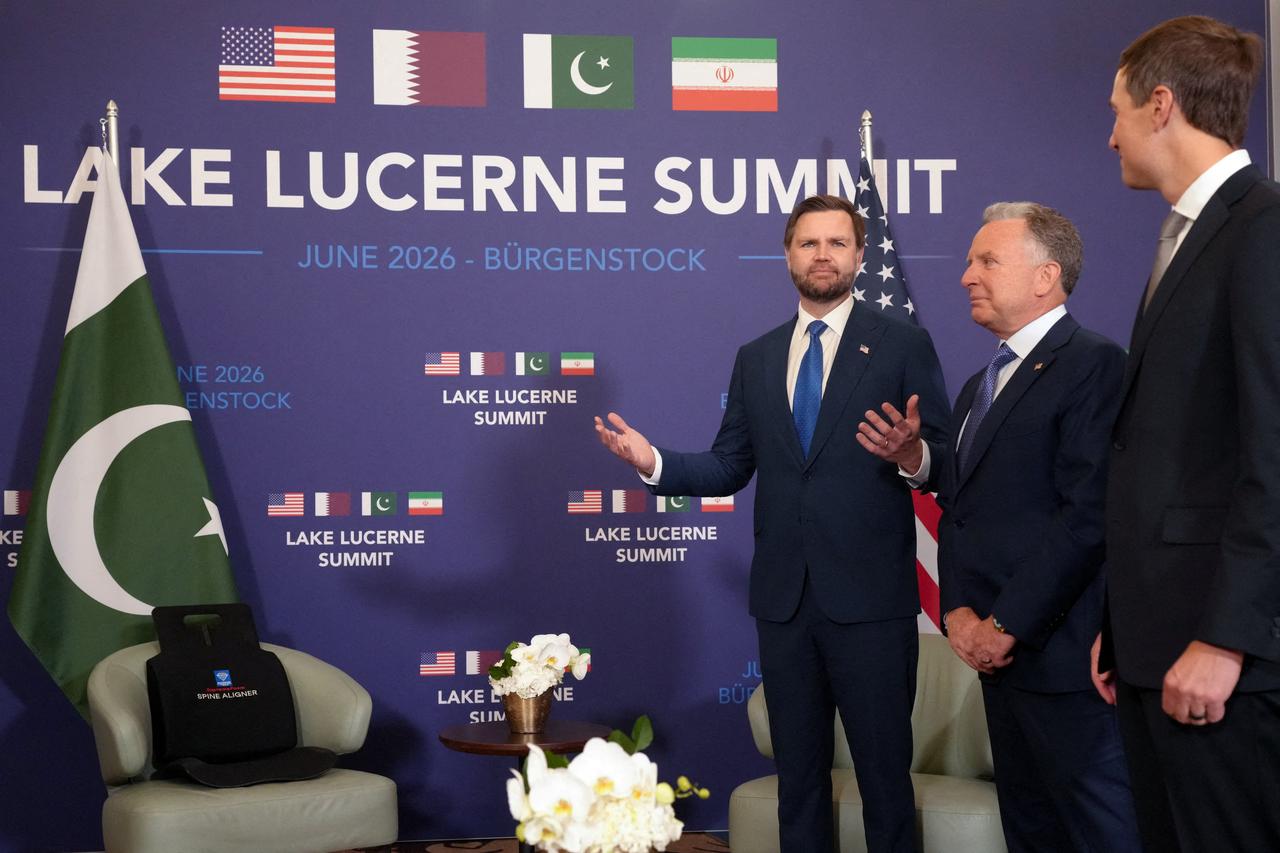

Meanwhile, Iranian Foreign Ministry and negotiating delegation spokesperson Esmail Baghaei said Monday that his country would continue relations with the IAEA in line with its commitments under inspection agreements.
According to Iran's official IRNA news agency, Baghaei was responding to remarks by Vance that Iran had approved re-inviting IAEA inspectors and that the agency would begin inspections in the country.
The Iranian official said his country's relations with the IAEA would continue in line with its commitments under inspection agreements, as well as decisions by the Iranian Parliament and Iran's Supreme National Security Council.
In an earlier statement, Baghaei said IAEA inspections would continue at facilities where inspections had previously been ongoing, such as the Bushehr Nuclear Power Plant. But he said inspections at other facilities where the IAEA's access had been cut off because of attacks by the U.S. and Israel would depend on the course and outcome of negotiations.
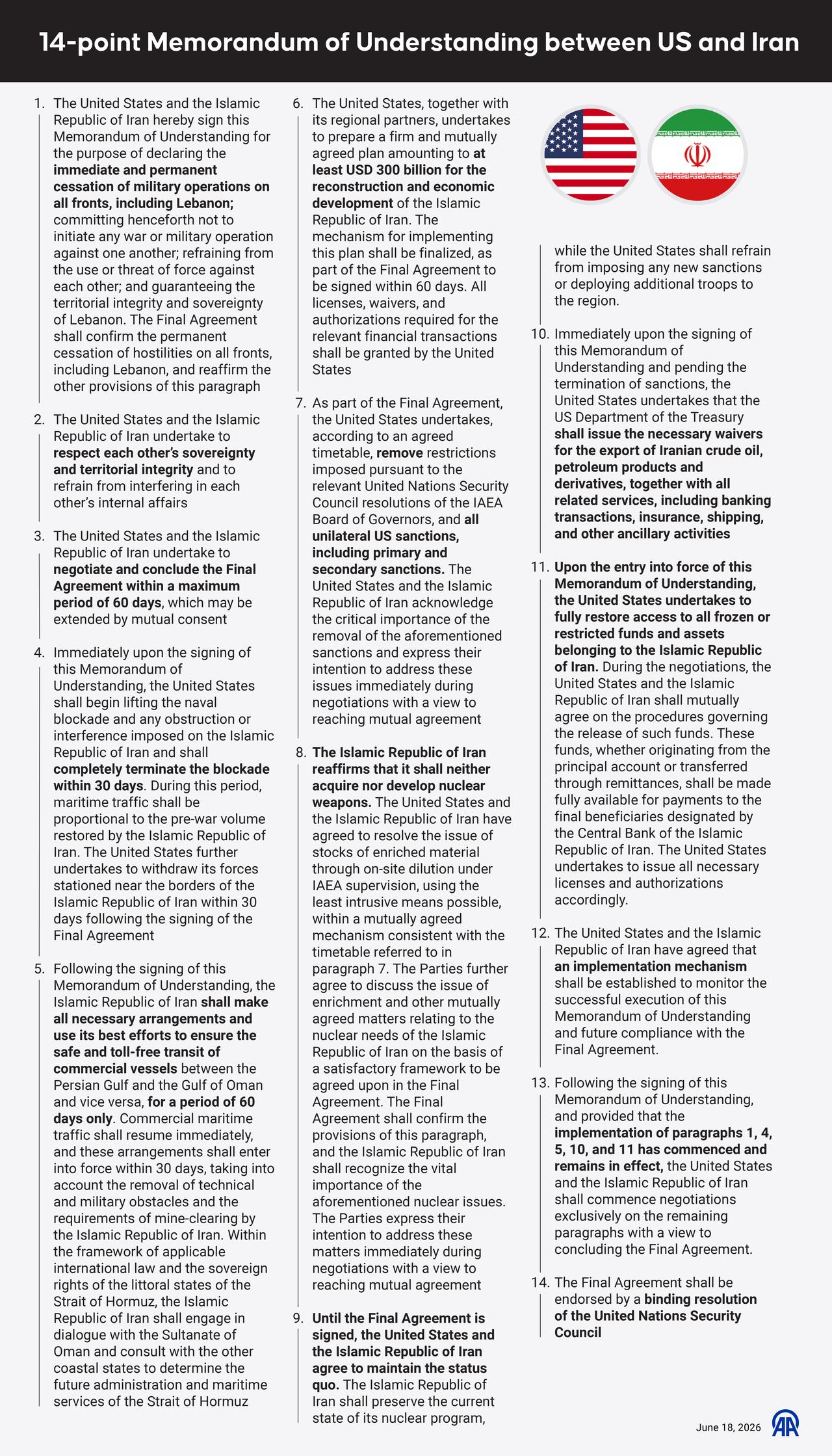
As part of the deal, Tehran is set to receive some form of sanctions relief from Washington, as well as the unfreezing of assets.
Vance insisted the assets had not yet been unfrozen and said that, if they were, they would be used to buy U.S. goods, such as soybeans, and would not fund terrorism.
He called it "a classic Trump deal, where if Iranian assets are ever unfrozen, they're going to go to make American farmers richer and to feed the Iranian people."
Iranian Foreign Minister Abbas Araghchi, meanwhile, posted on social media: "Oil and petrochems exports are waived, blockade lifted, some frozen assets released, and major reconstruction & development plan launched for Iran."
U.S. Secretary of State Marco Rubio is due to begin a trip to the United Arab Emirates, Kuwait and Bahrain to discuss the deal and "efforts to secure full and free safe transit through the Strait of Hormuz," his spokesperson, Tommy Pigott, said.
Iran's negotiating delegation, including Mohammad Bagher Ghalibaf and Araghchi, left Tehran on Monday for Oman's capital, Muscat, to discuss "joint efforts to stabilise Iranian arrangements for managing the Strait of Hormuz," according to IRNA.
Tehran and Washington have set up communication lines to end the fighting in Lebanon and keep the vital Strait of Hormuz open, mediators said.
Iran closed the strait, through which much of the world's oil and gas travels in peacetime, early in the war, sending economic shockwaves across the globe.
Before the conflict began, there was free international passage through the strait, but Tehran appears keen to monetize the waterway as part of any deal.
Tracking data Monday showed vessels were still transiting the strait, despite Iran saying Saturday that it had closed it again over Israeli attacks in Lebanon.
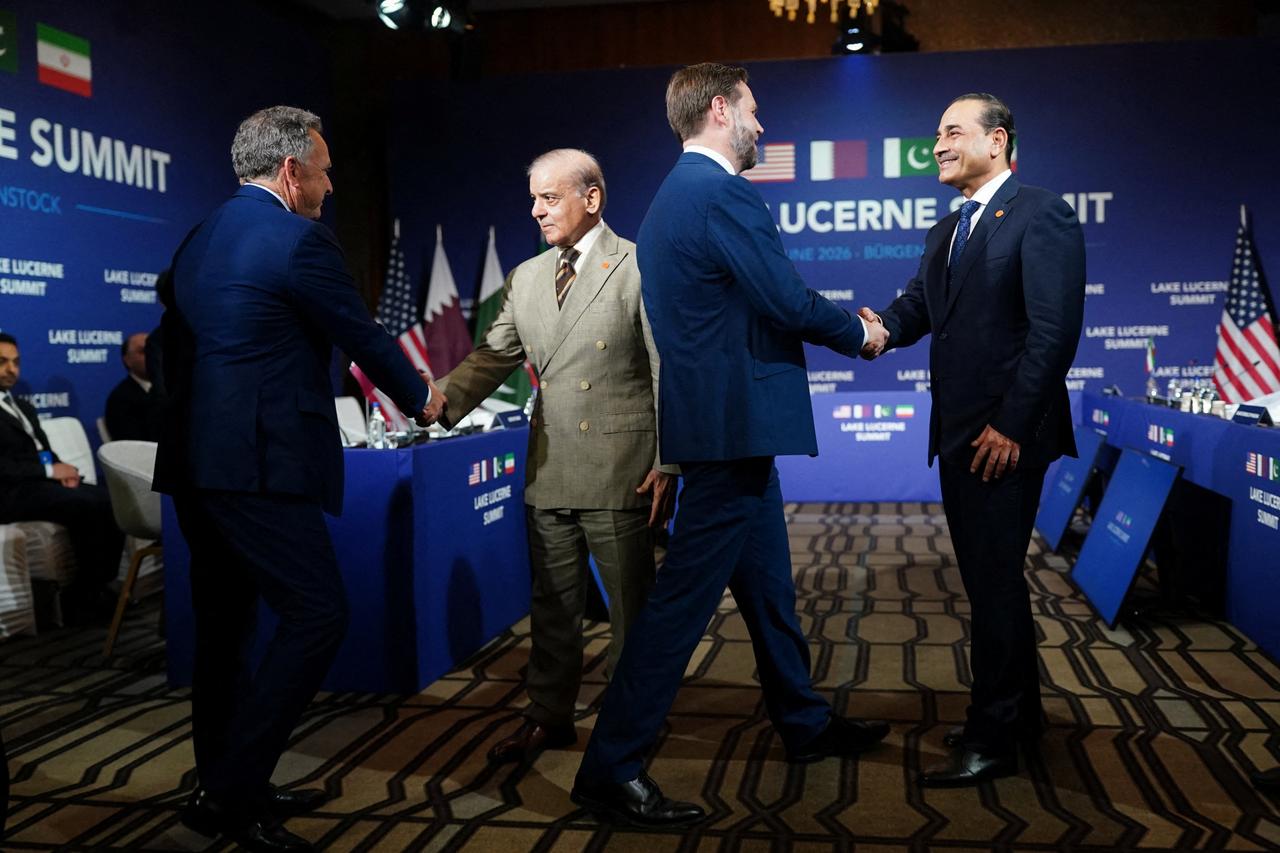
Mediators Pakistan and Qatar said negotiators reached an agreement on a "roadmap towards reaching a final deal within 60 days," with technical talks to continue for the rest of the week at the Swiss resort.
"Encouraging progress has been made," they said, including a contact channel set up to "avoid incidents and miscommunication" in the Strait of Hormuz.
 2 min read
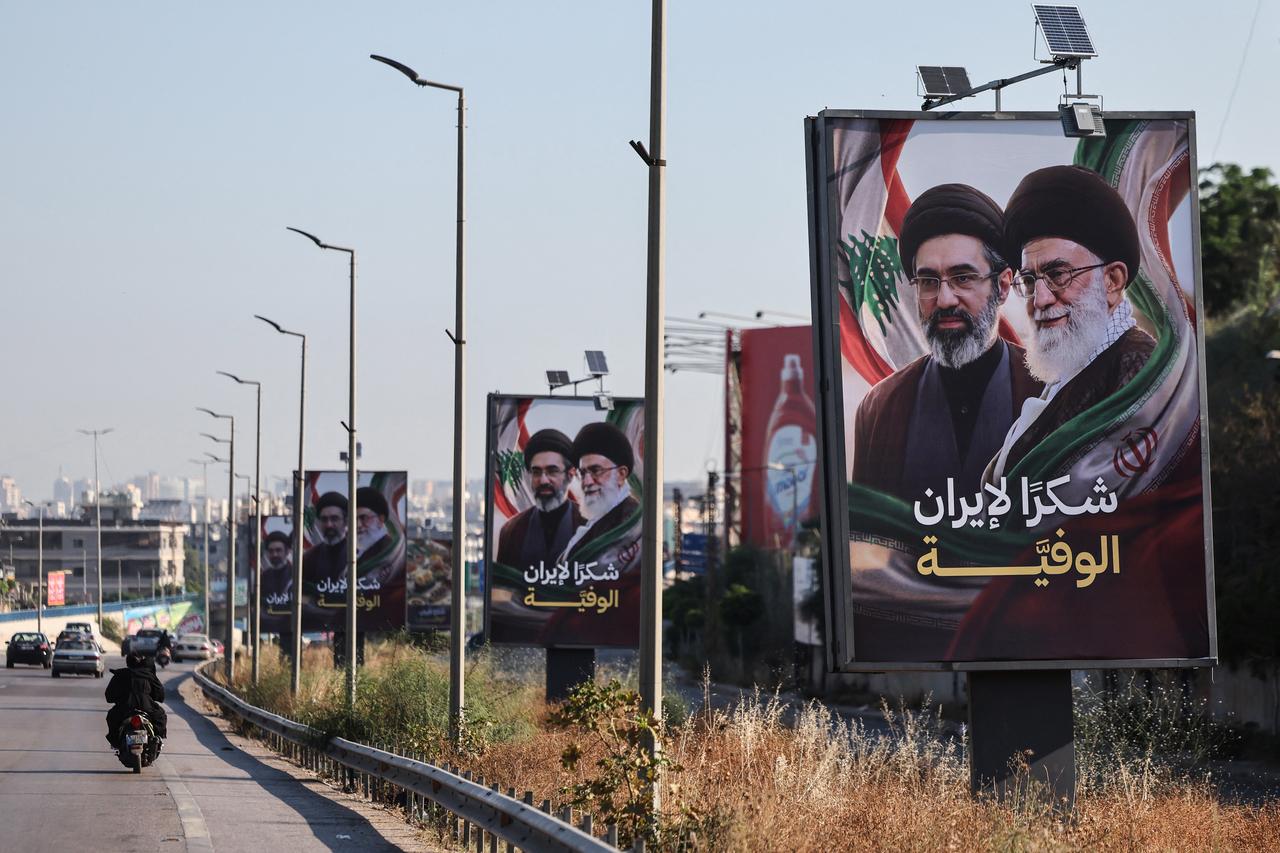
In the weeks and days before the U.S.-Iran talks, the war in Lebanon between Israel and Iran's close ally Hezbollah threatened to collapse the cease-fire, though the country has been relatively calm since Saturday evening.
A "de-confliction cell" between the parties and Lebanese authorities has been agreed to prevent fighting from erupting again.
Israeli leaders have nonetheless expressed deep misgivings over the deal, and Prime Minister Benjamin Netanyahu on Monday insisted Israeli troops "have full freedom of action to thwart any direct or developing threat" in south Lebanon.
The overall death toll from the fighting in Lebanon has surpassed 4,100, the Health Ministry said.
A survey by the U.N. Development Program and Lebanon's government-linked National Council for Scientific Research estimated damage to buildings in south Lebanon from the latest fighting at around $1.38 billion.


 Set as preferred source
 Set as preferred source


 1 min read