Newsletters


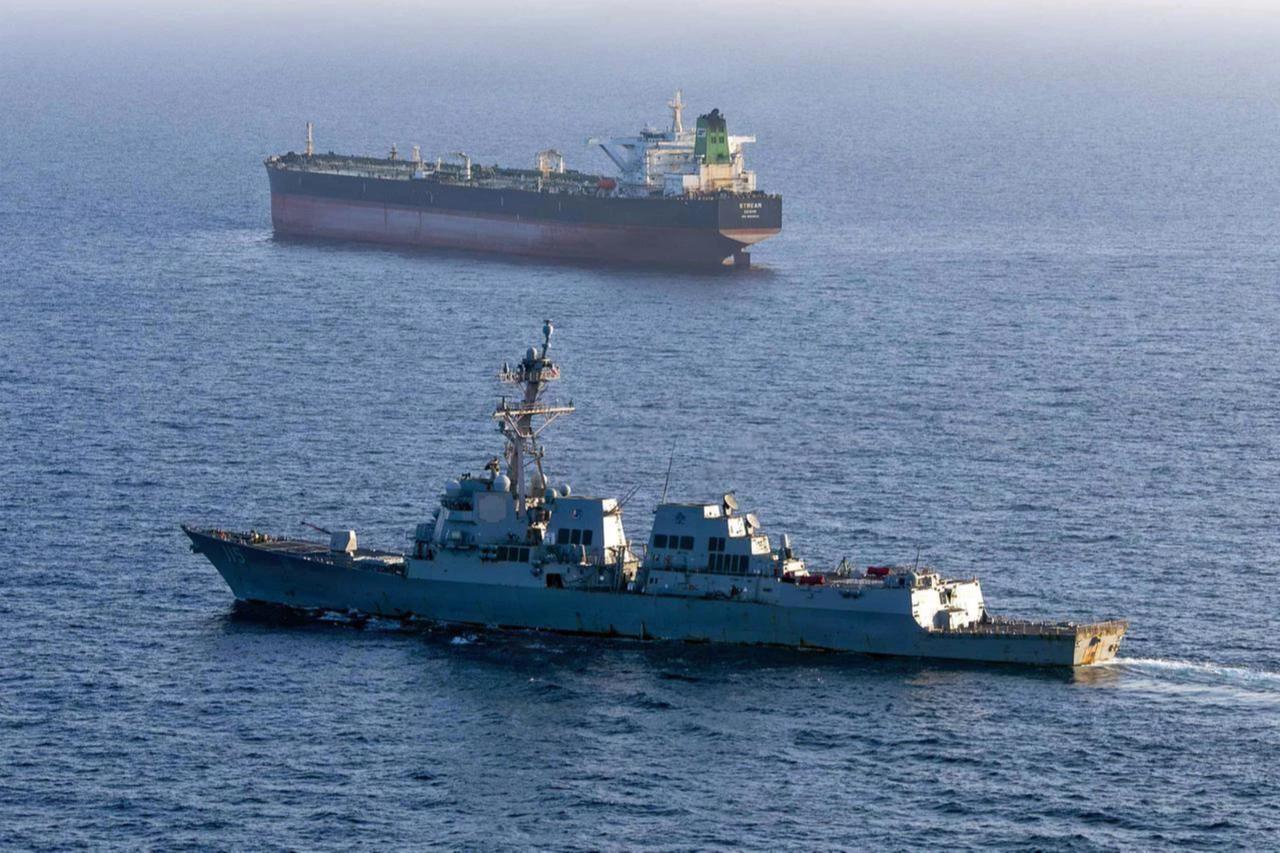


U.S. President Trump announced Tuesday that the U.S. Navy has removed or destroyed all mines from the main international shipping lane of the Strait of Hormuz, a development that is expected to open the vital waterway to significantly more oil tanker traffic.
Trump made the announcement in a post on Truth Social, saying he had been informed by the Navy that the clearing operation in the strait's Traffic Separation Scheme, the median lane situated between Oman and Iran, was complete. He warned that any vessel found placing new mines in the area would be "immediately and systematically destroyed," and said the U.S. Space Force was monitoring the strait closely under what he called a "zero tolerance policy" on mine placement.
The mines had been in place since the war over the summer, when Iran deployed dozens of them across the median lane, according to two U.S. officials with direct knowledge of the matter. Their presence posed a serious hazard to commercial shipping through one of the world's busiest oil transit corridors.
Iran had agreed to remove the mines as part of a memorandum of understanding reached with the United States earlier this year, the officials said, but that agreement broke down and the mines were never cleared by Tehran. In the months since, U.S. Navy underwater drones systematically surveyed the strait and identified more than 100 suspected mines, which the military then had private contractors remove or detonate.
While the median lane remained mined, the U.S. military had been routing tankers through a southern channel closer to the Omani coast. American officials said that over the past 30 days, more than 500 ships passed through the strait via that southern route, with roughly 2% struck by Iranian drones or missiles.
With the median lane now cleared, ships will be able to move simultaneously in both directions through the strait under U.S. Air Force protection, a shift officials say should allow more oil to reach global markets.
The announcement came as the foreign ministers of Iran and Oman met in Tehran to discuss arrangements for navigating the strait, a meeting that did not produce a final agreement. In a joint statement, the two countries said they were discussing a framework for a temporary joint corridor and mine clearance, alongside technical talks on a permanent navigation route and the strait's future administration. They also said they were exploring a mechanism for information exchange, traffic management and maritime security services.
Omani Foreign Minister Badr al-Busaidi said after the talks that he hoped Iran and Oman would "soon announce a temporary corridor for the Strait of Hormuz and practical arrangements to restore safe navigation."
It remains unclear how relevant any Omani-Iranian agreement would be in practice. The United States is currently blocking Iranian ships from transiting the strait, and with mines cleared and tanker traffic already increasing through the southern lane, Washington appears to be securing much of what it wanted in the waterway independent of a separate Tehran-Muscat arrangement.
The Strait of Hormuz, which separates Iran from the Arabian Peninsula, is one of the world's most critical chokepoints for oil shipments, with a large share of globally traded crude passing through its narrow waters each day.


 Set as preferred source
 Set as preferred source



 3 min read