Newsletters


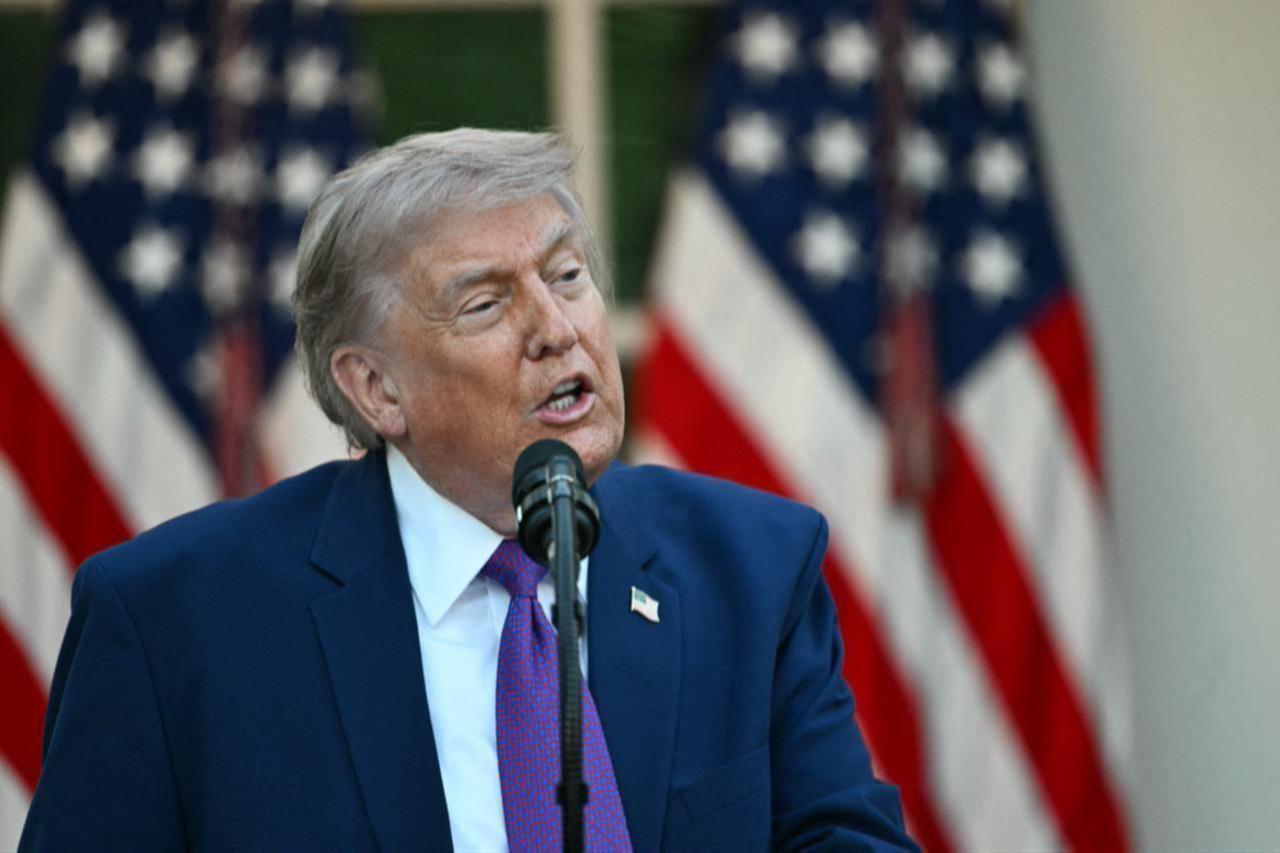


U.S. President Donald Trump said Thursday that the United States opposes any tolls on shipping through the Strait of Hormuz and declared that Iran will not be permitted to retain its stockpile of highly enriched uranium, drawing firm lines as diplomatic negotiations with Tehran continue.
Speaking to reporters at the White House, Trump was unequivocal on the tolls question. "We don't want tolls. It's an international waterway. They're not charging tolls right now," he said, adding that the US is monitoring reported talks between Iran and Oman over the possible formalization of such charges.
While acknowledging awareness of those discussions, he appeared to dismiss the prospect, saying only, "We're looking at it; we hear about it."
On the question of Iran's nuclear program, Trump left little room for ambiguity. Asked whether Iran could hold on to its highly enriched uranium under any future deal, he responded bluntly: "No, we get the highly enriched; we will get it."
He added that the material would likely be destroyed once in US hands and repeated his longstanding position that Iran would not be permitted to develop a nuclear weapon. "We're going to get it one way or the other," he said.
Highly enriched uranium, enriched to 90 percent or above, is the key fissile material required for a nuclear weapon and has been a central sticking point in international efforts to constrain Iran's nuclear ambitions dating back to the early 2000s.
Trump also asserted that the US has established near-total control over maritime activity in the Strait of Hormuz, the narrow waterway between Iran and the Arabian Peninsula through which roughly 20 percent of the world's petroleum and liquefied natural gas normally transits. "We have total control of the Strait of Hormuz, as you know, with our blockade," he said, describing it as "100% effective" and "like a steel wall." He also claimed that Iran is suffering significant financial losses as a result of restrictions on shipping activity.
The remarks come against the backdrop of a fragile and unresolved standoff. Regional hostilities escalated sharply after the US and Israel launched strikes against Iran on Feb. 28.
Iran retaliated with strikes on Israel and US allies in the Gulf and closed the Strait of Hormuz to foreign shipping. A ceasefire brokered by Pakistan took effect on April 8, but subsequent talks in Islamabad failed to produce a durable agreement. Trump later extended the truce indefinitely while maintaining the blockade on vessels traveling to or from Iranian ports through the strait.
Negotiations on a broader settlement, including freedom of navigation through the Hormuz passage and the future of Iran's nuclear program, remain ongoing.


 Set as preferred source
 Set as preferred source


 2 min read
 1 min read