Newsletters




The economic downturn and currency collapse in Iran are being felt acutely in Türkiye’s eastern border province of Van, where businesses that once relied heavily on Iranian visitors are now struggling, local officials and business owners told Agence France-Presse (AFP).
Fevzi Celiktas, vice president of the chamber of commerce in Van, said the region’s development is complicated by its geography and neighbors.
“We have some of the most feared countries in the world right on our doorstep: Iraq, Syria and Iran,” Celiktas said. “This greatly complicates our development.”
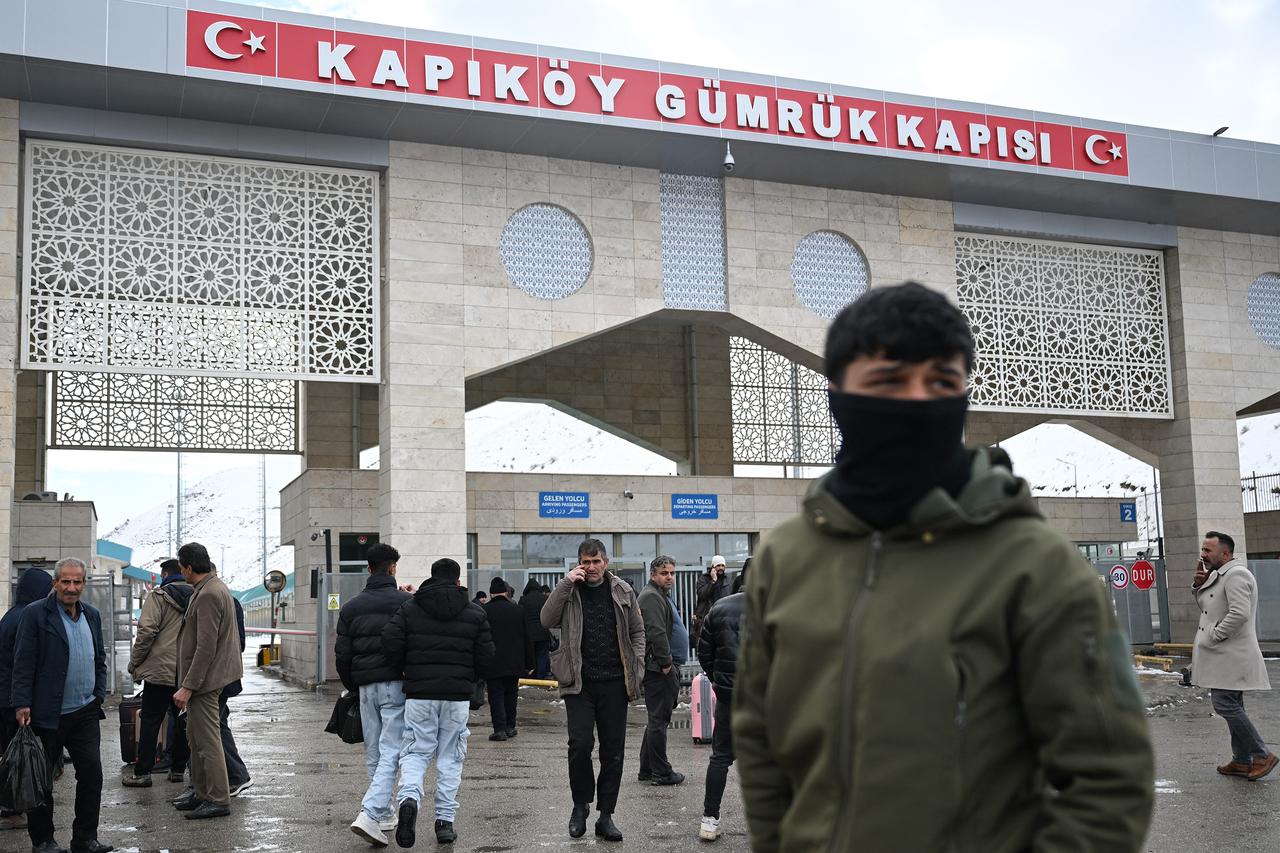
Türkiye shares a 550-kilometer border with Iran, about 300 kilometers of which run alongside Van province. The main pedestrian crossing at Kapikoy lies about a 90-minute drive from the provincial capital, also called Van.
The latest crisis is another blow to the local economy in a province of about 1.1 million people at the eastern edge of Anatolia.

Van, perched on the eastern shore of Lake Van and surrounded by snow-capped mountains, has long been a popular destination for Iranian tourists seeking shopping, nightlife and leisure on Türkiye’s largest lake.
“Iranian tourists are our main clientele,” said Emre Deger, head of Van’s tourism professionals association. He said hotel occupancy rates have declined year after year.
Even during the winter low season, about a third of hotel rooms are typically occupied, he said. “But currently, all the hotels are empty or at 10 percent of capacity at best.”
Deger said visitor numbers collapsed for eight to 10 days after a crackdown on protests in Iran in January, when authorities imposed an internet blackout.
“Those who came were just here for the internet,” he said.
Each morning, only a few dozen travelers now arrive through the Kapikoy crossing, boarding buses or taxis toward Van. Apart from some students and a small number of people with long-term plans outside Iran, many avoid speaking publicly and stay in discreet hotels.
“Most even hesitate to go out to get food,” Deger said, adding he is waiting to see whether numbers rebound around March 21, when Iranians celebrate Nowruz, the Persian New Year.
 2 min read

An Iranian woman in her 30s from Tabriz said the decline in tourism reflects broader hardship in Iran.
“There’s no middle class left in Iran. We’re all at the bottom, the very bottom,” she said, declining to give her name.
She previously worked in insurance in Iran but now has a job at a cafe in central Van.
“In the whole of January, I saw maybe two Iranians here,” she said.
She said costs in Türkiye have become unaffordable for many Iranians.
“Two years ago, when you came to Türkiye with 5 million or 10 million rials ($4-$8), you were fine. Now you need at least 40 million or 50 million rials. Hotels, food, everything has become more expensive for us,” she said.
“Our money is worthless now,” she added, saying her former monthly salary in Iran would last only three days in Van.
Retailers have also felt the downturn. “Our customers used to fill entire suitcases with clothes to take home. But it’s very quiet now,” said Emre Teker, who runs a clothing store.
Celiktas blamed U.S. and European sanctions for crippling Iran’s economy and, by extension, harming Van.
“The Van bypass still isn’t finished after 18 years of construction,” he said, calling it a local joke sometimes written on trucks: “May our love be like the Van bypass and never end.”
He said decades of trade restrictions inevitably have consequences for neighboring regions.
“In a neighbourhood, if your neighbour bothers you, you can move. But you can’t do that with countries,” Celiktas said. “You can’t replace Iran with Germany, Italy, France or Russia. So you have to reach some sort of agreement.”


 Set as preferred source
 Set as preferred source


 1 min read