Newsletters


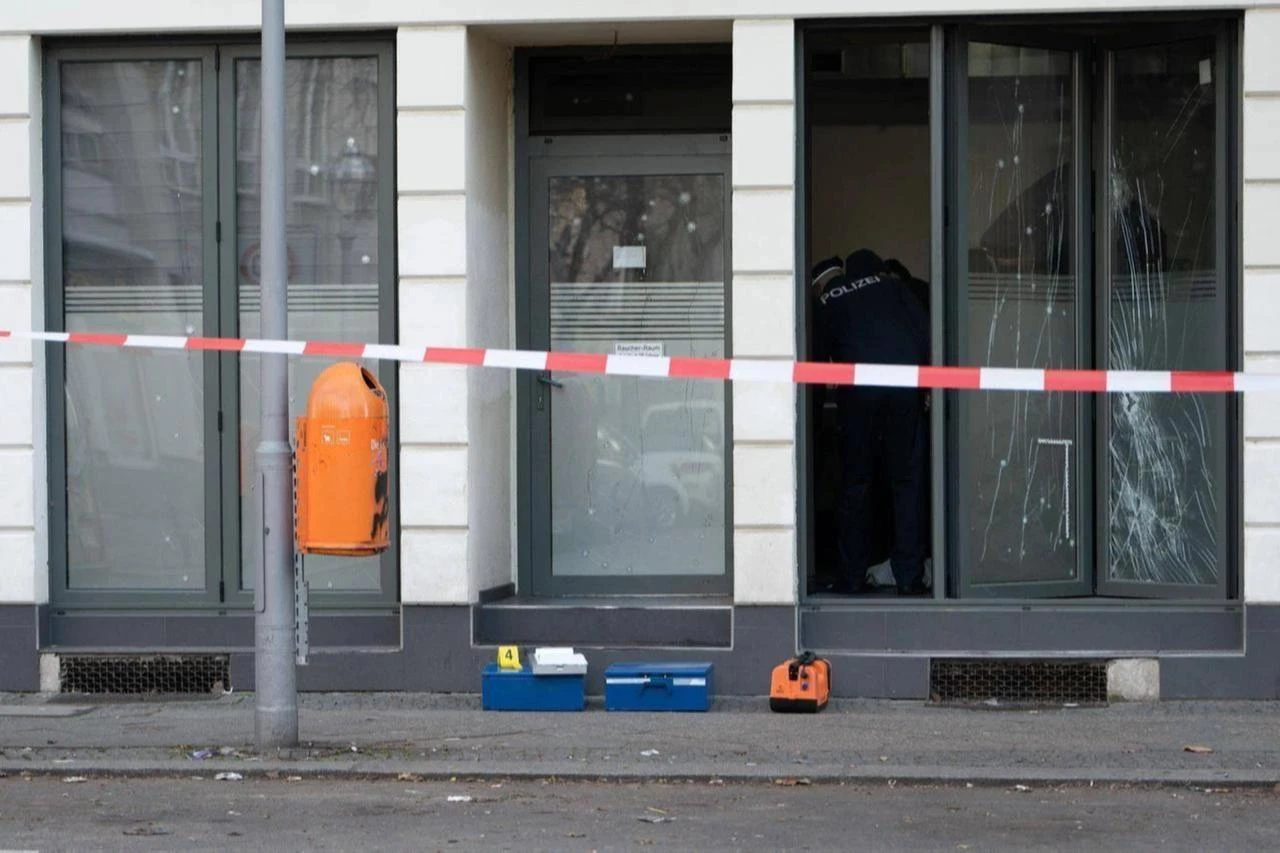


A wave of armed extortion attacks targeting Turkish-owned businesses in Berlin has grown into an escalating campaign of gun and grenade violence over roughly two years, according to a Der Spiegel investigation based on police and prosecutorial files, indictments, court rulings, and interviews with investigators, experts, and victims.
Criminal groups demanding sums ranging from €50,000 to €500,000 from cafes, restaurants, supermarkets, late-night kiosks and driving schools have opened fire on businesses and attacked them with hand grenades when payment isn't made, according to Der Spiegel.
In all known cases, the targeted business owners share one trait: Turkish immigrant background.
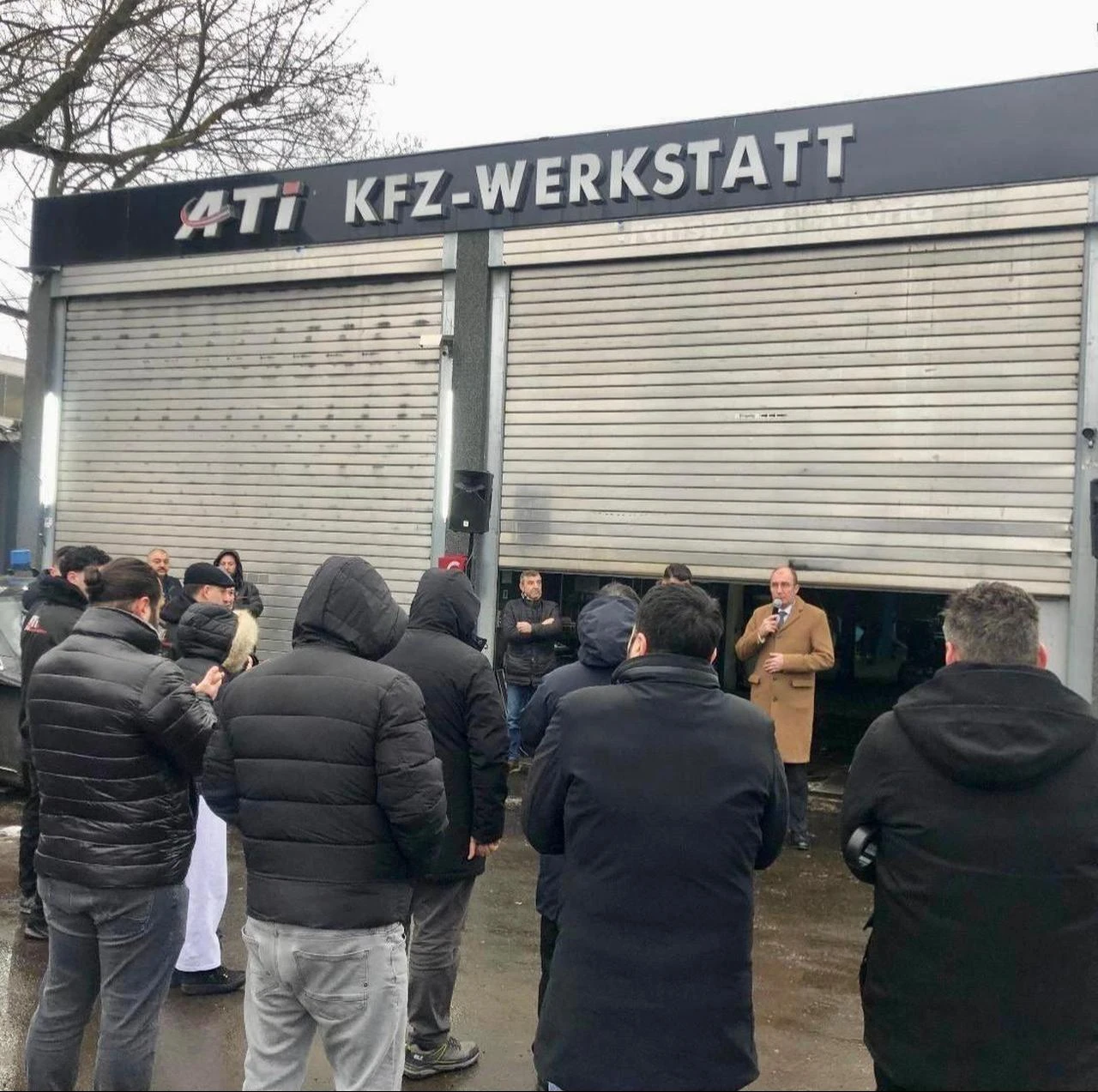
Adem Ispirli, who runs an auto repair shop in southern Berlin, was alone in his office one Sunday when he stepped away to the printer in an adjacent room.
Moments later, two bullets pierced the steel entrance door and struck his computer monitor, according to Der Spiegel.
Ispirli said he received a video on his phone shortly afterward showing a hand pulling a pistol trigger, with the white-painted door of his office visible in the background.
Before the shooting, callers had demanded €250,000 from Ispirli, telling him he would be left alone if he paid, and that they would return and shoot him in the legs if he didn't.
"They wanted to finish me off," Ispirli said.
A kiosk in Wedding and a club in Kreuzberg were separately attacked with hand grenades, and numerous other business owners across the city have been targeted with gunfire.

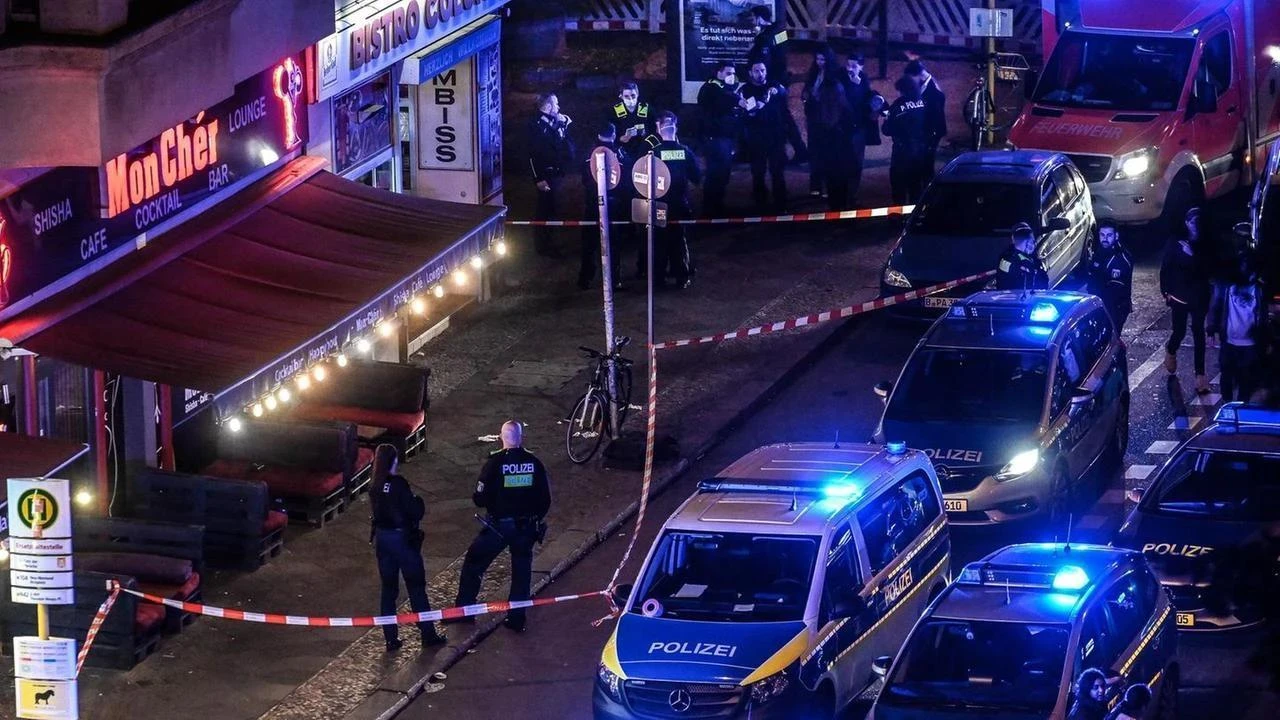
Berlin police recorded 1,119 cases involving threats or use of a firearm in 2025, an increase of nearly 70% from the previous year, according to police crime statistics cited by Der Spiegel. Roughly half of all shootings in 2026 are believed to be directly linked to the extortion campaign.
Berlin Police President Barbara Slowik said the issue was, until an attack on Berlin's Christopher Street Day pride event, "currently the number one topic" on her agenda.
In November, police established a dedicated unit called Ferrum, Latin for "iron," staffed by around 100 officers, with deployments scaling up to 600 personnel depending on operation size. Prosecutors separately created a special unit called Telum, Latin for "weapon."
Ferrum operations have so far seized nearly 60 firearms and around 3,300 rounds of ammunition, opened more than 500 investigations, and led to 61 arrest warrants issued by the Telum unit, according to Der Spiegel.
The first reports of the extortion campaign began reaching police in late 2024, when Turkish business owners told authorities that unidentified callers were demanding money described as a "penalty."
The threats quickly escalated from verbal warnings to gunfire aimed at shop windows.
A pivotal moment in police understanding of the attacks came in March 2025. Alican C., who arrived in Germany from Türkiye in 2022 at age 17 as an unaccompanied minor seeking asylum, took cocaine and three glasses of whiskey before opening fire on a branch of the Turkish supermarket chain Eurogida in Berlin's Spandau district, then a second branch, in exchange for a promised €1,000.
Employees escaped unharmed. Afterward, the operators were told to pay €250,000. When they didn't, the demand rose to $500,000 and included threats to kill the family members of the chain's leadership.
The Berlin Regional Court sentenced Alican C. and those found to be behind him to multi-year prison terms, identifying the Türkiye-linked "Daltons" group as a possible instigator.
According to Der Spiegel's reporting, the foundations of the Dalton structure were laid in Istanbul by Baris Boyun, born in 1984, who in the 2010s drew young people in poor neighborhoods around him with luxury cars and a gangster lifestyle. Some members reportedly saw themselves as part of a resistance against social inequality and what Der Spiegel described as oppression by the Turkish state, though the structure evolved from car theft into drug and weapons trafficking and contract killings.
Dubbed the "Gen-Z Mafia" by observers because of armed social media posts, the group operates on what experts call a "crime as a service" model, carrying out crimes for payment on behalf of others, not only for itself.
Turkish investigative journalist Osman Cakli, who has tracked the group's rise in Türkiye, told Der Spiegel that Turkish authorities initially underestimated the problem, with politics and the judiciary responding only later.
"The fight against the mafia now has the highest priority," Cakli said.
An indictment reviewed by Der Spiegel from the Istanbul public prosecutor's office, running 1,676 pages, describes the group's illegal activities as threatening "public order." More than 300 defendants stood trial at the end of last year, with around 40 receiving life sentences.
Cakli said the crackdown pushed many leading figures abroad, fearing arrest and seeking new revenue sources, even as the groups remain active in Türkiye.
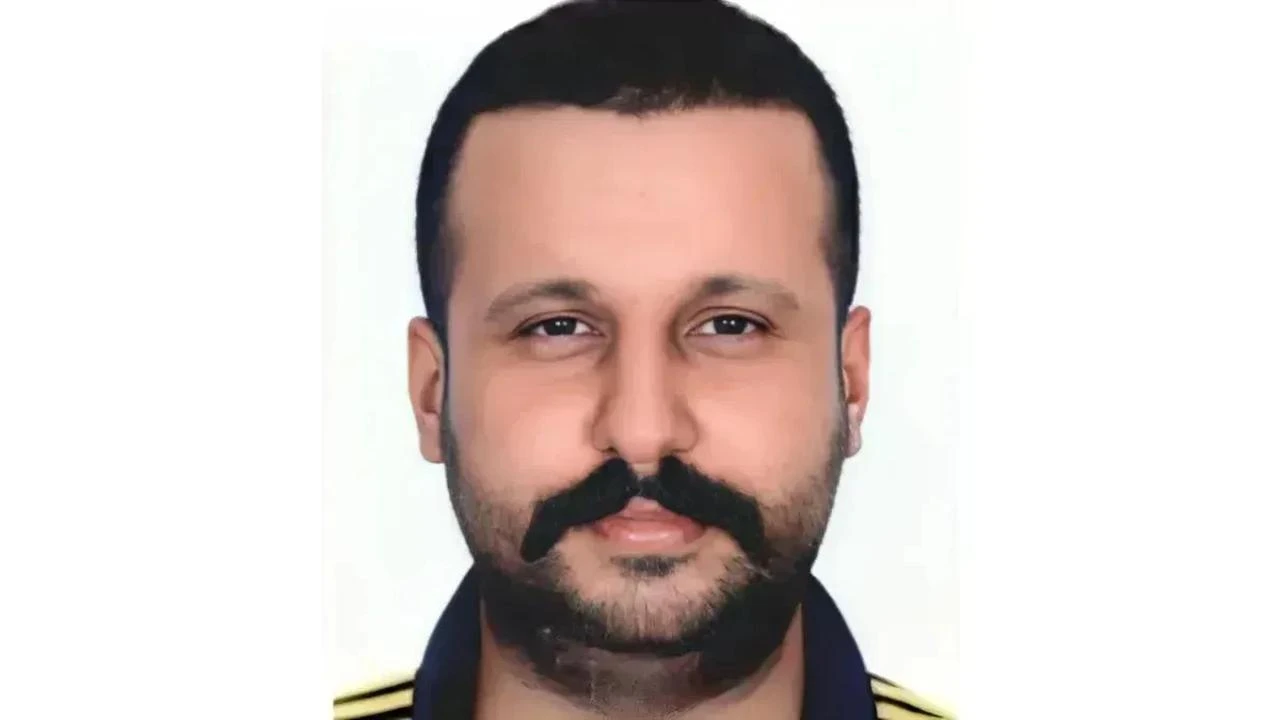
Boyun was arrested in Italy in May 2024. Prosecutors have accused him of forming a criminal organization, cross-border drug dealing, illegal arms trafficking, and ordering several killings, including that of a Belgian-Turkish businessman near Berlin's former Checkpoint Charlie crossing in March 2024, reportedly stemming from a dispute between rival gangs.
Boyun has denied the allegations through his lawyer.
Boyun's operations were reportedly continued by Beratcan Gokdemir, once one of his closest associates, who later founded his own gang under the Daltons name.
One caller in the Eurogida extortion identified himself on the phone as "Ahmet from the Daltons," and a separate threatening call, according to a court ruling, came from someone described as one of Gokdemir's closest associates, calling from Azerbaijan.
Like Boyun, Gokdemir left Türkiye and was arrested in Russia in 2024. Türkiye requested his extradition, but Russia ignored the request.
German broadcaster ARD's "Kontraste" program reported that Moscow's intelligence services had protected the gang boss, with one expert suggesting the Kremlin could use the Daltons for "destabilizing acts."
Der Spiegel's reporting found that it is questionable whether the Daltons are actually behind many of the Berlin shootings.
Political scientist Mahmoud Jaraba, who researches criminal milieus, told Der Spiegel the group undoubtedly plays a role in Berlin, "but that does not mean that a single, clearly defined and centrally controlled organization is behind all the extortion and shootings."
He said local criminals sometimes invoke the Daltons' name to intimidate victims even when they have no connection to the group, and that in Berlin, "Daltons" functions more as a brand.
Ispirli initially believed he was being extorted by Boyun himself and his people, telling Der Spiegel that weeks before the shots were fired through his office door, a caller had threatened that Boyun would punish him if he didn't pay.
Ispirli, who grew up in Berlin's Neukolln district, said he made inquiries through contacts, including in Türkiye's underworld, and that a contact eventually assured him "1,000%" that neither the Daltons nor the Boyun gang was behind the extortion. He said he later learned the real identities of the extortionists but declined to name them, saying it "wasn't appropriate."
Der Spiegel noted Ispirli's account could not be fully verified but that his claim that local Berlin gangsters, not the Daltons, are often behind the extortion demands, aligns with internal security-agency memos and statements from investigators.
According to Der Spiegel, the extortion attempt against Ispirli and his business partner—and reportedly other cases—traces back to Koray T., known as "Cowboy," a serious criminal who first drew negative attention in Berlin years earlier.
Born in Berlin in 1994 to Turkish immigrant parents, Koray T. was once associated with the Hells Angels and was convicted of murder in March 2019.
According to the court ruling, he suffered from bedwetting, fear of the dark, nail-biting and fits of rage as a child; he began smoking cannabis after primary school and later used cocaine. In 2011, he received a juvenile sentence of three years and eight months for, among other things, aggravated robbery and dangerous bodily harm, and assaulted a fellow inmate while in pretrial detention.
In September 2016, Koray T. shot and killed a man near Kottbusser Tor in Berlin-Kreuzberg who had gotten into a dispute with his brother-in-law, firing three shots from a semi-automatic weapon. Because he was under the influence of drugs during the act, the Berlin Regional Court found him to have diminished capacity and sentenced him to eight years in prison. In August 2022, roughly three years later, he was granted a prison furlough to attend his daughter's first day of school, and used the opportunity to flee. He is believed to have been in Dubai until recently and reportedly also spent time in Thailand.
Berlin prosecutors accuse Koray T. of orchestrating a series of extortion attacks as the head of a criminal organization, according to a search warrant reviewed by Der Spiegel.
His father, Ahmet T., now in his 60s, is also named in the warrant as having recommended potential extortion targets to his son and supplied the group with cars and hand grenades. A request for comment sent to his lawyer went unanswered. Ahmet T. is not unknown in German judicial circles; the Berlin Regional Court sentenced him in 2000 to 10 years and six months in prison for drug offenses.
According to the search warrant, the organization was allegedly led not by Ahmet T. but by another man who also dealt drugs: Seyit D. The Berlin Regional Court sentenced him in 2023 to a multi-year prison term, but Germany's Federal Court of Justice overturned the sentence on appeal in February of the previous year.
A subsequent ruling followed months later; Seyit D. appealed again and remained free both times.
Photos show him traveling to luxury hotels in Hong Kong, Oman and the Maldives, presenting himself on social media as a jet-set gangster, posing on turquoise beaches, in high-powered cars, and at a shooting range on Instagram and TikTok.
As recently as April, he was seen shadowboxing at a Berlin fitness center.
On May 13, a special operations unit of the Berlin police arrested him; he has been in pretrial detention since, with no indictment yet filed. A request for comment sent to his lawyer also went unanswered.
During a June raid against the alleged gang of Koray T. and Seyit D., officers searched an apartment in a rundown 1960s building in Kreuzberg where investigators found so-called "shooters," young men from Türkiye, some wh recently arrived as refugees, apparently used to carry out the group's intimidation shootings against extortion victims.
Der Spiegel's investigation concludes that the picture in Berlin points not to a single classic mafia structure, but to a fragmented and flexible extortion marketplace where organization leaders who fled Türkiye, local Berlin gangs, illegal weapons trafficking, and refugee youths used as subcontracted gunmen all intersect.
Investigations point to two structural backbones of Berlin's criminal network. On the human resources side, a run-down Kreuzberg apartment searched in June housed refugee youths and some drug-dependent people smuggled from Türkiye and allegedly used as gunmen against non-paying business owners. On the logistics side, a significant share of the firearms circulating on Berlin's streets reportedly originate from illegal makeshift factories in Türkiye, alongside lethal 3D-printed weapon copies.
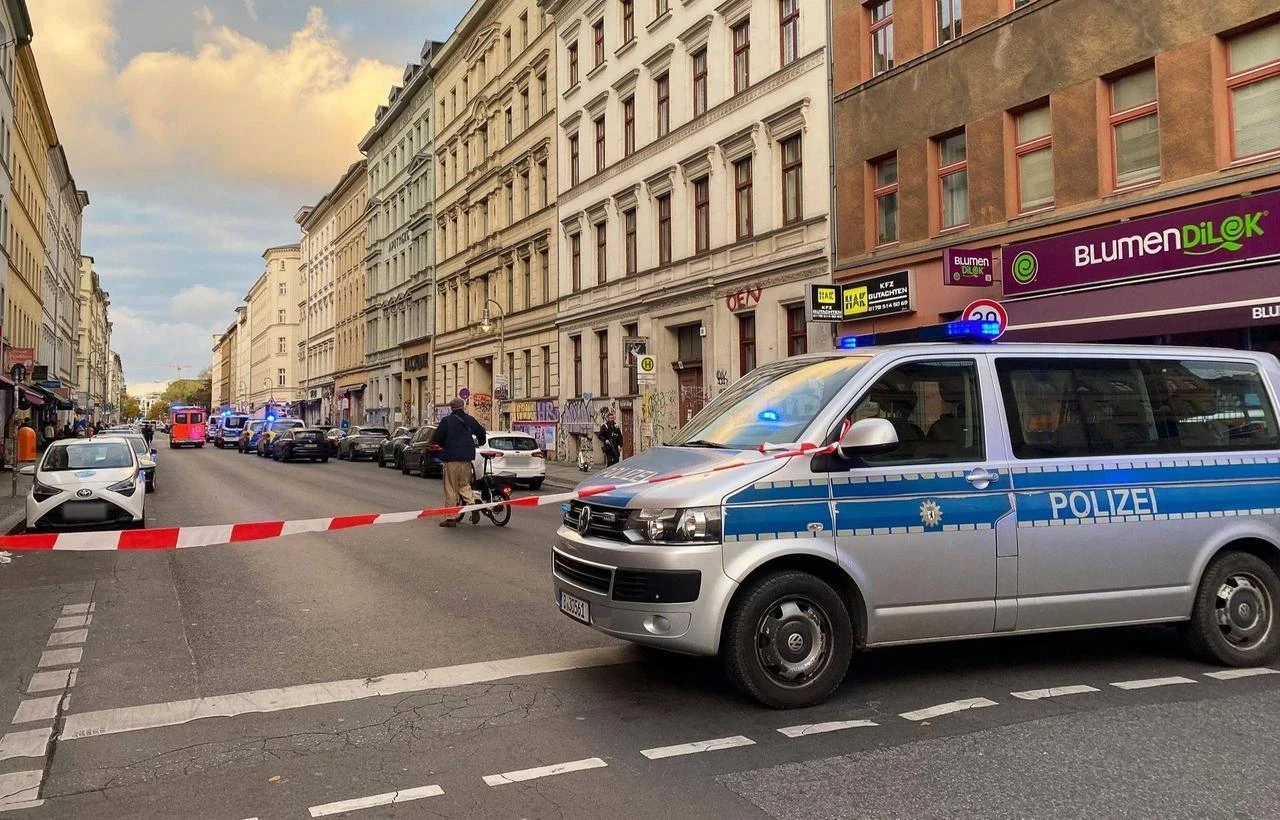
In July, police and Ferrum units arrived at a cafe on a busy street in Wilmersdorf in five vans, conducted fingerprint checks, and stopped a nearby Lamborghini worth roughly €300,000, which turned out to belong to an illegal car rental operation unrelated to the extortion series, according to Der Spiegel.
Police spokesperson Florian Nath said the message sent by such operations is clear: the strongest gang in Berlin is still the police, and the city has become too hot for criminals.
He said some criminals have already left the capital because "it's gotten too hot for them here."
Despite the arrests, danger has not passed yet. Koray T. remains a fugitive, and the extortion business remains lucrative.
Ahead of Berlin's state parliament election at the end of September, security ranks among residents' top five political concerns, and each new attack increases political pressure on the governing Christian Democratic Union (CDU)-Social Democratic Party (SPD) coalition.


 Set as preferred source
 Set as preferred source


 1 min read

 1 min read