Newsletters


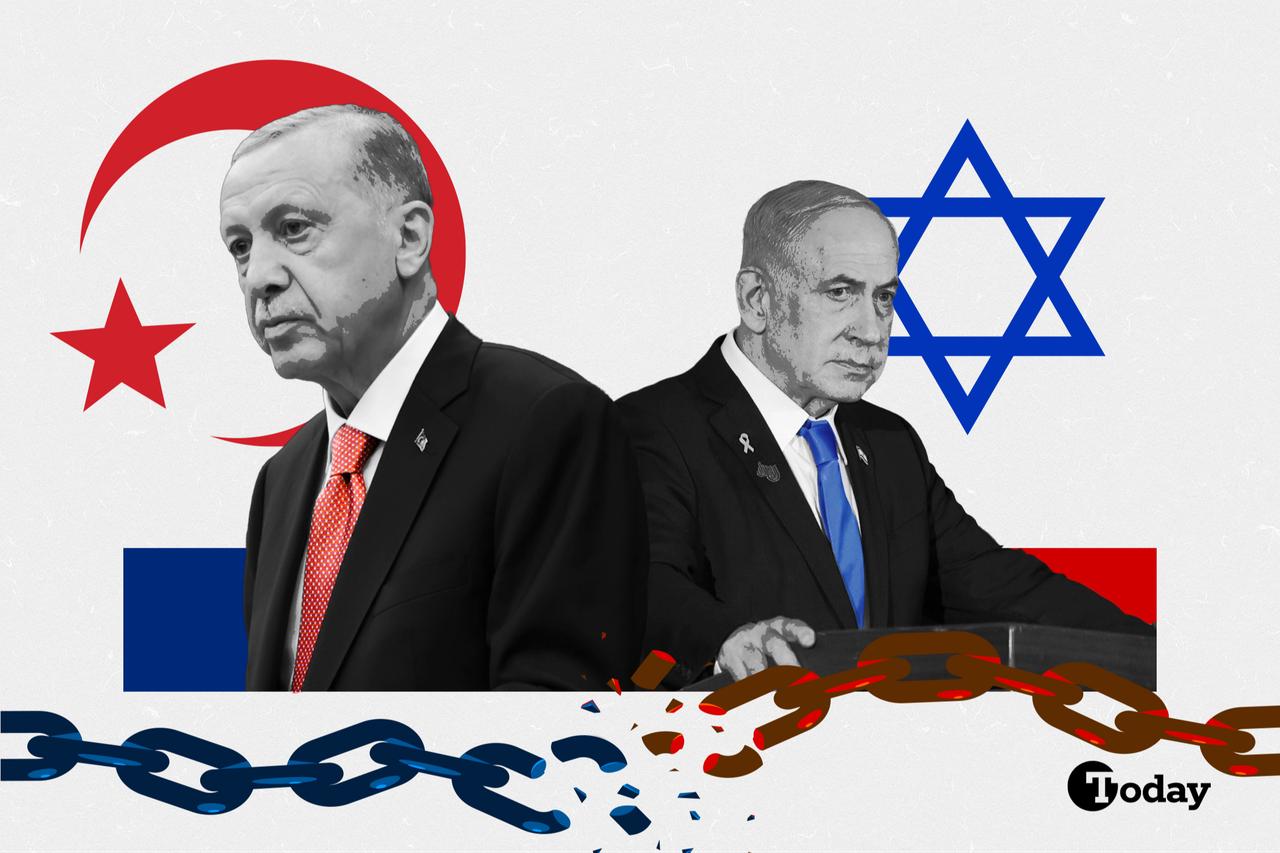


Once considered a rare example of strategic alignment in the Middle East, relations between Türkiye and Israel have entered a period of sustained tension.
The transformation reflects not a sudden rupture but a gradual erosion of trust, culminating in the aftermath of the Mavi Marmara incident and in the aftermath of the Israeli war on Palestine, especially after Israeli military actions amounting to a genocide in Gaza in 2023 and its regional repercussions.
In recent months, the rhetoric has taken on a sharper tone.
Former Israeli Prime Minister Naftali Bennet described Türkiye as an "emerging threat," while Israeli discourse has increasingly framed Ankara as "the next Iran."
The change in the increasingly aggressive rhetoric towards Ankara did not go unnoticed, as Turkish Foreign Minister Hakan Fidan recently stated, "After Iran, Israel cannot live without an enemy. We see that Netanyahu may be seeking to designate Türkiye as the new adversary."
U.S. Ambassador to Türkiye Tom Barrack, who also serves as U.S.'s special envoy for Syria, recently said, "I think this rhetoric is going to go away."
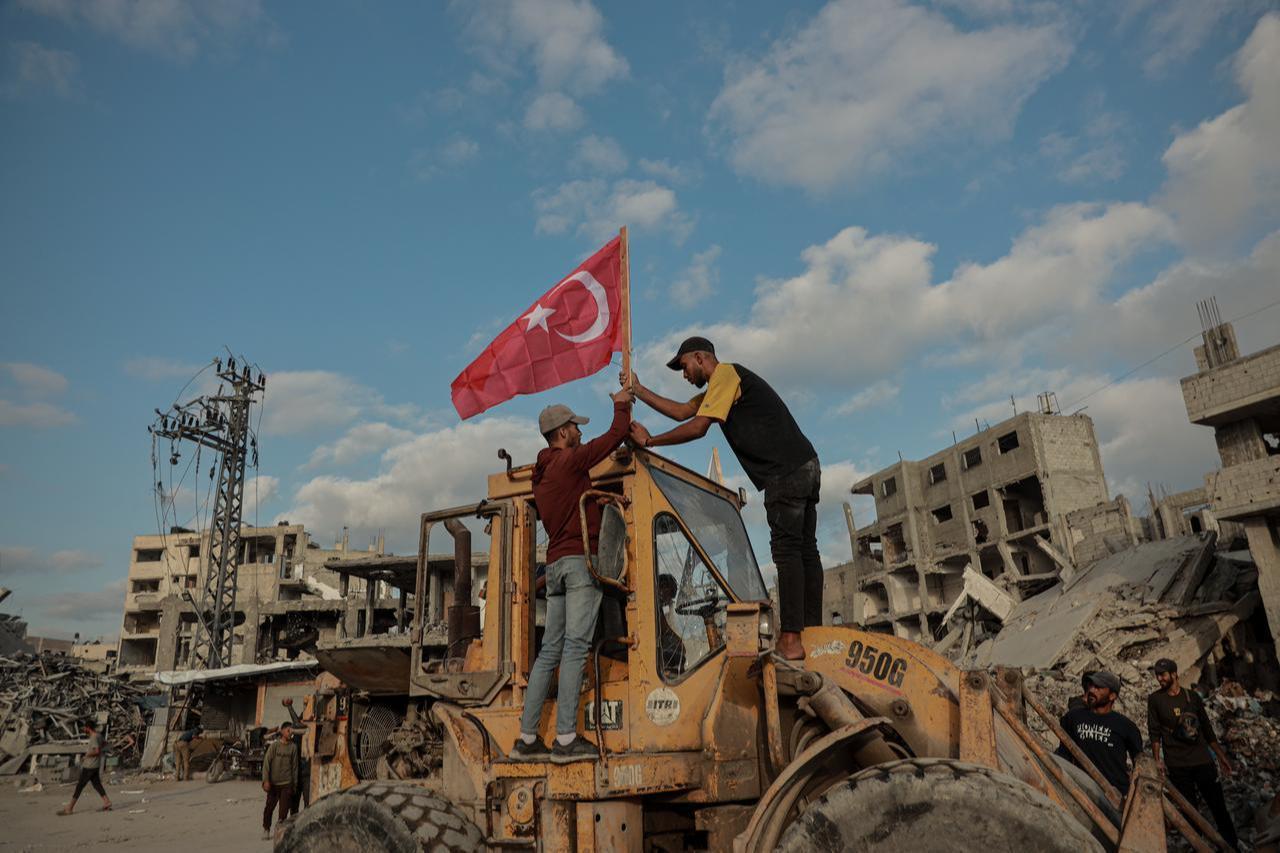

Speaking to Türkiye Today in an exclusive interview, former Israeli Ambassador Alon Liel stated that the growing comparison between Türkiye and Iran in Israeli political discourse reflects a desire to "upgrade" Türkiye "to the league of Israel's worst enemies" and "teach Türkiye a lesson."
He said bilateral relations cannot recover as long as Ankara and Jerusalem disagree on the future of Palestine, and warned that their competing visions for Syria carry "explosive potential."
"Relations between our two countries were improving before Oct. 7, 2023. There was even a meeting between Erdogan and Netanyahu shortly before at the U.N.," Liel said.
"The relations seriously deteriorated since then, mostly because of the war in Gaza and its scope regarding casualties and destruction. The countries are hostile to each other these days," he added.

Liel said that the diplomatic infrastructure that once connected the two countries has largely collapsed.
"As far as I know, even the channel of Israeli President Isaac Herzog, who was instrumental during the rapprochement before Oct. 7, is not functioning now," he said.
He added that the intelligence channel between Mossad and the Milli Istihbarat Teskilati (MIT), Türkiye's national intelligence organization, is likely still open.
"I guess the intelligence channel is still open as it always was, even during the worst times in our relations," Liel said.
Liel addressed the increasingly aggressive Israeli rhetoric comparing Türkiye to Iran, a narrative that has intensified during the current war.
"The Iran-Türkiye comparison stems from the anger and even the hatred toward Türkiye in Israel today," Liel stated.
"People here know Türkiye; many have visited the country in the past, and they are aware of the differences between Iran and Türkiye. But the comparison to Iran expresses the 'upgrading' of Türkiye in Israeli eyes to the league of Israel's worst enemies," he added.
"It also reflects the government's and the public's wish to 'teach Türkiye a lesson' for its hostility toward Israel," he added.
Liel warned that the two countries' fundamentally different views on Syria could lead to a dangerous escalation.
"Today, both Israel and Türkiye control some Syrian territory. Israel in the Golan Heights and beyond, and Türkiye in the north of Syria. Both have a military presence in Syria, but the nature of it, to my mind, is very different," Liel said.
"Türkiye seems to respect the Syrian sovereignty and its new regime. It was also invited by the Syrian government to assist in defending the country. Israel's presence in Syria, on the other hand, is not welcomed by the Syrian regime," he said.
Liel said that the Israeli government does not trust Syria's new leadership and is not interested in its stabilization. He noted that Israel views the Turkish presence in Syria as a replacement for Iranian influence, moving toward military dominance over the nation and, in doing so, becoming a dangerous and immediate neighbor to Israel.
"These observations are of an explosive potential," Liel warned.
Liel described the recent Israeli-Turkish military-level talks held in Azerbaijan and Paris as limited in scope and ambition.
"The talks in Azerbaijan, as well as those held in Paris, were of a technical nature. They did not intend to change the on-ground political realities. They only made sure that the two armies did not clash at this stage," Liel said.
"They were carried upon at the request of the Americans and were mainly meant to satisfy Washington," he added.
He was of the view that the talks could become meaningful only "if both governments seriously agree to discuss the future of a sovereign Syria, especially on the point that it should stay a sovereign state with peaceful relations with all its neighbors."
"This might only help ease tensions between the two countries on the issue of Syria, for as long as Ankara and Jerusalem disagree on the future of Palestine, their bilateral relations can never really recover," Liel added.
Liel said that the Israeli government views its relationship with Türkiye as strategically secondary, focusing instead on potential pressure from Washington.
"What Israel really cares about is potential pressure from Washington regarding its Palestinian policy: pressure to move to a two-state solution, pressure against the expansion of West Bank settlements, and potential pressure to withdraw from Gaza," Liel said.
"The U.S. has hardly gotten involved in Turkish-Israeli relations during the last decade. The Ankara-Jerusalem link is not seen as important by the Israeli government, which is aiming at upgrading its relations with other regional players," he added.
On the broader regional picture, Liel said, "If Israel overcomes its bilateral relations with the Palestinian, Lebanon and Syria, it will strengthen its regional and global status. If, on the other hand, Israel faces ongoing regional wars, Türkiye will benefit regionally from this situation and the diplomatic weakening of Israel."
"As for the bilateral Ankara-Jerusalem link, the future of Gaza will be the key factor," Liel said.
He called on the international community to prioritize Israeli-Palestinian peace.
"The international community, including the U.S., should focus on the efforts to bring about peace between Israel and the Palestinians. This, to my mind, is the key to stability in the region as well as the key to Turkish-Israeli relations," Liel concluded.


 Set as preferred source
 Set as preferred source


 4 min read