Newsletters


Türkiye has emerged as one of the key enablers of Gulf freight rerouting as the near-closure of the Strait of Hormuz drives shipping giants to mobilize land bridges through the region.
Shipping giant Maersk CEO Vincent Clerc told the Financial Times (FT) that "the Saudis and the Iraqis have opened up for a lot of trucks coming from Iraq, from Jordan, from Türkiye even," as freight rates on the Shanghai to Gulf route hit record highs this week, surpassing even the peaks of the COVID-19 pandemic.
The cost to ship a standard 20-foot container on the Shanghai to Gulf and Red Sea route rose from $980 before the war to $4,131 in the week to May 15, according to Clarksons Research, exceeding the 2021 pandemic peak of $3,960 per TEU (20-foot equivalent unit).
Shanghai to Jebel Ali rates had quadrupled to more than $8,000 per 40-foot container at the start of the war before easing to approximately $5,700, according to shipping platform Freightos.
All major shipping companies, MSC, Maersk, CMA-CGM, and Hapag-Lloyd, have opened lorry routes from Red Sea and Gulf of Oman ports, including Yanbu, King Abdullah, and Fujairah, to ports such as Dammam, Basra, and Jebel Ali.
However, Hapag-Lloyd CEO Rolf Habben Jansen told the FT that trade flows into the Gulf had fallen 60-80% and that "the only way to get it in there is through a land bridge, but of course the capacity of all those land bridges is a lot less."
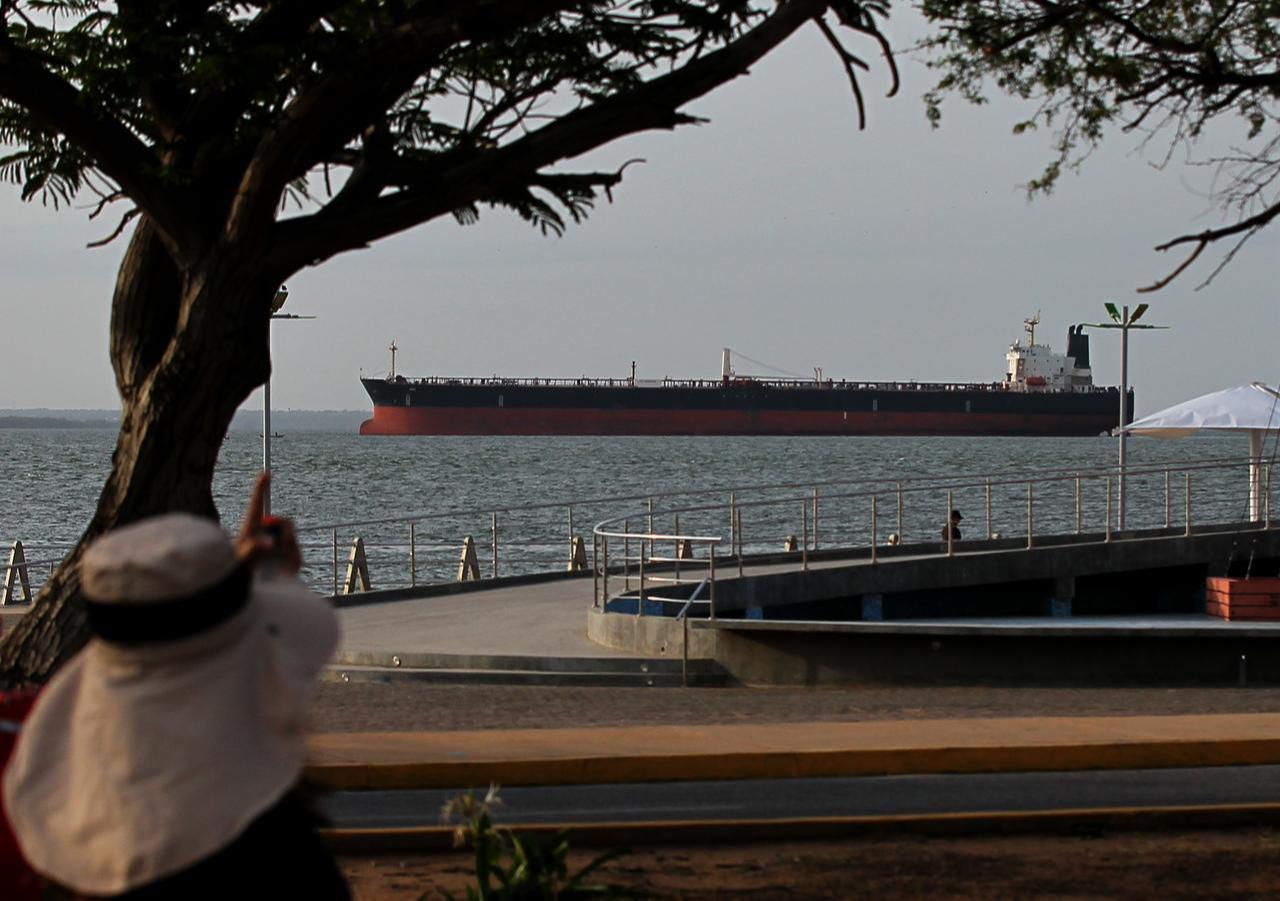

The shipments bound for the Middle East remain stranded in ports as far as India and Mozambique.
Tata Consumer Products' senior VP of supply chains, Tony Stubbs, told the FT that tea, salt, and pulses are being rerouted through Jeddah and Khorfakkan for overland transport, with delays of up to 60 days.
A London shipbroker told the FT that grain traders are also rerouting through Fujairah and Khorfakkan with trucks distributing cargo to Qatar, Bahrain, and other Gulf destinations on smaller vessels.
Fertilizer trader Hexagon Group president Christian Wendel told the FT, "Logistically it's a nightmare," noting that standard fertilizer export cargoes of 30,000-50,000 tonnes require thousands of 30-tonne trucks.
 1 min read
U.S. Central Command (CENTCOM) confirmed Saturday that as of May 16, 78 commercial ships had been redirected and four disabled under the U.S. naval blockade.
Iran's state television reported Saturday that European countries had begun negotiations with Iran's IRGC navy for Hormuz transit rights, following earlier passage by Chinese, Japanese, and Pakistani vessels under Iran's "management protocols."
Iranian parliament national security committee chair Ebrahim Azizi confirmed a formal Hormuz traffic management mechanism was being prepared and would be "unveiled soon," with fees for cooperating vessels and the route closed to "operators of the so-called 'freedom project.'"
Italian Prime Minister Giorgia Meloni, speaking at the Europe-Gulf Forum in Costa Navarino, Greece, called for the reopening of the Strait of Hormuz "without tolls or discriminatory restrictions" and said Italy was ready to contribute to maritime safety "as soon as the conditions are right."
Qatar's Foreign Minister Sheikh Mohammed bin Abdurrahman Al Sani and Saudi Arabia's Faisal bin Farhan held a call on Sunday, discussing efforts to ease tensions, with the Qatari side stressing the "importance of all parties responding positively to the ongoing mediation efforts."
Regional tensions have escalated since the U.S. and Israel launched strikes against Iran on Feb. 28.
In response. Tehran retaliated with strikes targeting Israel as well as U.S. allies in the Gulf, including the UAE, along with the closure of the Strait of Hormuz.
A ceasefire took effect on April 8 through Pakistani mediation, but talks in Islamabad failed to produce a lasting agreement. U.S. President Donald Trump later extended the truce indefinitely.


 Set as preferred source
 Set as preferred source


 1 min read