Newsletters


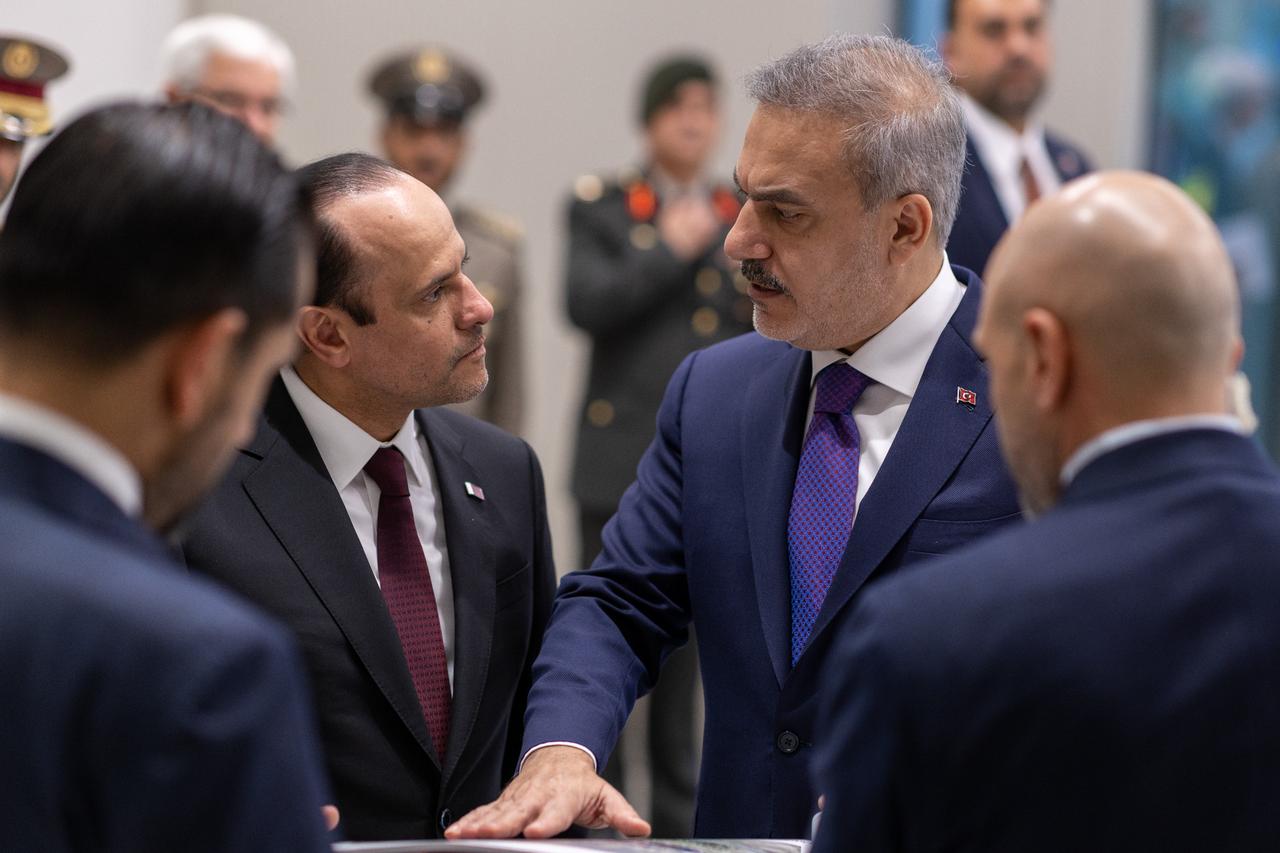


Turkish Foreign Minister Hakan Fidan said countries sharing a common vision of regional peace could join the Mecca defense alliance, as Türkiye's parliament approved the trilateral defense agreement with Pakistan and Saudi Arabia, paving the way for its implementation.
The Turkish parliament approved the bill ratifying the Mecca Agreement on Joint Defense on Thursday by 279 votes to 119, with 398 of the chamber's 592 members participating in the vote.
Fidan, meanwhile, said the alliance was established to strengthen regional deterrence and promote stability through cooperation among countries sharing a vision of "regional solutions to regional problems."
His remarks appeared in an article titled "The Role of Regional Ownership in Our Foreign Policy: the Mecca Defense Alliance," published in the November issue of Anadolu Agency's monthly magazine, AA Briefing.
The foreign minister said other countries in the region that share the alliance's vision of peace could also participate in the initiative.
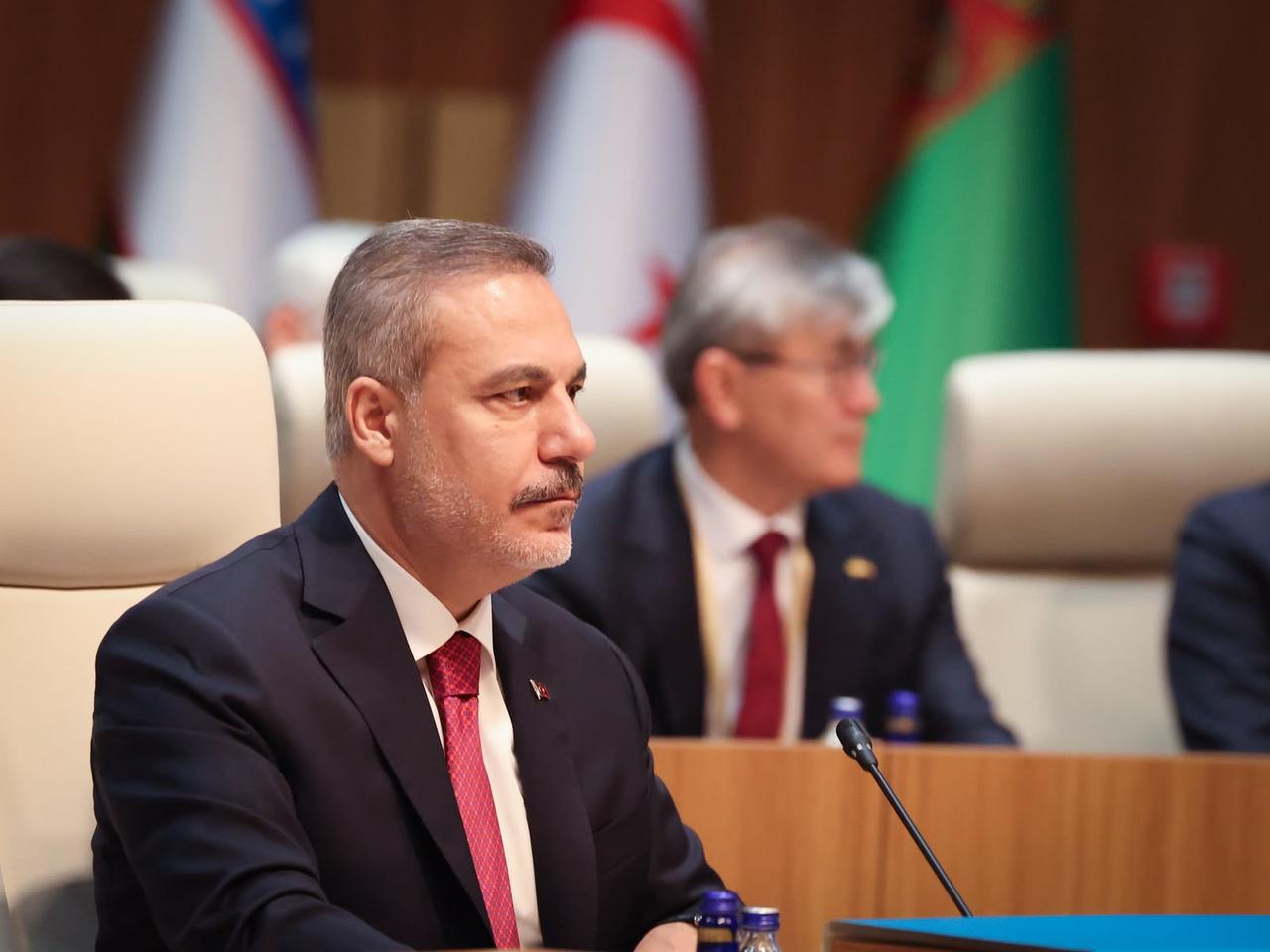

Fidan said Türkiye, Pakistan and Saudi Arabia signed the agreement because of their shared approach to addressing regional security challenges.
He emphasized that the global governance system was undergoing a turbulent period, with the Middle East at the center of major international challenges.
"The Mecca Defense Alliance lies at the intersection of our strategic foreign policy priorities, which can be summarized as strengthening regional peace and stability, supporting development and prosperity, expanding the institutional framework of our foreign relations, and contributing to the transformation of the global system," Fidan said.
The minister described the initiative as part of Türkiye's broader foreign policy priorities, emphasizing regional ownership, institutional cooperation and deterrence.
His article also examined changes in the international governance system, the institutional framework of Türkiye's foreign relations and Ankara's vision for the future.
The parliamentary approval followed a debate over the agreement's scope, objectives and compatibility with Türkiye's existing international commitments.
The legislation, formally titled the Bill on the Approval of the Mecca Agreement on Joint Defense between the Republic of Türkiye, the Islamic Republic of Pakistan and the Kingdom of Saudi Arabia, passed with support from a majority of participating lawmakers.
During the debate, Ziya Altunyaldiz, a lawmaker from the ruling Justice and Development (AK) Party, said the agreement was intended to expand regional security cooperation.
He emphasized that the pact was not directed against any third country and that its principal objective was to prevent conflicts rather than escalate them.
Opposition lawmakers, however, raised concerns about the agreement's scope and oversight mechanisms.
Mehmet Guzelmansur of the main opposition Republican People's Party (CHP) called for clear rules to ensure that the agreement did not conflict with Türkiye's other international obligations.
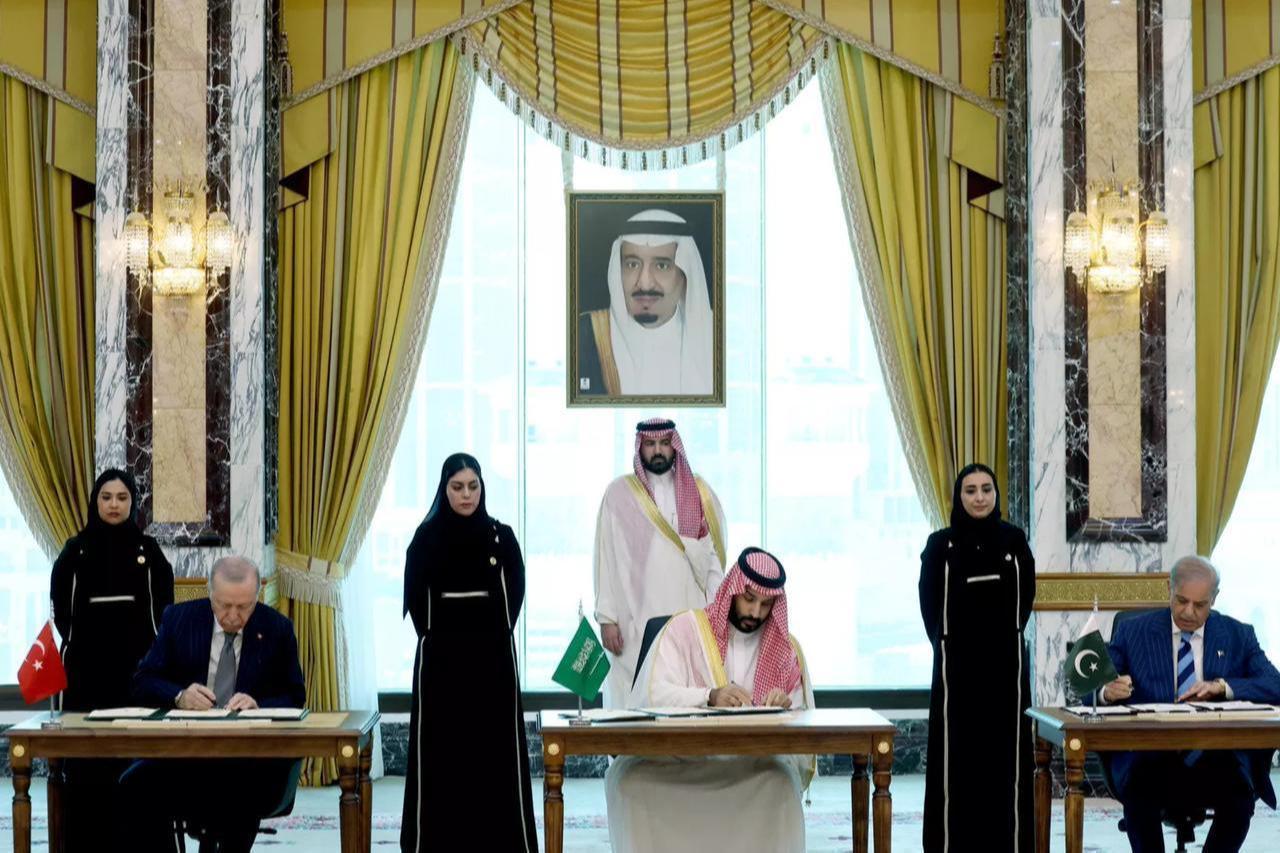
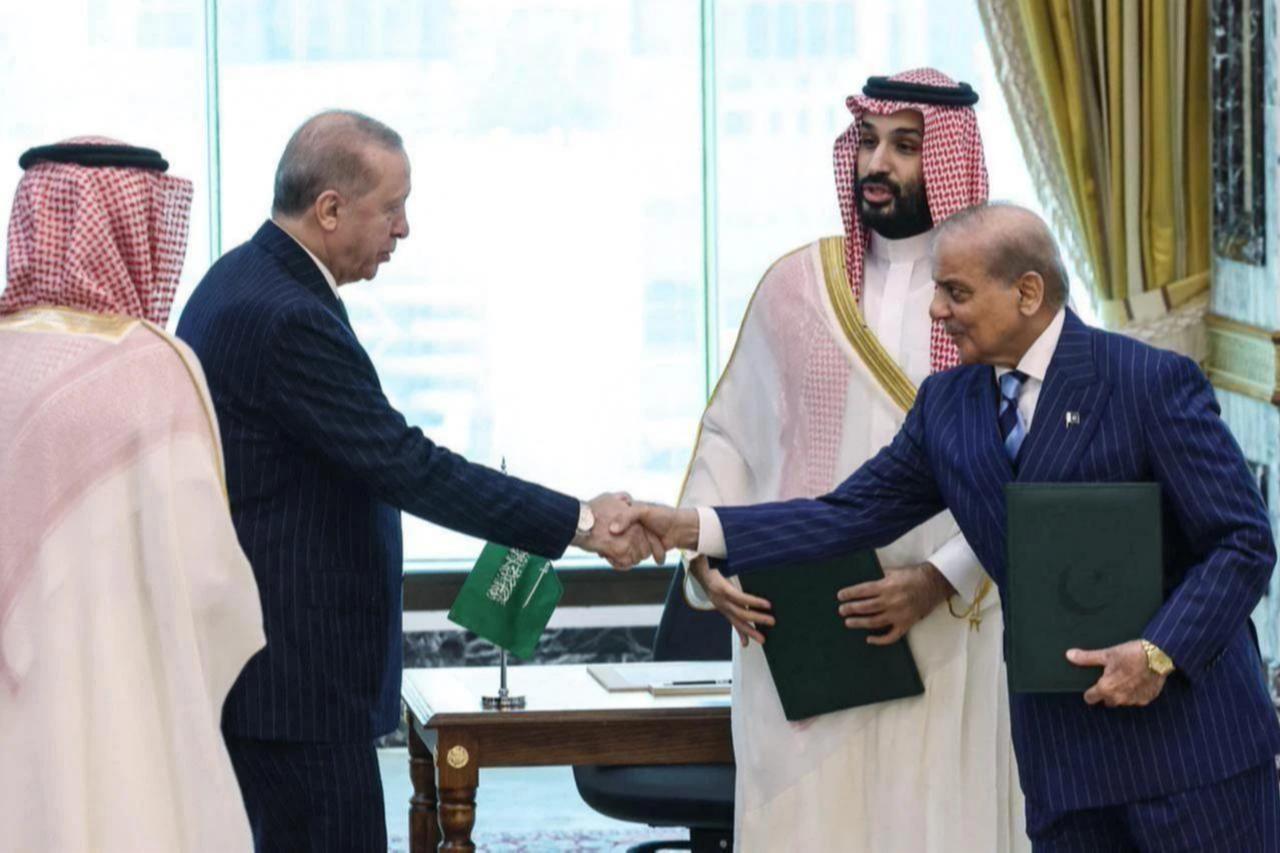
Türkiye, Pakistan and Saudi Arabia signed the Mecca Joint Defense Agreement at a trilateral summit in Mecca on Aug. 7, pledging to strengthen collective security, deepen defense cooperation and promote regional peace and stability.
The latest developments came as Pakistani Prime Minister Shehbaz Sharif said Wednesday that Islamabad was continuing diplomatic efforts to restore peace in the Middle East amid rising global oil prices.
Speaking at a Cabinet meeting in Islamabad, Sharif described recent diplomatic contacts with Iran and other regional actors as "very productive."
"Pakistan is playing its role as before in restoring peace in the region," he said.
Sharif also highlighted a recent meeting in Tehran involving officials from Pakistan, Iran, Saudi Arabia and Türkiye, describing the discussions as "positive."
He said the participants had discussed ways to reduce regional tensions, including cooperation under the Mecca defense agreement.
"We also discussed the trilateral Mecca defense pact involving Türkiye, Pakistan and Saudi Arabia in Tehran in a very positive atmosphere," Sharif said.
Separately, Pakistani Foreign Minister Ishaq Dar met Iranian Ambassador Reza Amiri Moghadam on Wednesday to discuss bilateral relations and regional developments.
According to Pakistan's Foreign Ministry, Dar reaffirmed Islamabad's commitment to strengthening relations with Tehran and emphasized the importance of dialogue and diplomacy in promoting regional stability.
The defense initiative comes against the backdrop of continued regional instability following the outbreak of war between the United States, Israel and Iran earlier this year.
After the United States and Israel launched military operations against Iran on Feb. 28, Pakistan helped secure a ceasefire on April 8 and subsequently hosted more than 20 hours of negotiations between American and Iranian officials in Islamabad.
Following weeks of mediation, Pakistan and Qatar helped secure the Islamabad memorandum of understanding, signed June 18.
The agreement established a framework and a 60-day period for Washington and Tehran to negotiate a longer-term settlement aimed at ending the conflict.
However, retaliatory strikes subsequently resumed, and regional tensions have continued.
Fidan's remarks on the potential expansion of the Mecca pact, together with the Turkish parliament's approval of the agreement and Pakistan's diplomatic engagement with Iran, come as the three participating countries pursue closer defense cooperation alongside efforts to address regional security challenges.


 Set as preferred source
 Set as preferred source


 1 min read
 1 min read