Newsletters


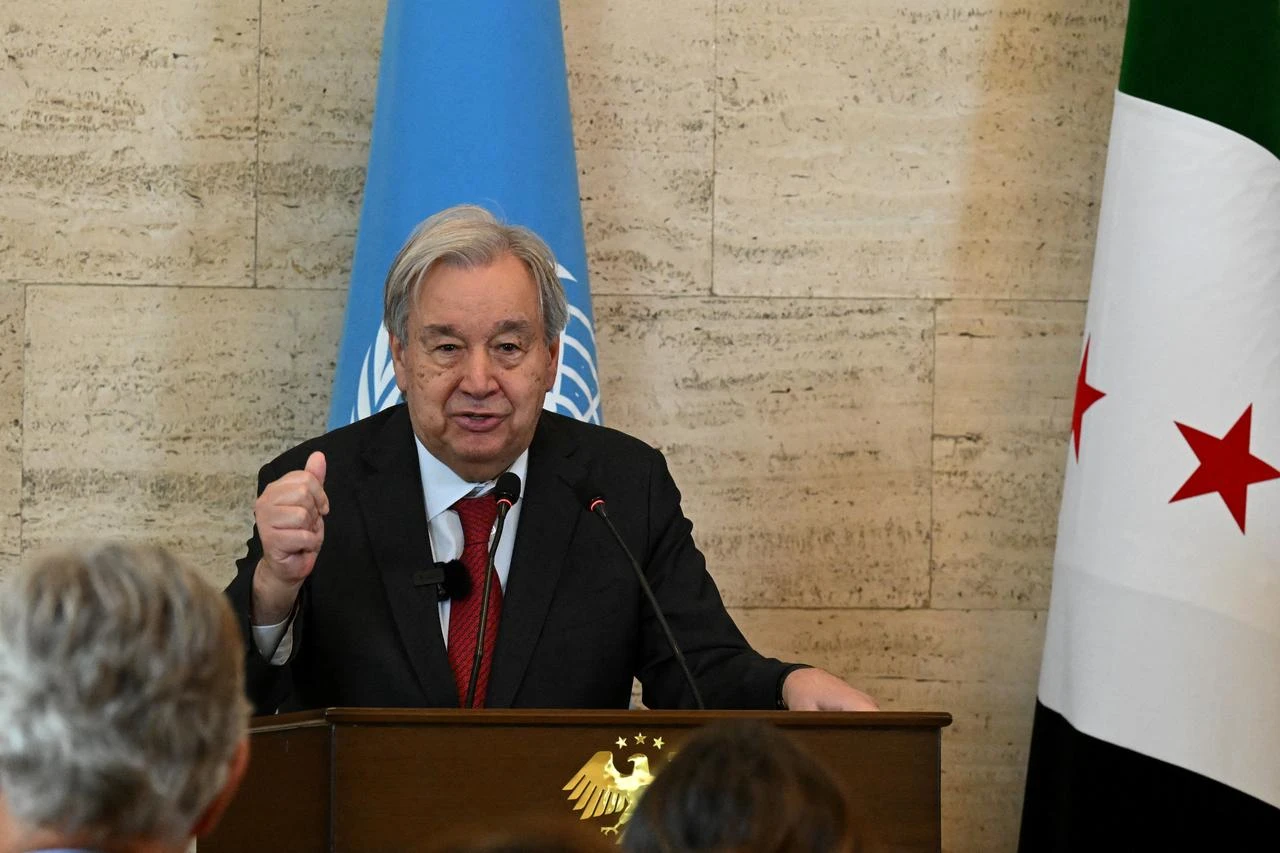


United Nations Secretary-General Antonio Guterres said Saturday that any violation of Syria's territorial integrity is unacceptable and called on the international community to act through the U.N. Security Council.
Speaking at a news conference with Syrian Foreign Minister Asaad Hassan al-Shaibani in Damascus, Guterres said the Golan Heights, occupied by Israel in 1967, are Syrian territory.
"The United Nations recognizes, leaving no room for doubt, that the Golan territories are Syrian territory," Guterres said.
"The Golan Heights are Syrian territory, and any violation of the sovereignty of Syrian territory is unacceptable and must be stopped," he added.
Guterres said Israel's violations in the Golan Heights and Syrian territory had been condemned many times by the U.N., adding that the primary responsibility for addressing the issue belongs to the U.N. Security Council.
"As the United Nations, we are strongly advocating for the recognition that what belongs to Syrians belongs to Syrians," he said.
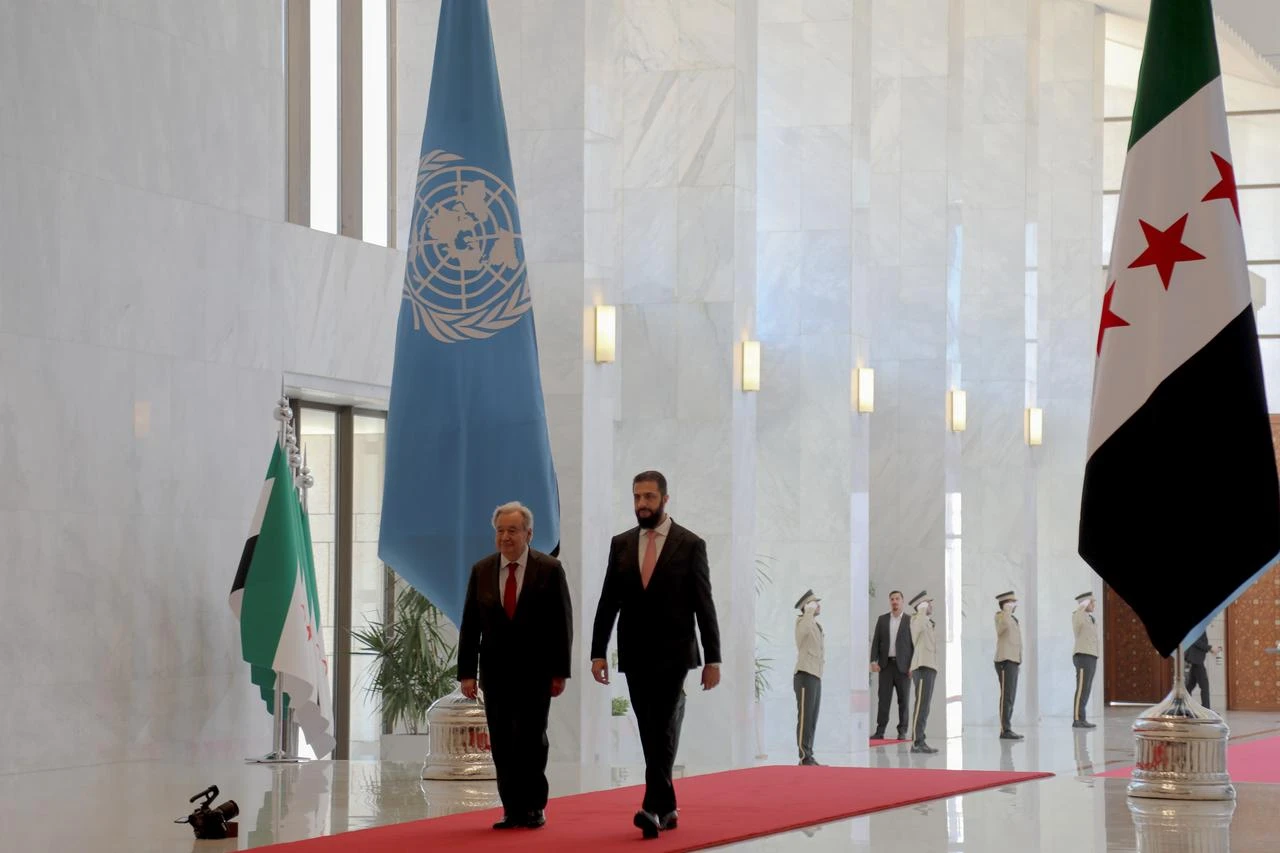
Guterres arrived in Damascus on Saturday for a three-day visit, the first by a U.N. secretary-general to Syria since Ban Ki-moon in 2009.
"I have just arrived in Damascus for a visit of solidarity," Guterres wrote on X.
"My message is clear: The UN stands with Syria at this pivotal moment & I appeal to the international community to spare no effort to support the people of Syria as well," he said.
Guterres met Syrian President Ahmad al-Sharaa at the People's Palace, visited the Umayyad Mosque and toured the Old City of Damascus, accompanied by Syria's permanent representative to the U.N., Ibrahim Olabi.
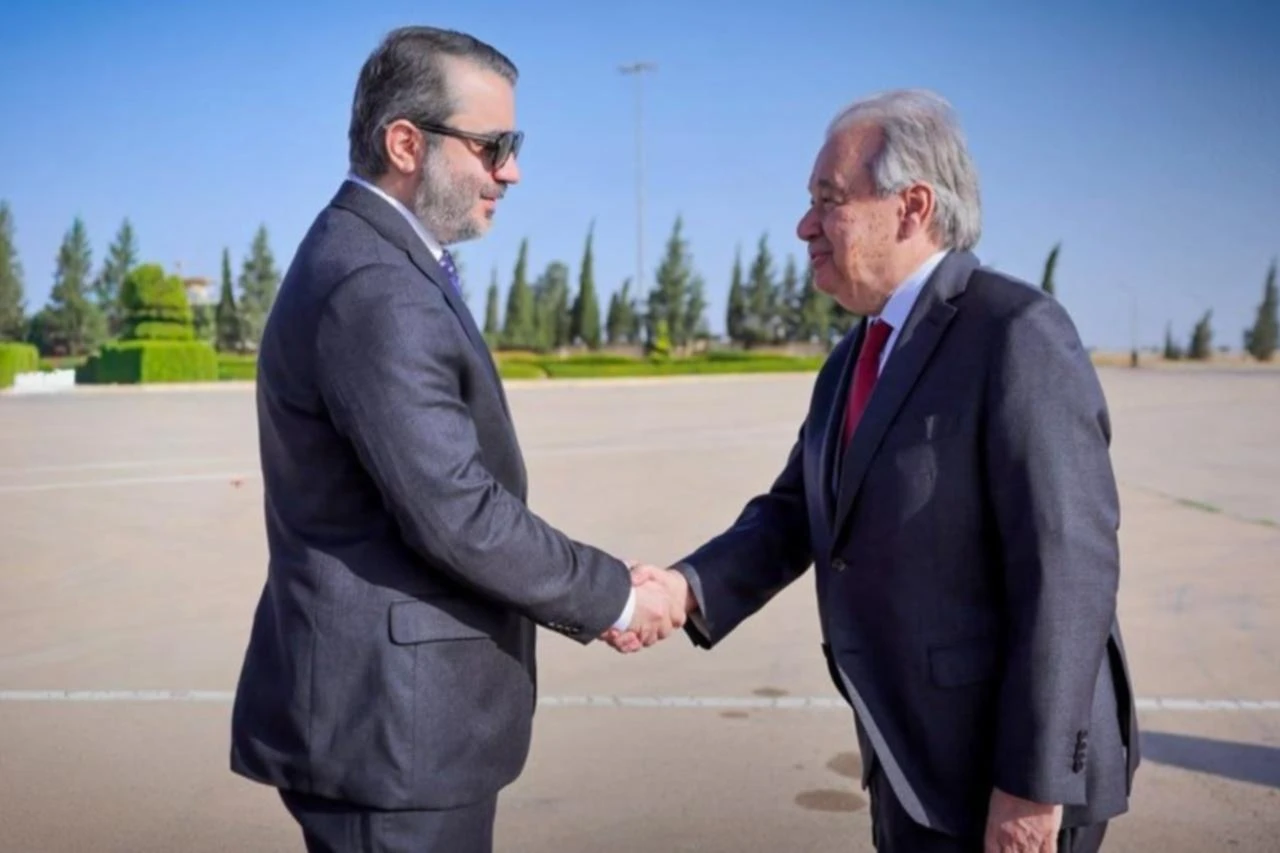
Foreign Minister Shaibani received Guterres and his delegation at Damascus airport.
The visit also includes a field tour to inspect the U.N. Disengagement Observer Force (UNDOF), stationed in the Golan Heights as part of efforts to monitor commitments under the cease-fire agreement with Israel.

Guterres said the Syrian people had endured many years of hardship during the country's civil war but had maintained resilience, perseverance, innovation and a sense of belonging.
He said Syria is now going through a period of both recovery and investment.
"There is no country that has emerged from a very violent conflict and rebuilt itself on its own," Guterres said.
"We must help Syria in its determination and resolve on this issue," he added.
He said the U.N. looks forward to cooperating with Syria and working with the international community to achieve a more prosperous future for Damascus.
"Syria today is laying the foundations for a better future for all Syrians," Guterres said.
Shaibani said he and Guterres discussed Syria's reconstruction and Israel's violations against the country.
He said the talks addressed ways to improve cooperation with the U.N. in support of Syria's reconstruction efforts.
Shaibani said Syria prioritizes ensuring security and stability.
"Syria today presents a strategic model of peace focused on gathering weapons in the hands of the state and ensuring the security of the country's borders," he said.
Shaibani said about 3.5 million Syrians had recently returned to their country, describing it as one of the world's largest voluntary return movements.
He said Syria needs the support of the international community and the European Union.
"Those who want to see a successful model in this period need to stand by Syria," Shaibani said.

Shaibani said Israel's violations against Syrian territory constitute a direct threat to regional security.
He said Syria wants the U.N. to assume a more active and supportive role in the country.
Shaibani added that he and Guterres discussed the partnership process between Syria and the U.N.
"The Syrian people have the opportunity at the current stage to participate in rebuilding their country," he said.
Guterres' visit comes as Syria remains in transition following years of war and the overthrow of longtime ruler Bashar Assad.
Since Sharaa took power, the international community has urged the new authorities to build strong and effective institutions and establish an inclusive system of governance for Syria's multiethnic and multiconfessional society.
Guterres "will emphasize that the opportunity now is not only to recover from conflict, but also to lay the foundations for a future for Syria that will be more stable, more inclusive and more prosperous for all Syrians," his spokesman, Stephane Dujarric, said ahead of the visit.
He will also "reaffirm the role of the United Nations is to accompany and support the Syrian people on this journey," Dujarric added.
Guterres is also set to meet representatives of Syrian civil society and nongovernmental organizations supporting women's issues.
After Assad's overthrow, Israel sent troops into the U.N.-patrolled buffer zone separating Israeli and Syrian forces on the Golan Heights and has carried out strikes and repeated incursions deeper into Syrian territory.
Israeli officials have said they intend to keep forces in a "security zone" in southern Syria, where they seek a broader demilitarized zone.
Despite tensions between the neighbors, Israel and Syria's new authorities have held several rounds of direct talks and agreed to establish an intelligence-sharing mechanism, though the move has not halted Israeli military activity.
Syria's war shattered the country's infrastructure and forced millions of people to flee internally and abroad.
Since Assad's ouster, about 1.9 million internally displaced people and 1.7 million refugees from abroad have returned, according to the U.N.
Around 5.5 million people remain displaced inside the country and another 6 million remain overseas.
With many Syrians living in poverty, an estimated 15.6 million people require humanitarian assistance.
Several senior U.N. officials have visited Syria since Assad's fall, including rights chief Volker Turk and U.N. nuclear watchdog head Rafael Grossi. A U.N. Security Council delegation of ambassadors also made its first-ever visit to Syria late last year.
Sharaa last year made a landmark visit to the U.N., becoming the first Syrian president in decades to address the General Assembly.


 Set as preferred source
 Set as preferred source


 1 min read

 1 min read