US military disables another tanker for breaching Iran blockade
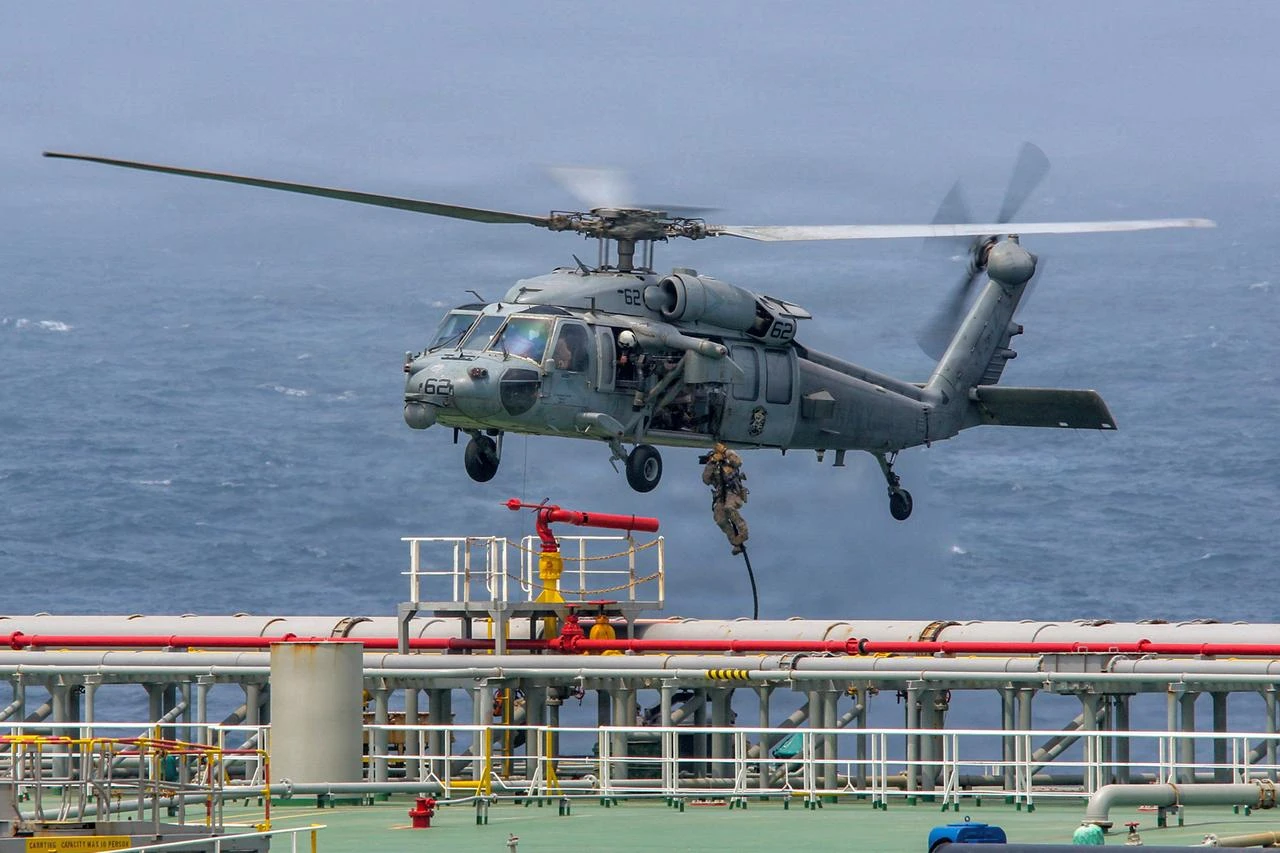
This handout photograph, taken on July 16, 2026, by US Central Command Public Affairs, shows US Marines conducting a verification boarding aboard M/T Wen Yao in the Gulf of Oman. (AFP Photo/NAVCENT Public Affairs/US Marine Corps/HO)
July 25, 2026 11:53 AM GMT+03:00
The U.S. military said Friday it fired on and disabled a merchant tanker attempting to breach its blockade of Iranian ports, as both Washington and Tehran showed signs that further escalation remained possible following a 13th consecutive night of U.S. strikes on Iran.
U.S. forces disabled the tanker M/T Lavine in the Gulf of Oman after the crew attempted to run the blockade at least four times, according to Navy Capt. Tim Hawkins, a U.S. Central Command (CENTCOM) spokesperson, cited by Agence France-Presse (AFP), The Associated Press (AP) and CBS News.
An incident involving a tanker and unspecified military forces was reported on Saturday near the Strait of Hormuz waterway, according to the United Kingdom Maritime Trade Operations (UKMTO) monitor.
"UKMTO have received a report of an incident involving a tanker and military forces in the Gulf of Oman," the agency said in a statement on X. It's not known if the incidents are related.
Tanker disabled after ignoring warnings
"We disabled the tanker after the crew attempted to run the blockade at least four times prior. The crew was repeatedly warned, didn't comply, and U.S. forces on scene disabled the ship after firing into its engine room. The ship is no longer transiting to Iran," Hawkins said.
According to the AP, this marks the second commercial ship disabled since the U.S. reimposed its naval blockade of Iranian ports.
The first, the Curacao-flagged tanker Belma, was sailing toward Kharg Island, Iran's main oil export terminal, when it was disabled July 15 after a U.S. aircraft fired a missile into its smokestack following what CENTCOM described as the ship ignoring multiple warnings
CENTCOM said on X that since resuming the blockade nine days earlier, it had redirected 12 commercial vessels and disabled one to prevent ships from entering or leaving Iranian ports or coastal areas.
U.S. embassies across the Middle East have begun alerting Americans in the region that options to leave could become more limited, while Iran's Islamic Revolutionary Guard Corps (IRGC) has advised residents of neighboring countries to stay away from bases hosting U.S. troops.
Neither side has shown signs of stepping back from the conflict following the 13th consecutive night of U.S. strikes.
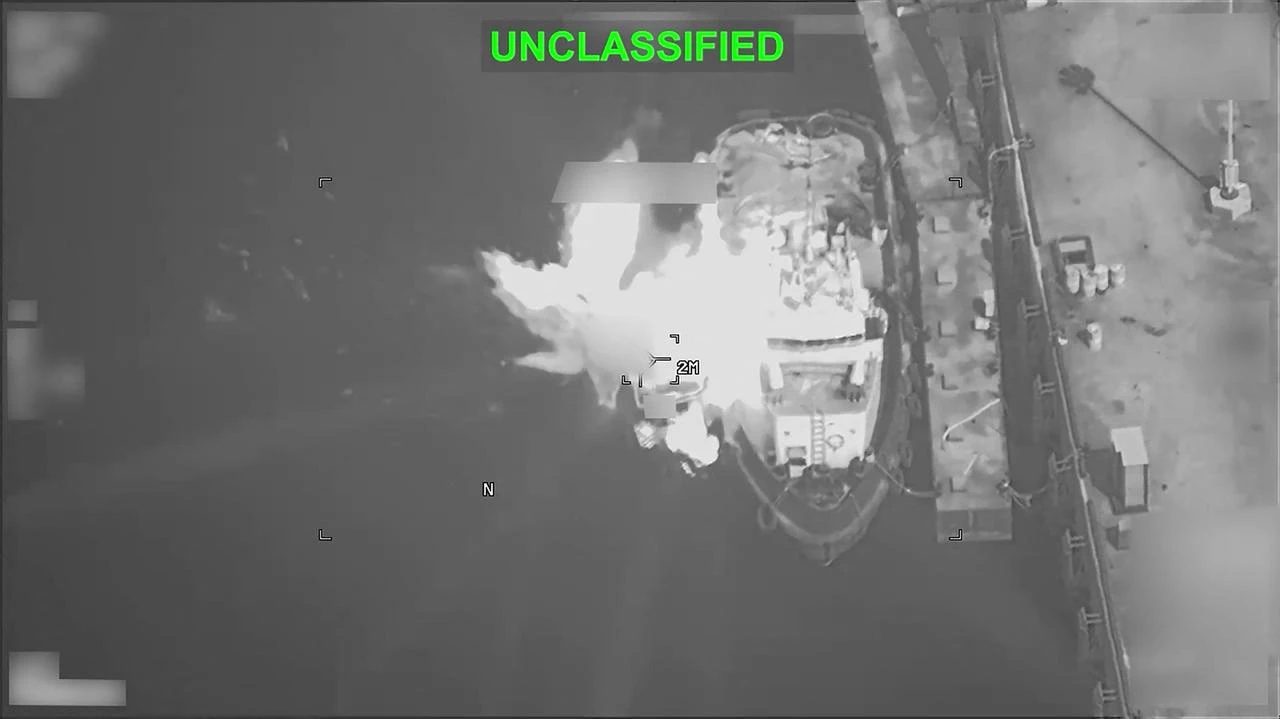
This screen grab made on July 24, 2026, from handout footage released by the US Central Command (CENTCOM) on July 23, 2026, shows a precision strike by US forces against Iran. (AFP Photo/US Central Command Public Affairs/HO)
A guide to US bases across the region
As Iran has targeted bases hosting U.S. forces throughout the war, AFP compiled an overview of the major U.S. military concentrations in the Middle East, all falling under CENTCOM.
Elizabeth Dent, a senior fellow at the Washington Institute for Near East Policy, told AFP that these bases "can support a wide range of missions from logistics, pre-positioning assets, refueling, and of course combat operations."
Iran has accused Gulf states of allowing the U.S. to use these bases to launch attacks against it, an accusation Dent told AFP was "likely" accurate in general, though she said Tehran's "perennial argument that all of these bases are inherently offensive is not accurate."
- Bahrain hosts the U.S. Navy's Fifth Fleet and U.S. Naval Forces Central Command headquarters at a deep-water port capable of accommodating aircraft carriers, used by the U.S. Navy since 1948. Bahrain has faced heavy Iranian strikes during the war, with Manama briefly evacuating the neighborhood hosting the Fifth Fleet early in the conflict.
- Iraq hosts American troops as part of the U.S.-led coalition against Daesh in the country's northern region, mainly at Erbil airport and al-Harir air base. The coalition is preparing to end its mission in Iraq by the end of September. Iran-backed Iraqi groups have struck U.S. facilities, including diplomatic missions in Baghdad and Erbil, more than 600 times during the war. A U.S. service member was killed in northern Iraq last week during the controlled detonation of unexploded ordnance from a downed Iranian drone.
- Jordan hosts U.S. troops at bases Amman and Washington describe as Jordanian, including Muwaffaq Salti Air Base, which houses F-16, F-15 and F-35 fighter jets, refueling and reconnaissance aircraft, drones, and Patriot and THAAD air defense systems. Dozens of U.S. military aircraft were reportedly deployed there ahead of the Feb. 28 strikes that launched the war. Iranian attacks recently killed three U.S. service members in Jordan. Dent told AFP that in recent years, largely due to Iran's growing missile, drone and proxy network, the U.S. has shifted toward more mobile basing along the western side of the Middle East, in Israel and Jordan.
- Kuwait has hosted a significant U.S. military presence since 1990, including Camp Arifjan, the forward headquarters for CENTCOM's Army component, and Ali al-Salem Air Base, home to the 386th Air Expeditionary Wing, a primary airlift hub for the region. Washington has also deployed MQ-9 Reaper drones to Kuwait. 6 U.S. service members and four Kuwaiti troops and border guards have been killed there since the war began.
- Qatar hosts Al Udeid Air Base, the largest U.S. base in the Middle East, including forward CENTCOM components, its air forces and special operations forces, along with the 379th Air Expeditionary Wing. Iran struck Al Udeid during the current war, having first attacked it in June 2025 following U.S. strikes on Iranian nuclear facilities.
- The United Arab Emirates hosts the U.S. 380th Air Expeditionary Wing at Al Dhafra Air Base, comprising 10 aircraft squadrons including MQ-9 Reaper drones, and serving as the Air Force's hub for advanced air warfare training.
- Saudi Arabia does not host formal American bases but has hosted U.S. troops at Prince Sultan Air Base in Al-Kharj, near Riyadh, since a 2019 bilateral agreement. The base, home to the 378th Air Expeditionary Wing, has come under attack during the war. A U.S. service member in Saudi Arabia died of wounds sustained in an Iranian attack in March.
Chatham House Middle East expert Neil Quilliam told AFP he did not expect Gulf states to consider reducing the U.S. military presence despite the deadly attacks, though he said Washington itself "is likely to reconsider its military posture in the region."
July 25, 2026 01:47 PM GMT+03:00


 Newsletters






 Set as preferred source
 Set as preferred source


 3 min read