Newsletters


Iranian Foreign Minister Abbas Araghchi stated on Thursday that the United States "has long miscalculated due to intelligence failures," including when it launched its war on Iran, and accused Washington of making an even bigger miscalculation regarding the Strait of Hormuz. Meanwhile, other senior Iranian officials pushed back on U.S. President Donald Trump's claim that the U.S. maintains "total control" of the waterway.
"The U.S. has long miscalculated due to intelligence failures. Case in point: The war on Iran. Now, an even bigger miscalculation on the Strait of Hormuz," Araghchi wrote on X.
"Worse than fake news is fake intelligence. Be careful. Allah is Great, Greater than ANY power on Earth. In Allah we trust," he added.
Hossein Taeb, commander of the paramilitary Basij Organization, an affiliate of Iran's Islamic Revolutionary Guard Corps (IRGC), said the Strait of Hormuz is "under Iran's control and management," according to Iran's semi-official Fars news agency.
"Today you see that the Strait of Hormuz is under the management and control of the Islamic Republic, and our country continues on its path in complete security," Taeb said.
"The Americans saw the power of the Islamic revolution," he added.
His remarks came a day after Trump wrote on Truth Social that the U.S. had "total control" of the waterway.
Taeb said the United States had sought to disrupt what he described as the Islamic Republic's popularity in the region by launching what he called another war in the Strait of Hormuz, but had been defeated again despite claiming Iran had neither an air force nor a navy.
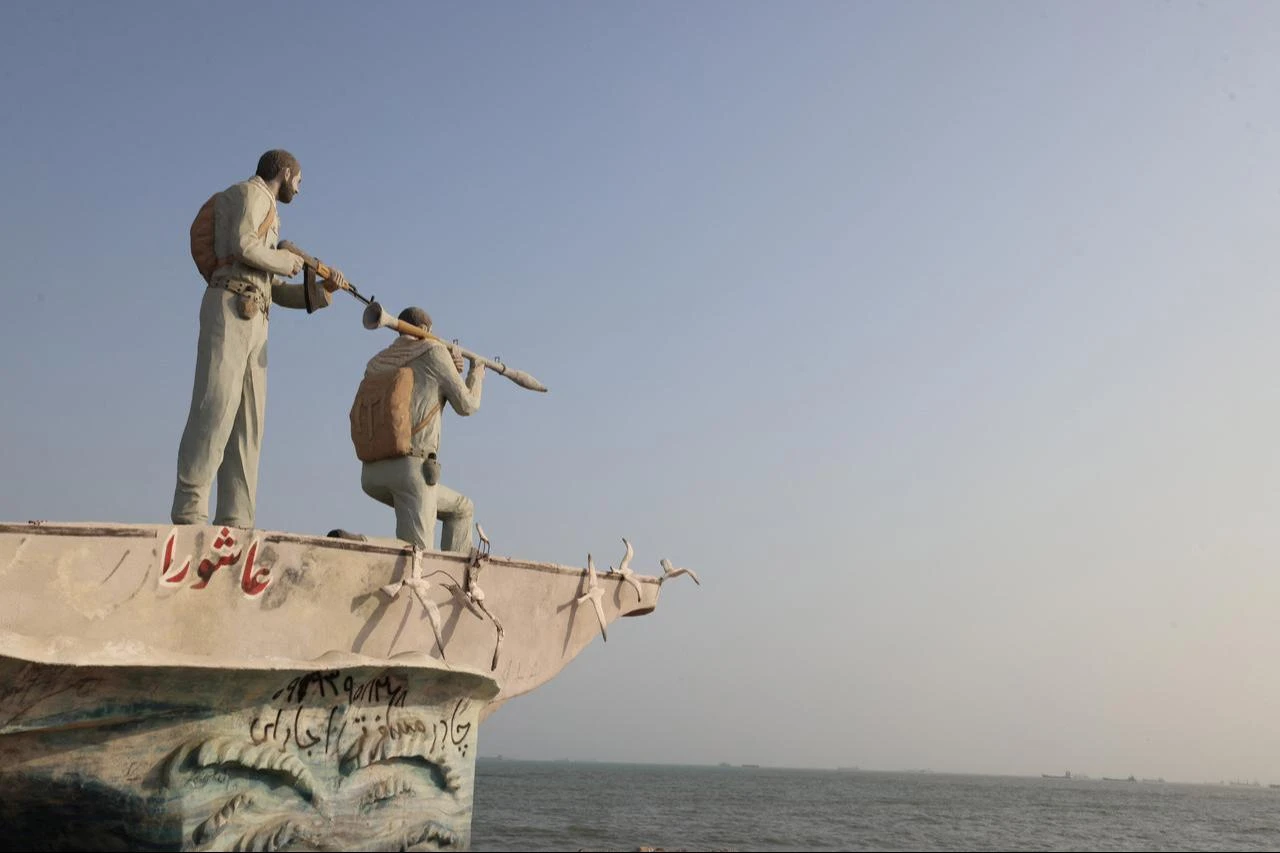

Behnam Saidi, secretary of the Iranian parliament's National Security Commission, stated on state television that no Israeli vessel will be permitted to pass through the Strait of Hormuz even after the war ends. He added that no U.S. military or commercial vessel will be allowed through the waterway until Washington ends what he described as its hostility and threats.
"No ship belonging to the Zionist regime has the right to pass through the Strait of Hormuz," Saidi said.
"Even if a vessel is affiliated with the regime and is carrying Israeli goods under another country's flag, it will not have the right of passage," he added.
Saidi said the same applied to U.S. vessels.
"No commercial or military vessel belonging to the guilty and aggressive American regime will have the right to pass through the Strait of Hormuz as long as it poses a threat to Iran and is designated as an enemy by Iran's Armed Forces," he said.
Separately, Saidi said negotiations between Iran and Oman would not mean the reopening of the Strait of Hormuz, adding that the strait "will not open until the United States fulfills its obligations."
Majid Ansari, the Iranian president's legal deputy, said Iran would achieve its objectives in the Strait of Hormuz and the wider region.
"The president has repeatedly emphasized from the very beginning that the government should try to avoid getting caught up in distractions," Ansari said.
"Despite all attempts at creating distractions, the president has monitored and maintained the main line of serving the people with honesty, trustworthiness and transparency," he added.
"These days, with the victories achieved and the negotiations that have taken place, the enemy feels completely defeated," Ansari said.
"We hope to reach a point of complete calm in the region with our heads held high. Our adversaries must respect the Iranian people, and the people will impose their dignity and respect upon them. They have become agitated because circumstances are proceeding in the Iranian people's favor and with calm. We will achieve our demands in the Strait of Hormuz and the region," the Iranian official noted.
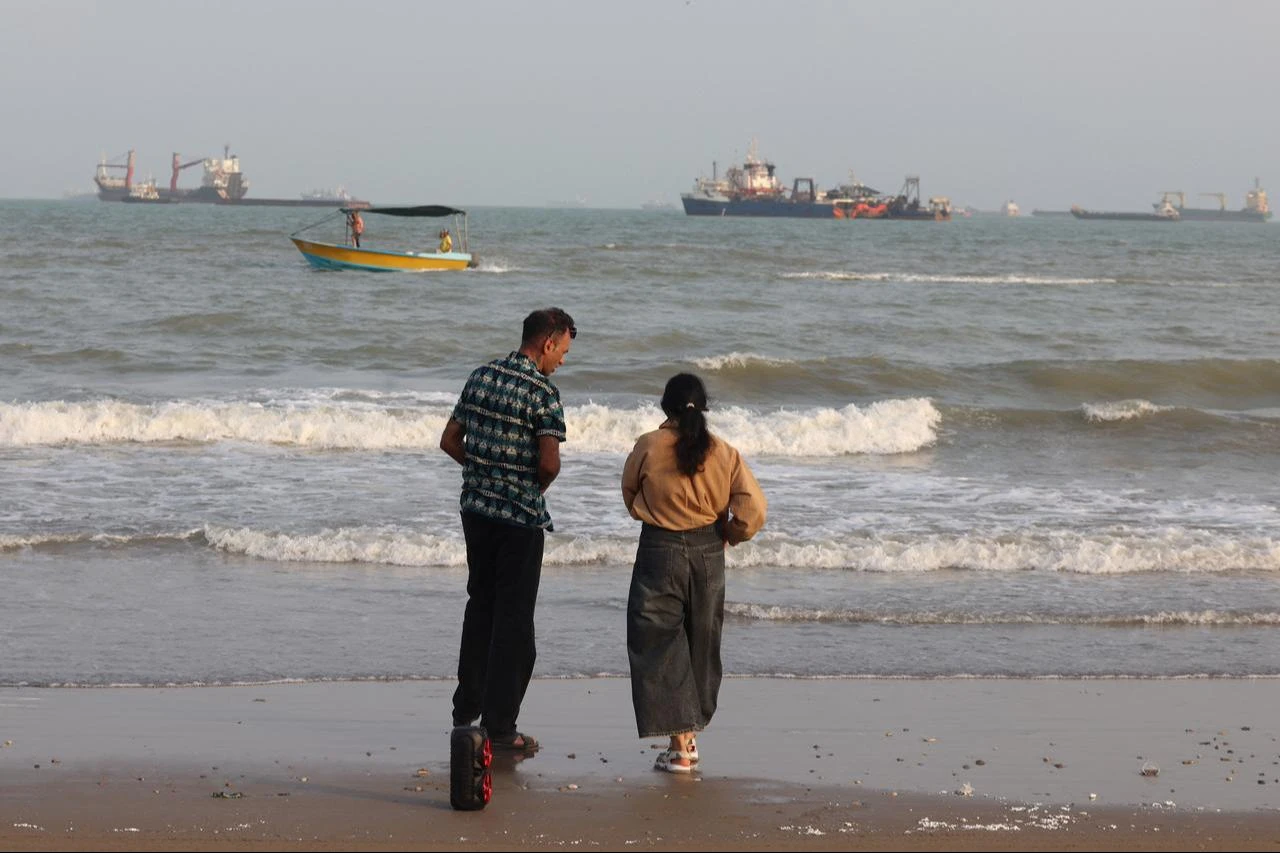
Iran's Foreign Ministry spokesman raised the question of environmental damage in the Persian Gulf and the Sea of Oman, saying any future administration of the Strait of Hormuz must address environmental conditions in the surrounding waters.
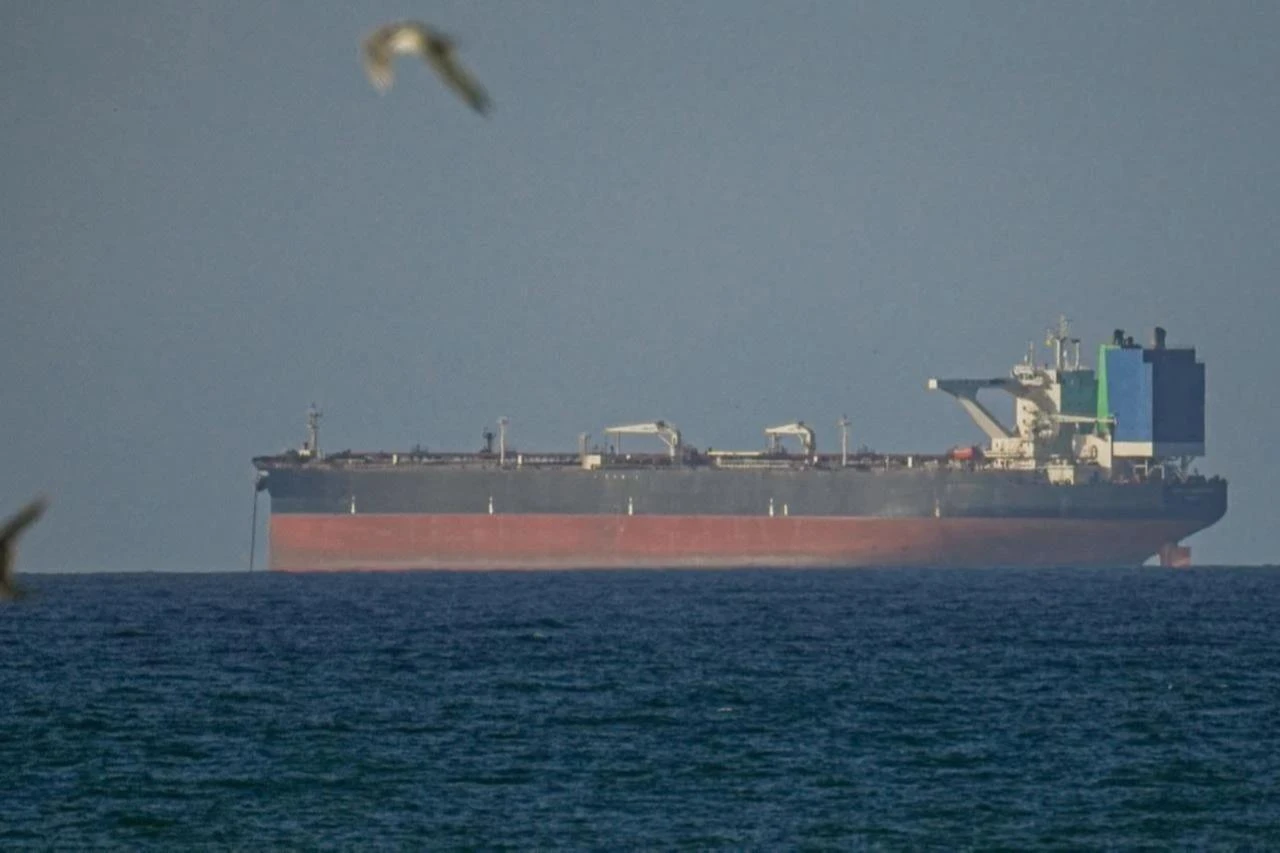
He said videos had circulated in recent days showing oil pollution along the shores of Qeshm Island, which he said drifted from the Persian Gulf toward the coast, with preliminary evidence pointing to a foreign bulk carrier as the source.
Contamination had been documented at three coastal sites and across portions of the sea surface, the spokesman said on X.
He said the pollution was one visible example of extensive damage, both overt and concealed, that has degraded the waters of the Persian Gulf and the Sea of Oman and the region's marine ecosystem over recent decades, which he said has imposed trillions of dollars in damage on Iran's coastal areas.
"Who bears responsibility for compensating these damages? Is it the nations that consume the inexpensive energy exported from our region, the shipping insurers, or the aggressors and their partners who have transformed the Persian Gulf and the Sea of Oman into a theater for military operations and the testing of highly destructive weaponry?" he said.
As the country with the longest coastline along the Persian Gulf and the Sea of Oman, he said, Iran "cannot remain indifferent," and argued every party benefiting from commercial shipping through the strait carries a legal and moral obligation to remediate the environmental harm.
Michael Stevens, an analyst at the Royal United Services Institute (RUSI), told Al Jazeera that behind-the-scenes talks are ongoing between Iran, Oman and the Gulf Cooperation Council (GCC) on how to manage maritime traffic through the Strait of Hormuz, which he described as the object of a tug-of-war between Tehran and Washington.
It remains unclear whether Iran and Oman have agreed to charge a toll on ships entering or leaving the waterway.
"My understanding is that the Omanis have engaged in this discussion with the Iranians with quiet backing from the GCC," Stevens said.
"What that already seems to point to is that the GCC accepts that there's a new reality in the Strait of Hormuz," he added.
While U.S. Treasury Secretary Scott Bessent has said the strait would become "irrelevant" due to new pipelines bypassing the waterway, Stevens said their construction would take time. "Iran is strengthening its hand as we go into another negotiation phase," he said. "I don't think there's a way in which the U.S. can present that as a political or strategic win."


 Set as preferred source
 Set as preferred source


 1 min read
 1 min read