

 Newsletters


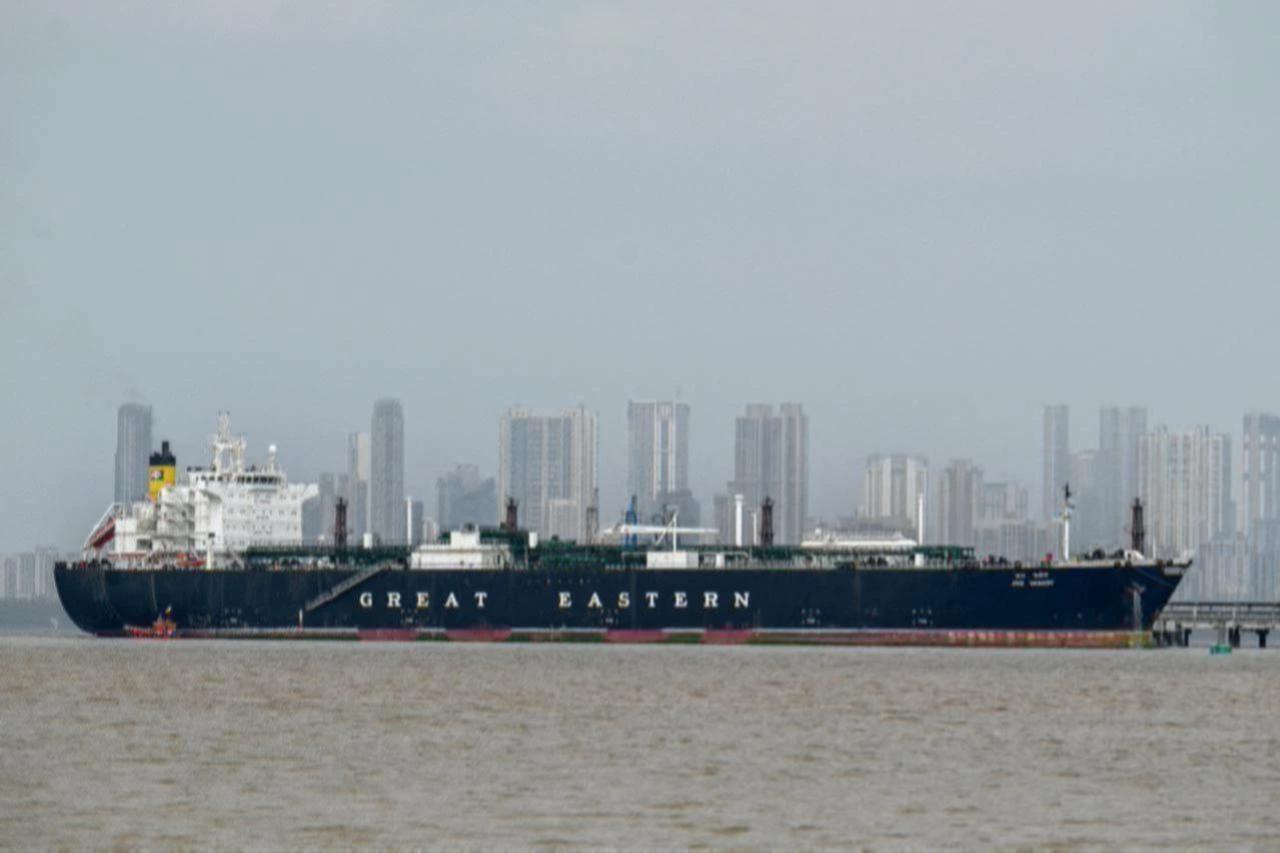


The U.S. Treasury Department has revoked a general license that had permitted the sale of Iranian oil, a concession issued less than three weeks ago under a preliminary memorandum of understanding between Washington and Tehran, as Iran launched strikes on at least three commercial tankers transiting the Strait of Hormuz on Tuesday, rattling fragile peace talks and sending oil prices higher on global markets.
The license, which the Treasury had issued on June 21 in the wake of the preliminary U.S.-Iran accord, has been cancelled against the backdrop of intensifying maritime hostilities, even as U.S. and Iranian officials insist negotiations are continuing.
The moves mark one of the sharpest single-day escalations since diplomacy between the two sides began, underscoring just how precarious the path to a durable settlement remains.
Iranian forces struck three vessels attempting to use a southern corridor near Oman's coast, a route Tehran had explicitly warned ships against using.
The targets included the Qatari-flagged liquefied natural gas tanker Al-Rakiyat, which caught fire in its engine room following the strike, raising fears of a potential explosion, and the Saudi-flagged crude supertanker Wedyan, which was hit by an Iranian-fired missile.
A third unidentified tanker, reported by the U.K. Maritime Trade Operations center, sustained structural damage from a drone strike but continued toward its next port of call without reported casualties. Iran did not formally claim the attacks, though its state television confirmed at least one vessel had ignored warnings from Iranian forces.
The strikes drew swift regional condemnation. Saudi Arabia called the attacks an "assault on the security and safety of international navigation, and on the security of global energy supplies.
"The secretary-general of the Gulf Cooperation Council, Jassim Mohammed Al-Budaiwi, described the strike on the Qatari tanker as "a dangerous escalation that threatens the security and stability of the region" and called on the international community to take "a firm and deterrent stance."
The Strait of Hormuz is the world's single most critical energy chokepoint, with more than a quarter of global seaborne oil trade and roughly a fifth of global liquefied natural gas exports passing through its narrow waters.
The bulk of that flow is bound for Asian markets, with China, India, Japan and South Korea among the most exposed to any disruption. Unlike most maritime chokepoints, it has no viable alternative route for the vast majority of vessels transiting it.
The attacks pushed international oil benchmarks sharply higher. Brent crude rose about 2.5 percent to $73.83 a barrel, while U.S. West Texas Intermediate climbed a similar amount to approximately $70 a barrel.
The move added to pressure in U.S. bond markets, where the yield on the 10-year Treasury rose to 4.51 percent from 4.48 percent.
Oil prices had already surpassed $100 a barrel earlier in the summer at the height of the conflict, and analysts warn that further disruptions could reignite inflationary pressures and force central banks to reconsider interest rate policy.
Even as fighting continued on the water, diplomatic activity persisted on land, though with mounting complications. Iranian Foreign Minister Abbas Araghchi said Tuesday that Tehran would not resume negotiations with the United States until Israel halted its strikes in Lebanon and would not sign any final agreement until Israeli forces had fully withdrawn from Lebanese territory.
Speaking during the Tehran funeral of former Supreme Leader Ayatollah Ali Khamenei, Araghchi cited the first of five clauses in the existing memorandum of understanding, which he said remained unimplemented.
"There will be no final agreement with the Americans except after the Israeli withdrawal from Lebanese territory," Araghchi said.
The position puts Tehran on a collision course with an apparent contradiction already embedded in the diplomatic framework.
Under a trilateral agreement reached two weeks ago between the United States, Lebanon and Israel, Israeli forces said they would depart Lebanon only once Hezbollah was fully disarmed and dismantled, a condition that directly conflicts with the original 14-point U.S.-Iran accord.
Araghchi's remarks followed a warning from Iran's foreign ministry spokesman, Esmaeil Baqaei, who told foreign journalists in Tehran that international humanitarian law had effectively been "killed" during the conflict, and called the strike that killed Khamenei "an apparent war crime," noting that four members of his family, including two women and a young child, had also been killed in the attack.


 Set as preferred source
 Set as preferred source


 1 min read
 1 min read



