Newsletters


The U.S. Treasury Department sanctioned Iran's Persian Gulf Strait Authority (PGSA) on Wednesday, accusing the newly created body of extorting global shipping on behalf of the Islamic Revolutionary Guard Corps (IRGC) and warning that anyone paying its tolls, in any currency or form, may face U.S. sanctions.
The Treasury's Office of Foreign Assets Control (OFAC) placed the authority on its Specially Designated Nationals list, effectively prohibiting U.S. persons from dealing with it. The action was taken under Executive Order 13224, the counterterrorism authority.
"The Iranian military's latest attempt to extort global maritime trade is proof that Economic Fury has left the regime desperate for cash," Treasury Secretary Scott Bessent said in a statement.
The Persian Gulf Strait Authority was established on May 5 as the "legal body and official representative of the Islamic Republic of Iran responsible for issuing permits and regulating maritime traffic" through the Strait of Hormuz, according to the Iranian state-linked Nour News outlet.
The authority works with the IRGC and IRGC Navy to coordinate traffic through the strait, requiring vessels to follow IRGC instructions along an Iranian-designated route near Iran's coast while charging fees for passage, according to the Treasury. Vessels must submit a "Vessel Information Declaration," an application form, to receive permission to transit.
On May 20, the authority published a map on X defining its "regulatory jurisdiction," demarcating red lines on both sides of the strait requiring Iran's authorization for passage.
The Treasury said funds from the tolls are "funneled to the IRGC," a designated Foreign Terrorist Organization. Anyone cooperating with the authority, including through payments made via fiat currency, digital assets, offsets, informal swaps or other in-kind payments, may be exposed to U.S. sanctions risk, Treasury warned.
Iran's Foreign Ministry spokesman Esmaeil Baghaei said Monday that Tehran is collecting fees for "navigational services," rather than imposing tolls.
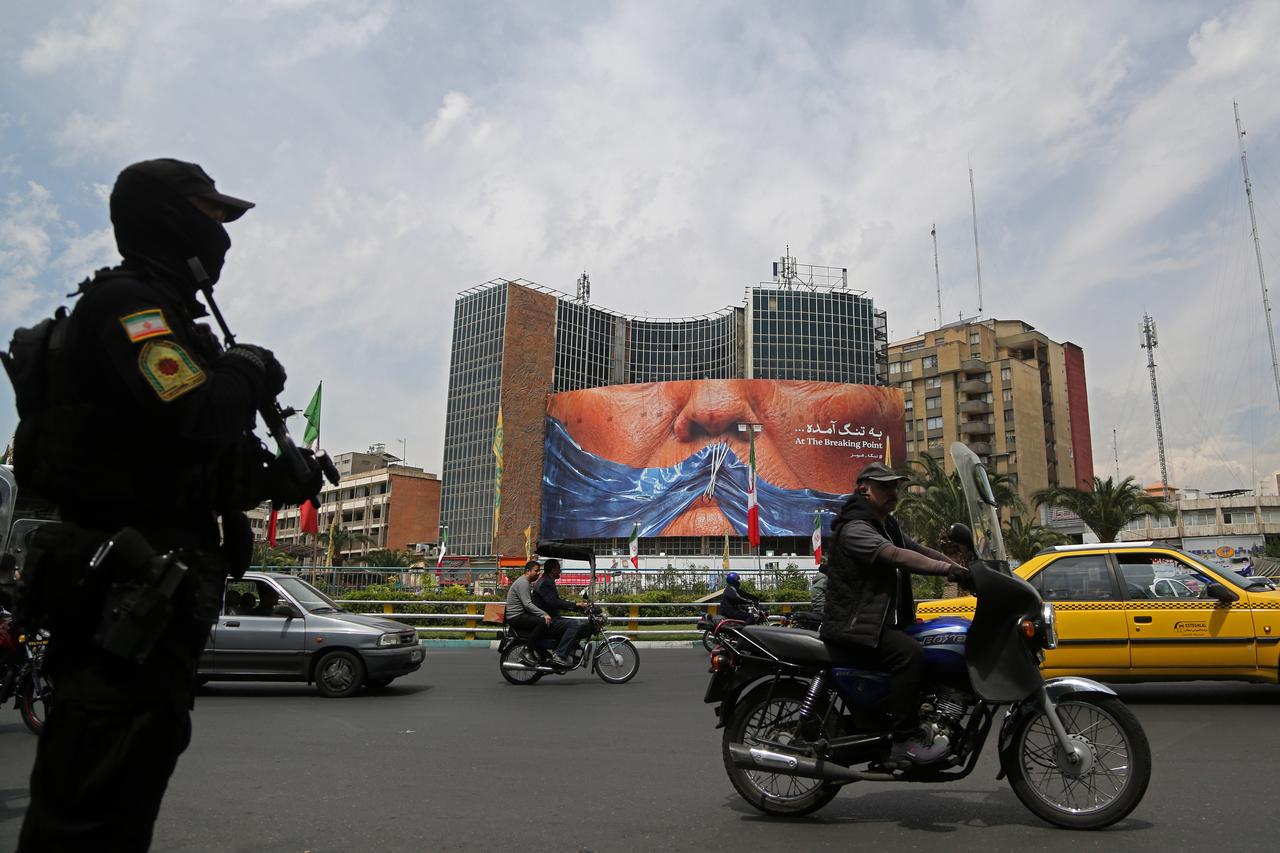

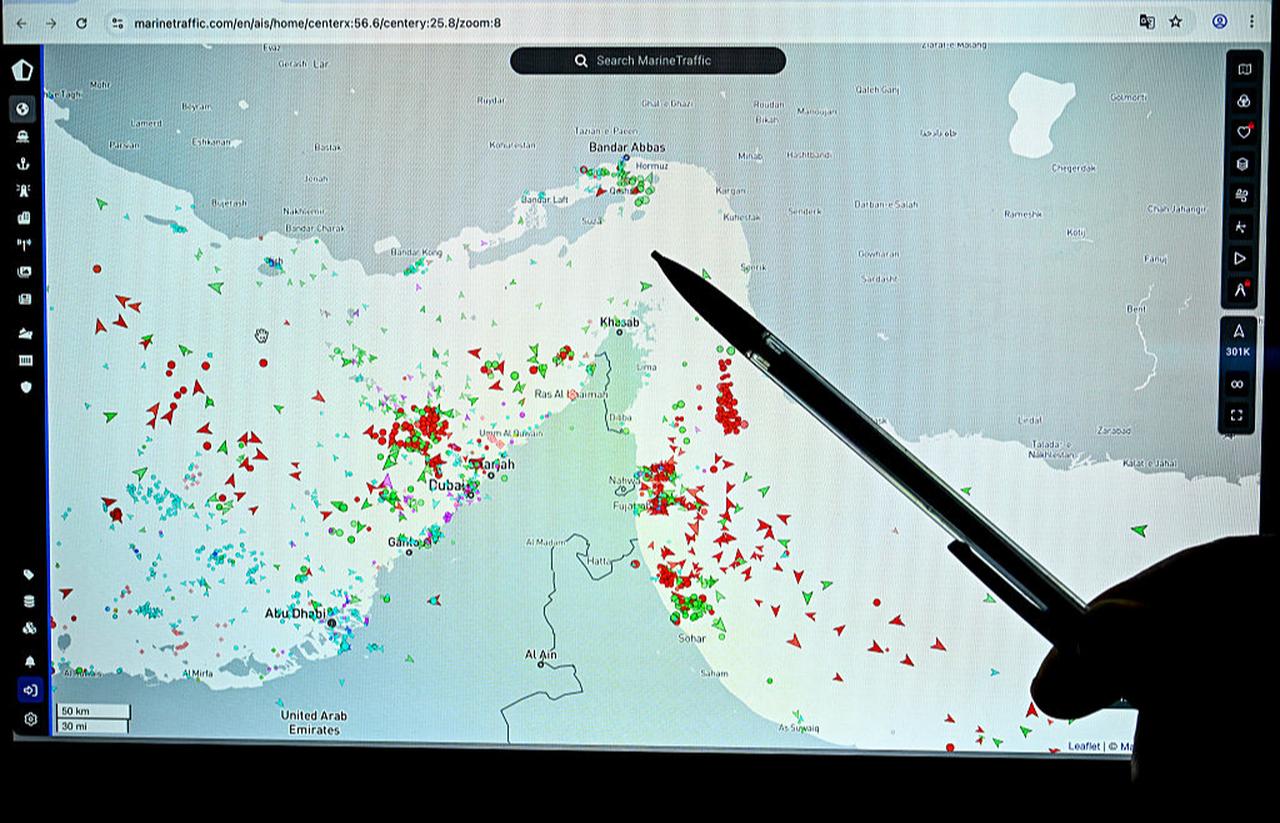
About 20% of the world's oil and liquefied natural gas supplies normally pass through the Strait of Hormuz. Shipping through the waterway has largely come to a halt, with only a minuscule percentage of vessels transiting compared with roughly 125 to 140 daily passages before the war began.
The strait lies between Oman and Iran and is 33 kilometers (21 miles) wide at its narrowest point, with the shipping lane just 3 kilometers (2 miles) wide in either direction. OPEC members Saudi Arabia, Iran, Kuwait and Iraq, as well as former member the United Arab Emirates, export most of their crude oil via the strait.
Qatar, among the world's largest LNG exporters, sends most of its output through the waterway.
Earlier this week, two oil supertankers and one LNG tanker exited the Strait of Hormuz with their transponders switched off, heading for India and China, shipping data from LSEG and Kpler showed.
The Very Large Crude Carrier Eagle Veracruz, carrying 2 million barrels of crude loaded from Saudi Arabia in late February, is heading to Quanzhou port in southeastern China's Fujian province.
AET Tankers owns and manages the vessel. Another VLCC, Nissos Keros, carrying about 1.8 million barrels of Das crude from the UAE, is en route to Visakhapatnam, where Hindustan Petroleum's refinery is located.
On Wednesday, the Chinese-flagged Hua Lin Wan, operated by COSCO, exited the strait carrying naphtha loaded from Kuwait and is bound for Huizhou port in southern China's Guangdong province.
Bessent said Treasury has "deprived the Iranian regime of revenue for their weapons programs, terrorist proxies, and nuclear ambitions" and disrupted "tens of billions of dollars' worth of revenue from being otherwise accessible" to Tehran.
The department said it includes actions that led to the freezing of nearly half a billion dollars in Iran-linked cryptocurrency.
"Under President Trump's leadership, we will remain relentless in our pursuit to constrain the network of vessels, intermediaries, and buyers through which Iran exports both its oil and malevolence," Bessent said.
The war began Feb. 28 when the United States and Israel launched strikes on Iran, prompting Tehran to retaliate with missile and drone attacks and close the Strait of Hormuz.
A ceasefire took effect on April 8, mediated by Pakistan, and was later extended indefinitely by U.S. President Donald Trump.


 Set as preferred source
 Set as preferred source


 3 min read