Newsletters


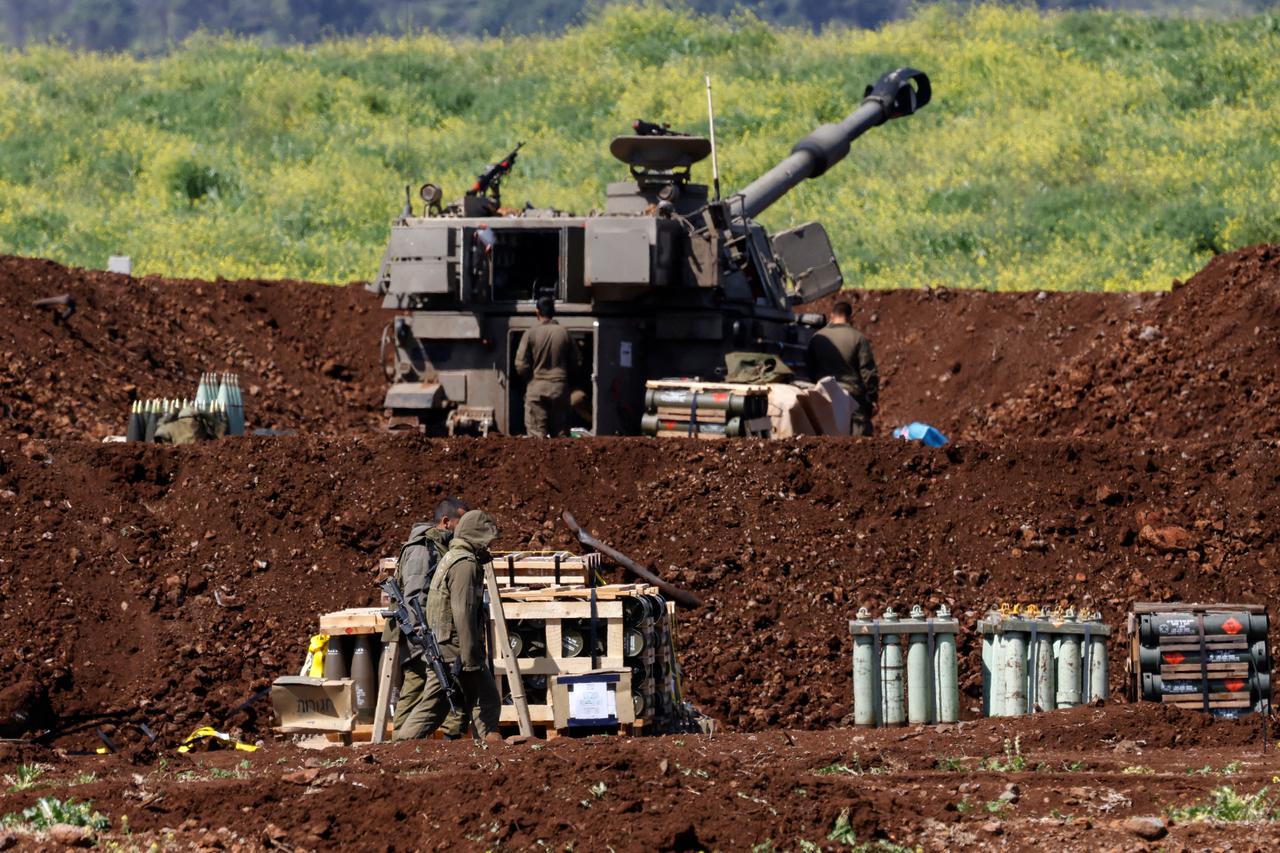


Senior Israeli military officials say the Israeli army is "not withdrawing from anywhere yet" under the U.S.-brokered framework agreement signed with Lebanon, with key questions about the timeline and conditions for any redeployment still unresolved, according to a Haaretz report citing sources familiar with the matter.
"As of this moment, the Israeli army is not withdrawing from anywhere," a military source told Haaretz.
"Despite the understandings, it is not clear when and how the withdrawal will actually be carried out, and this depends on the guarantees that we see from the political echelon," the official added.
Israeli officials have expressed satisfaction that the word "withdrawal" does not appear in the framework agreement, which instead uses the terms "redeployment" and "repositioning."
According to the text of the deal released by the State Department on Saturday, Israeli forces would only "progressively redeploy" from areas of southern Lebanon once the Lebanese military demonstrates it can disarm Hezbollah and dismantle its infrastructure.
Under the agreement, two "pilot zones" will be established in southern Lebanon, where the Lebanese army will assume "full and effective security responsibility," enabling the return of displaced residents, internationally supported reconstruction, and the creation of additional pilot zones in the future.


A source familiar with the details told Haaretz that Israel does not exercise full control over some of the designated pilot areas, where the Israeli army has operated only "intermittently."
The source said the military annex attached to the framework agreement is "fairly general," contains no clear timetable for Hezbollah's disarmament or an Israeli withdrawal, and does not precisely define the areas where initial steps will be implemented.
The source said the two sides discussed the possibility that Lebanese forces tasked with disarming Hezbollah would receive training in a third country.
The source also said the agreement does not provide for the deployment of American forces on Lebanese territory, though one option under U.S. consideration is a mechanism similar to the Civil-Military Coordination Headquarters (CMCC) in Kiryat Gat, which oversees implementation of the Gaza ceasefire. Still, it remains unclear whether such a headquarters would move forward or where it would be established.
Senior officers told Haaretz the Israeli army finds itself caught between two parallel tracks shaping Lebanon's future: the Israeli-Lebanese track, which the military is trying to strengthen through direct enforcement and security coordination with the Lebanese army, and the direct negotiations between Washington and Tehran, which the defense establishment views as more significant and more troubling.
The Israeli military is uneasy about the U.S.-Iran track, arguing it gives Hezbollah and Iran renewed political leverage and room to maneuver that could erode the operational gains achieved during the Israeli-American military campaign.
Lebanese Parliament Speaker Nabih Berri, sharply criticized the U.S.-brokered agreement, warning it could incite internal divisions among the Lebanese and insisting it would not be implemented.
In comments to Al-Akhbar, Berri described Iran-U.S. negotiations as the only realistic path to securing an Israeli withdrawal from Lebanon, arguing that any attempt to separate Lebanon from the broader U.S.-Iran track would prolong Israeli occupation.
Berri called the agreement a set of "dictates," saying its most dangerous aspect was not only its political content but "the potential for it to incite internal divisions and draw the Lebanese into a confrontation among themselves."
The agreement "won't be implemented," Al-Akhbar quoted him as saying.


 Set as preferred source
 Set as preferred source


 1 min read
 1 min read