Newsletters


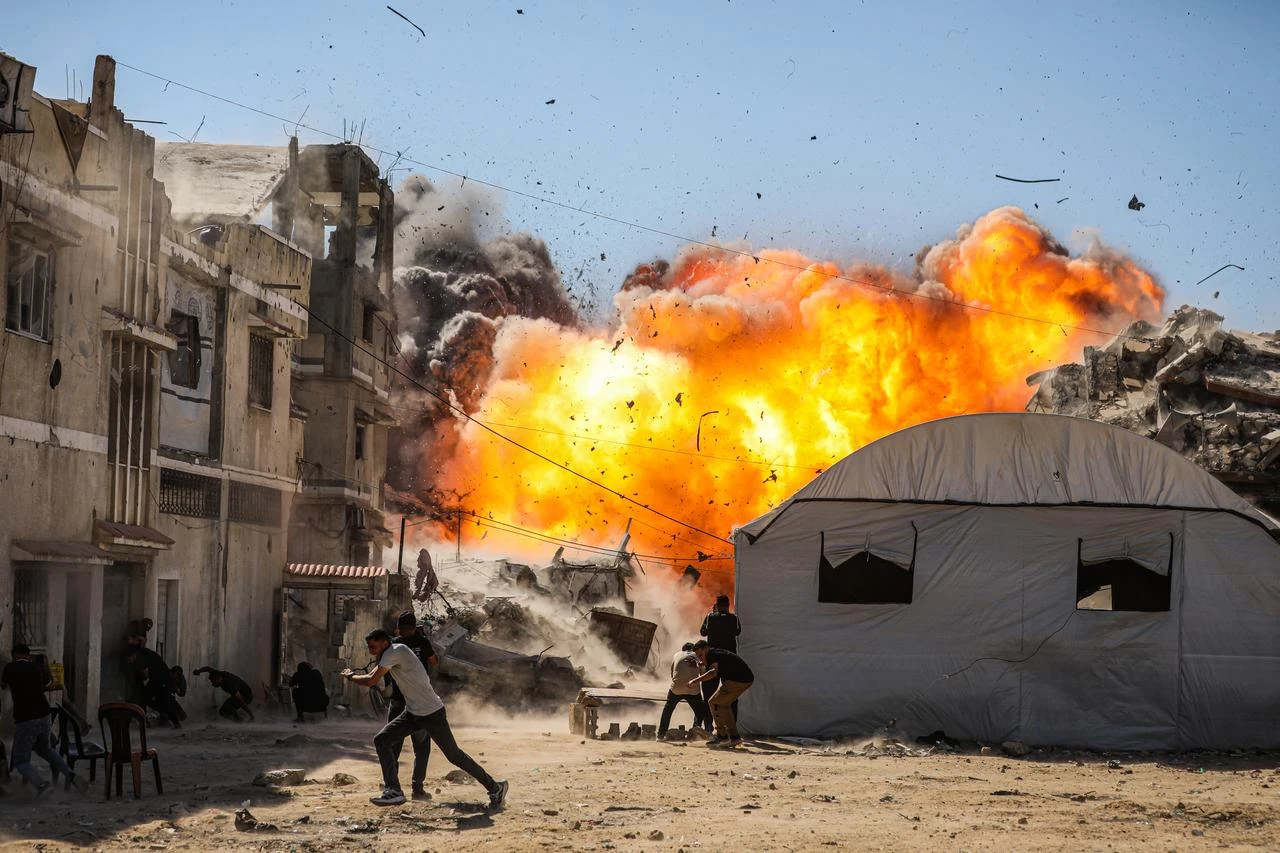


Russian Ambassador to Türkiye Sergey Vershinin said the "worst scenarios" unfolding in the Middle East today would be difficult to imagine without what he called external interference by the "collective West," in remarks at a seminar marking the 25th anniversary of the Russia-China Treaty of Good-Neighborliness and Friendly Cooperation.
Speaking at the event hosted at the Russian Embassy in Ankara, Vershinin said, "The worst scenarios unfolding in the Middle East today would be hard to imagine if not but one factor, the external interference of the collective West in an obvious and apparent violation of fundamental international principles, including the respect of sovereignty and territorial integrity and the right for self-determination."
Vershinin cited what he called "unprecedented and still unfolding" crises across the region, including what he described as "two major unprovoked military offences of the U.S. and Israel against Iran" over the past year, operations he referred to as "Midnight Hammer" in June 2025 and "Epic Fury," which began in February 2026.
He said the Islamabad Memorandum reached to end that conflict "was violated days after conclusion," leaving prospects for the war "gloomy" despite mediation efforts.
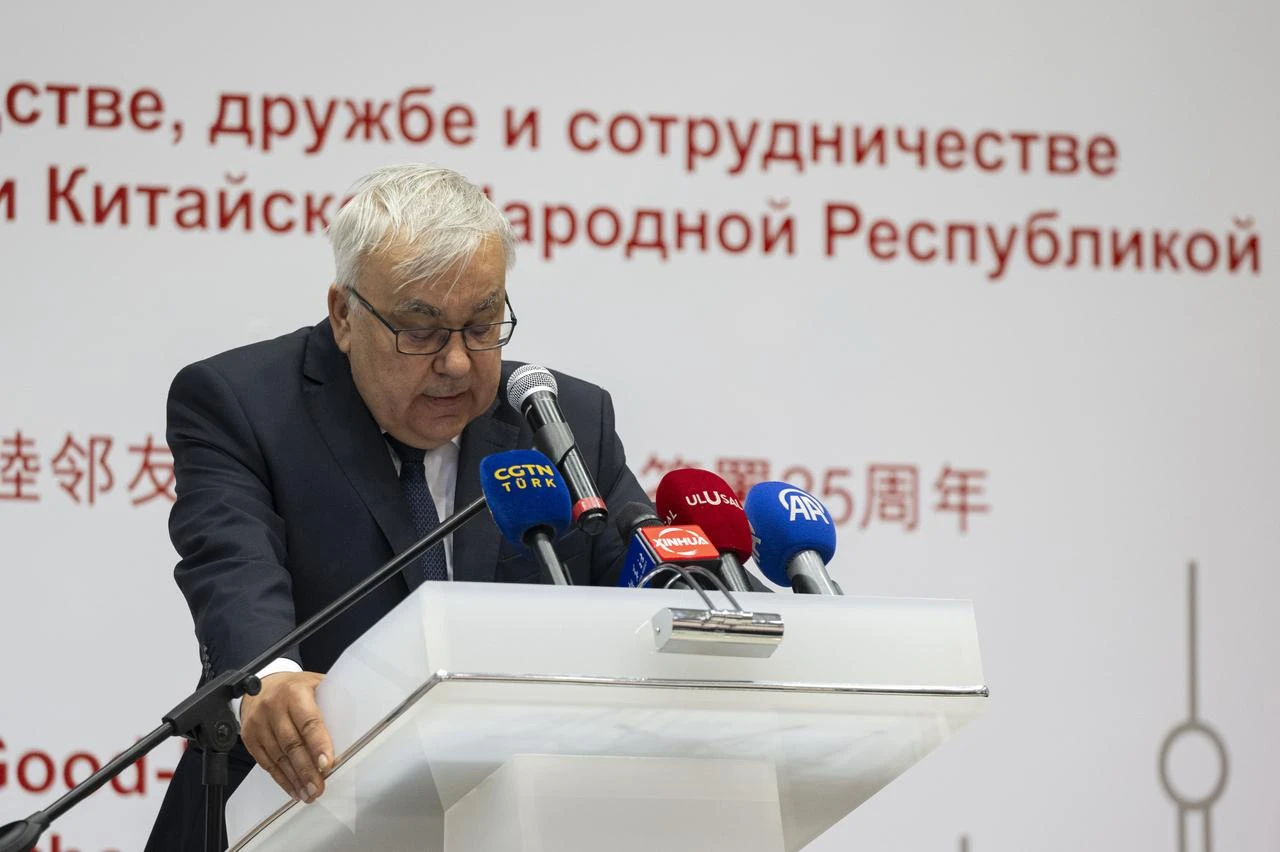

Vershinin also pointed to what he called "the protracted human tragedy and endless bloodshed in the Gaza Strip," saying a Gaza peace plan put forward by U.S. President Donald Trump in October 2025 had "proved to be no more than just a piece of paper," a fate he said echoed an earlier plan proposed by former President Joe Biden.
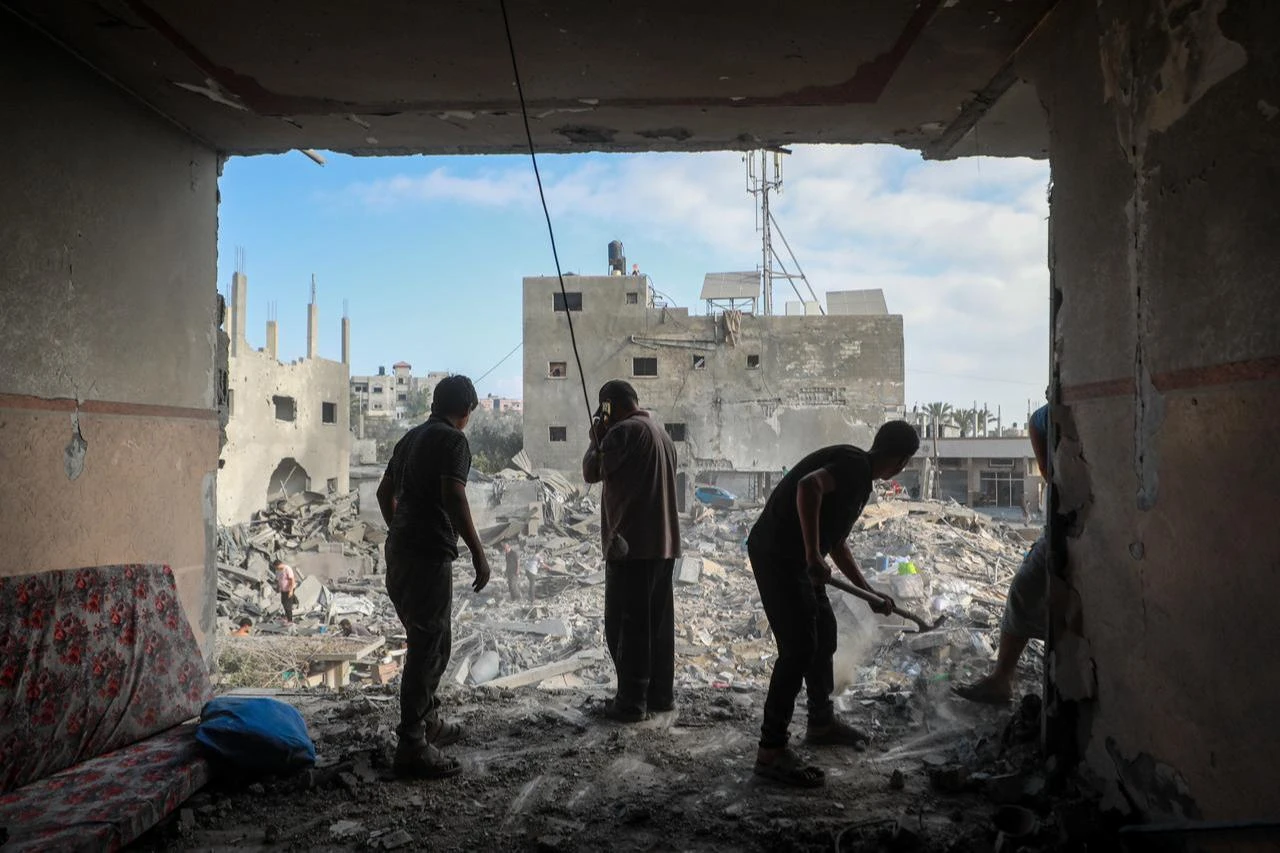
He described conditions in Gaza as involving "hunger, deprivation, misery, hopelessness and collective punishment" for Palestinians who survived what he called "relentless Israeli bombardment," and said the situation in the West Bank and East Jerusalem is similarly dire, citing what he described as prolonged Israeli occupation and rejection of a two-state solution.
The Russian envoy stated that Lebanon risked "repeating the fate of Gaza" given an Israeli offensive he said had resulted in the occupation of the country's south, and made a similar characterization regarding Israeli actions in Syria's Golan Heights.
Vershinin traced what he called the "root causes" of regional instability to what he described as the colonial and neocolonial policies of Western powers, citing the Sykes-Picot agreement's legacy in Lebanon, Syria and Palestine, and what he called "NATO destructive invasions" in Iraq, Libya and Afghanistan.
He argued that principles enshrined in the U.N. Charter, including respect for sovereignty, territorial integrity and self-determination, had become "useless and irrelevant" to Western countries, he said were "trying to advance their arbitrary 'rules-based order' in a desperate attempt to preserve their dominance and hegemony."
Vershinin praised what he called Türkiye's emergence as "a truly influential and well-known regional mediator and player."
He pointed to the Astana format on Syria, which he said "made a decisive contribution to preserving the sovereignty and territorial integrity" of Syria amid an "unprecedented Daesh terrorist threat."
He also cited Russian-Turkish coordination on Libya and the 3+3 Regional Cooperation Platform, which includes Azerbaijan, Armenia, Georgia, Iran, Russia and Türkiye.
He said Moscow is "ready and determined to maintain and develop" constructive engagement with Türkiye and other regional partners.
Speaking earlier in his remarks, Vershinin said Russia and China were united not only by shared history and geography but by "centuries-old traditions, shared interests and similar approaches to a wide range of international and regional issues."
He said the two countries' strategic partnership had "proven to be one of the key stabilizing factors for the entire world order," and that Russia and China, as permanent U.N. Security Council members, bore "special responsibility" for coordination on the international stage.
Vershinin said Russia's vision for a future Eurasian security architecture aligned with Chinese President Xi Jinping's Global Security Initiative, launched in February 2023, saying both "call for identifying and addressing the root causes of all conflicts."
He also voiced support for a Belarusian-proposed "Eurasian Charter of Diversity and Multipolarity in the XXI Century," which he said should serve as "the political and legal foundation of a pan-continental architecture" grounded in the U.N. Charter.
Chinese Ambassador to Türkiye Jiang Xuebin, who also spoke at the event alongside Patriotic (Vatan) Party leader Dogu Perincek and other diplomats and academics, said the 2001 treaty "reflects the good-neighborly relations and enduring friendship" between the Chinese and Russian peoples and "aligns with the shared values of all humanity."
Jiang warned that the world faced the risk of reverting to the "law of the jungle," saying: "China-Russia strategic coordination has proven to be of great importance for maintaining global strategic stability, defending multilateralism and upholding the international order."
Jiang also said China, Russia and Türkiye shared common goals regarding world peace, stability and the advancement of civilization, noting Türkiye's growing role in international relations.
The event, held at the Russian Embassy in Ankara, marked the 25th anniversary of the treaty signed in Moscow on July 16, 2001, by Russian President Vladimir Putin and then-Chinese President Jiang Zemin.


 Set as preferred source
 Set as preferred source


 1 min read
 1 min read