Newsletters


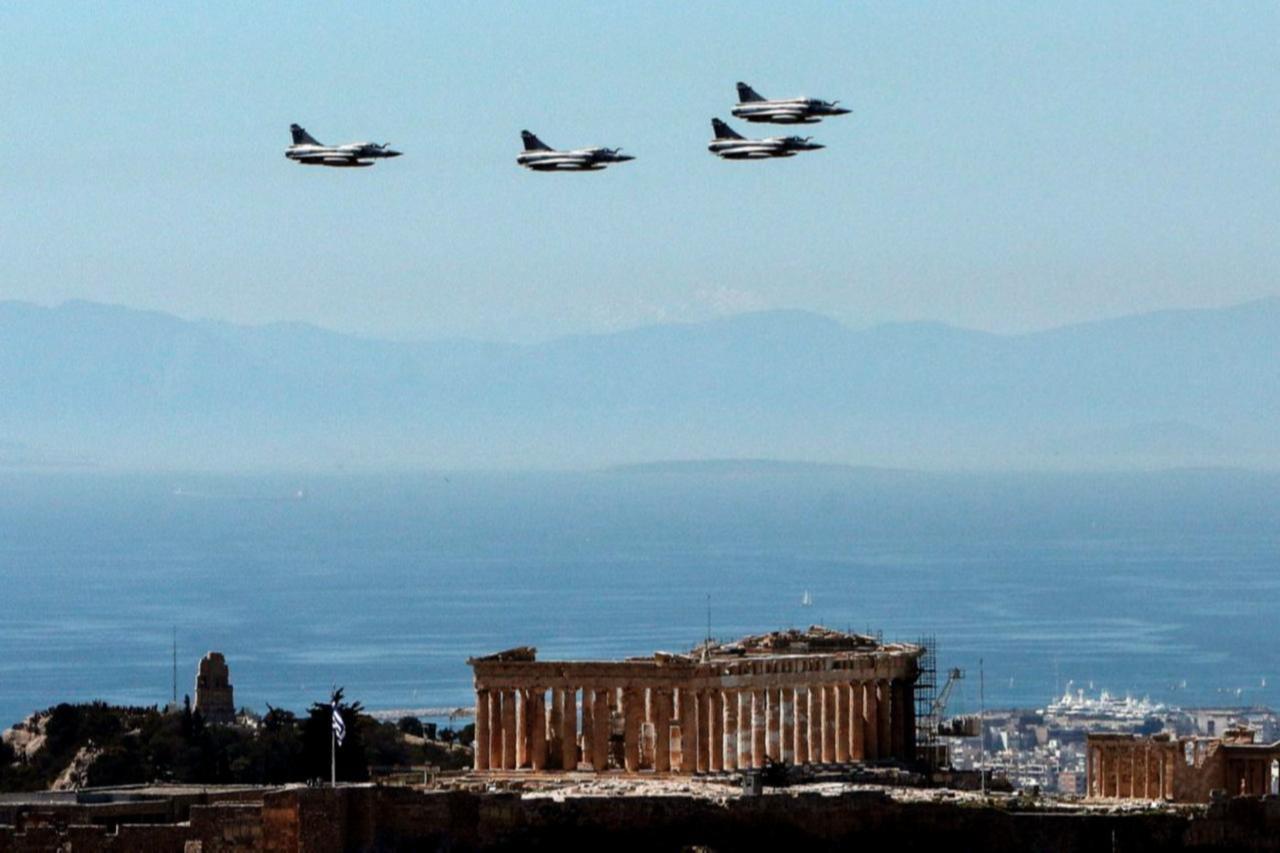


Greece has formally acknowledged a major shift in its Aegean doctrine, signaling a departure from its long-standing reliance on naval and air power with the statements of Defense Minister Nikos Dendias. Athens argues that defending a narrow sea such as the Aegean with expensive new frigates and warships no longer makes sense in an era where low-cost unmanned systems can neutralize high-value assets. Greek officials openly note that a billion-euro frigate can be destroyed by a drone costing only a few thousand euros.
The new concept envisions the Aegean not as a maritime zone protected primarily by the navy, but as a theater increasingly “closed off” from the land through dispersed missile deployments. Instead of projecting naval power inside a congested archipelago, Greece plans to rely on mobile missile units spread across hundreds of islands. These systems are meant to supplement, not replace, naval forces by reducing their exposure to concentrated threats.
This shift also includes a revised approach to air defense. Traditionally dominated by the Hellenic Air Force, Greece now seeks to push air defense responsibilities toward ground-based systems. Officials describe the emerging architecture as a layered shield meant to restrict access both at sea and in the air. The shift is framed domestically as a response to new technologies and a need to modernize defense without escalating costs.
Athens’ plan is packaged under the working title “Achilles’ Shield,” a project involving five different missile system types to be positioned across Aegean islands and along the land border with Türkiye. A substantial portion of these systems is expected to be sourced from Israel, continuing the expanding defense cooperation between the two states.
The procurement targets primarily revolve around air defense systems rather than long-range offensive strike assets. This reflects a structural limitation: Greece lacks its own land-based cruise missiles and has no inventory of drone-launched stand-off missiles. As a result, the actionable options are narrowed to ground-based air defense systems—Patriot, S-300, and potentially Israeli-made interceptors.
Greece currently operates six Patriot batteries with 96 missiles in total, capable of deploying 24 launchers at once. Reload cycles of roughly 30 minutes limit their responsiveness in a saturated scenario. The S-300 systems stationed on Crete remain another component, though their range and response time are considered insufficient against modern, mobile threats. Israeli systems under negotiation are expected to fill gaps, but not fundamentally alter the regional balance.
For policymakers in Athens, branding this overhaul as a doctrine change helps justify rising defense expenditures to domestic audiences. Naming it after a mythological figure provides symbolic weight, reinforcing the narrative of national resilience amid shifting geopolitical realities.
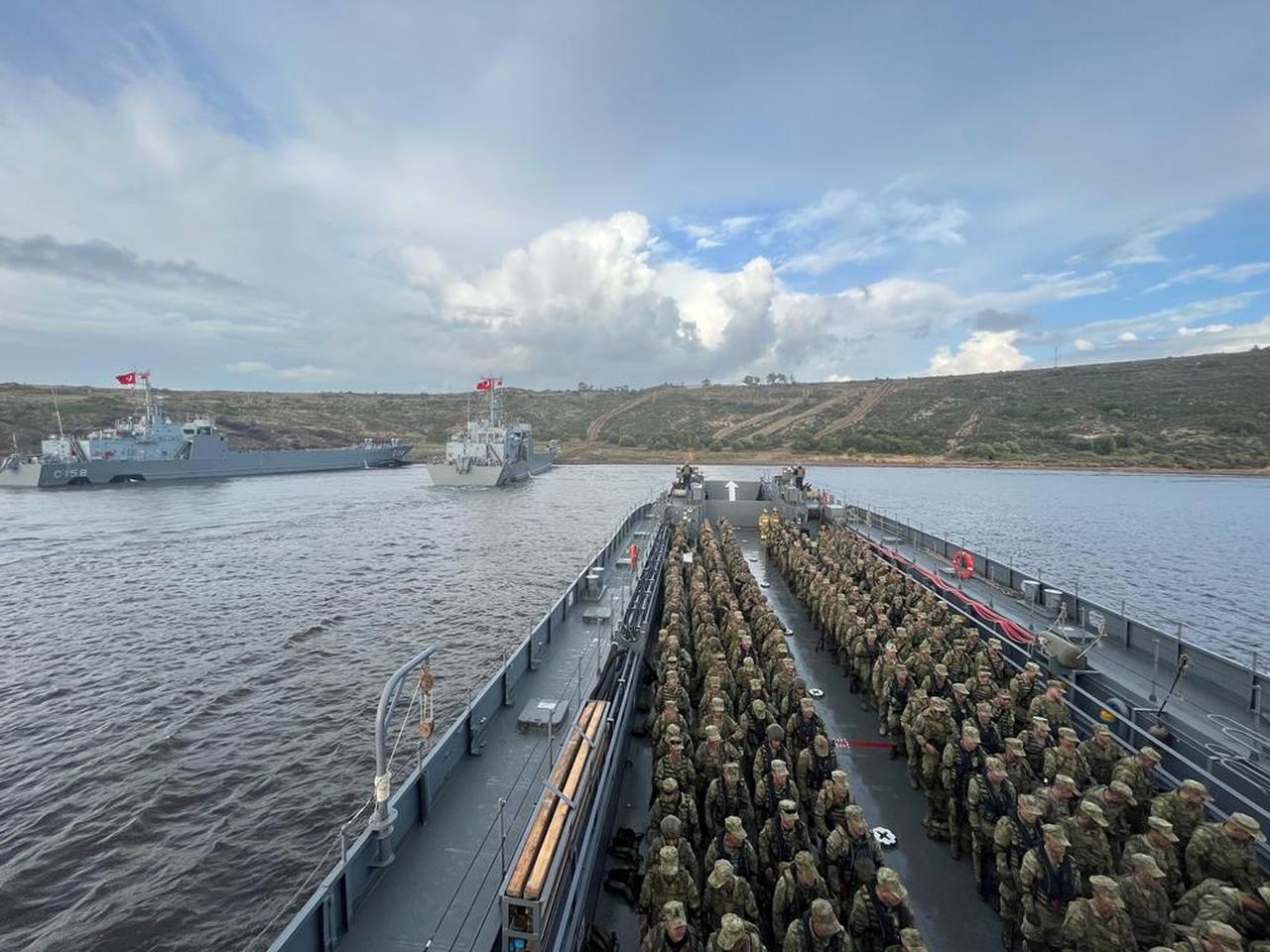

Despite the assertive rhetoric, significant technical constraints raise questions about implementation. Greece has approximately 3,000 islands in the Aegean; around 170 are inhabited, and roughly 20 have been militarized to date. Establishing a dense, resilient missile network across such a dispersed geography would require sustained financial, logistical, and command-and-control investments that exceed current capabilities.
Existing systems also face structural limitations. Cruise-missile deployments are not viable due to procurement gaps, and anti-ship or land-attack missiles such as Spike NLOS or Harpoon offer limited ranges compared with Türkiye’s inventory. Many Aegean islands lie near Türkiye’s coastline, placing any fixed or semi-fixed missile batteries at high risk of preemption in the event of a real crisis.
Analysts note that Türkiye today maintains one of the world’s largest drone fleets, with well over 1 million drones across various categories, including armed and kamikaze types, ranking behind only the United States and China. This volume, coupled with Türkiye’s rapid advances in unmanned systems, electronic warfare, and precision-strike capabilities, poses a fundamental challenge to static or semi-static island-based missile defenses.
Recent conflicts are cited as cautionary examples. In both Syria and the 2020 Karabakh war, advanced Russian air defense batteries were overwhelmed or neutralized before they could effectively engage incoming drones. In a tightly packed island environment, Greek systems could encounter similar vulnerabilities, raising doubts about whether batteries could even be activated before being targeted.
Greek officials portray Türkiye as the country’s primary security challenge despite both being NATO members since 1952. This framing positions Ankara as a threat within the alliance—an argument that resonates in domestic politics but is not reflected in Türkiye’s own defense posture.
Türkiye has no doctrine or planning aimed at attacking or occupying Greek territory. Its military planning focuses on preventing faits accomplis and responding to potential crises in the Aegean, not initiating them. Ankara emphasizes deescalation, direct diplomacy, and joint resource development in the Aegean and Eastern Mediterranean, policies that align with broader regional stability.
However, from a political standpoint, the Greek narrative of an imminent threat serves multiple purposes. It justifies higher defense spending in a country whose economy remains constrained by debt and structural weaknesses. It fosters national unity by presenting an external danger. And it strengthens the case for closer defense ties with partners such as Israel and select EU states.
This securitization strategy follows a pattern observed across Europe, where several governments have reoriented defense priorities after Russia’s invasion of Ukraine. Yet, unlike frontline Eastern European states, Greece’s threat framing focuses on a NATO ally, a contradiction that remains a persistent tension point.
Questions remain about whether Greece can realistically implement its doctrine or whether it serves more as political signaling. Establishing a comprehensive missile shield across dozens of islands requires financial resources that surpass Greece’s current defense allocation, which hovers around €8 billion ($9.33 billion) annually. Expanding it significantly would strain a country still managing debt obligations to European creditors.
The geographic realities also complicate any attempt to “close off” the Aegean. Island chains spaced across a narrow sea offer little strategic depth. Any isolated garrison risks becoming cut off, making it difficult to sustain a cohesive defensive grid. Türkiye’s proximity and technological advantages further magnify these vulnerabilities.
Moreover, an Aegean conflict would impose disproportionate economic costs on Greece, whose economy heavily depends on tourism and maritime logistics. A militarized posture risks undermining the very sectors that support national recovery efforts.
While Israel offers advanced technology and is likely to supply some of the desired systems, this partnership alone cannot resolve structural weaknesses. Athens’ attempt to position itself as part of a broader regional balancing strategy carries symbolic significance, but the underlying military feasibility remains limited.
Despite political rhetoric, both countries stand to benefit more from cooperation than confrontation. The Aegean presents opportunities for shared resource development, joint maritime management, and economic complementarity. Diplomatic engagement between Ankara and Athens in recent years has demonstrated that tensions can be reduced when political will exists.
For Türkiye, the stated Greek strategy represents less a pressing threat than an acknowledgement of shifting military realities. The move from naval dominance to land-based defense reflects a recognition of Türkiye’s growing technological and operational edge. For Greece, the doctrine change appears to serve domestic and symbolic aims as much as strategic ones.
The sustainability and effectiveness of Greece’s new Aegean posture remain uncertain. What is clear, however, is that long-term stability will depend not on missile deployments or myth-laden project names, but on political choices that prioritize shared prosperity and regional calm over narratives of mutual threat.


 Set as preferred source
 Set as preferred source


 3 min read